News
Cell death and quality evolution of 'Conference' pear during storage
The research by Ty, A.J., Nicoali, B. & Hertog, M. demonstrates that cell death during postharvest storage is initiated at the cellular level prior to the appearance of visible tissue symptoms, and depends on the atmospheric conditions of the storage
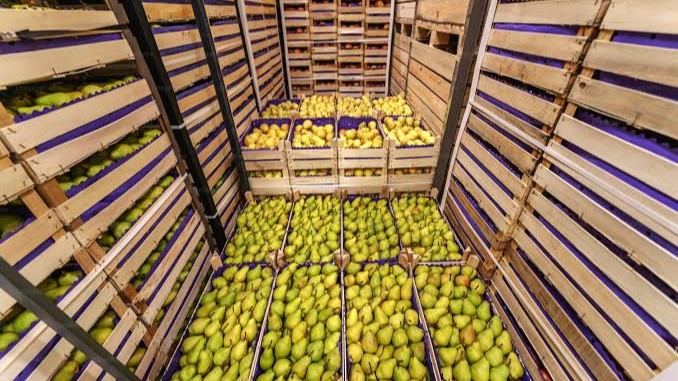
Postharvest storage profoundly influences fruit physiology and quality, yet the cellular mechanisms underlying storage-related disorders remain insufficiently resolved.
Programmed cell death (PCD), defined as a genetically controlled process of cellular self-dismantling involved in development, senescence, and stress responses, is distinct from necrotic cell death, which arises from uncontrolled loss of metabolic and membrane integrity.
In pear fruit, controlled atmosphere (CA) storage simultaneously suppresses ripening-related senescence while imposing hypoxic stress, creating conditions in which hypoxia may activate PCD pathways but if cellular control mechanisms are exceeded, result in necrotic cellular collapse.
Programmed and necrotic cell death and quality evolution
This dissertation, therefore, investigates how programmed and necrotic forms of cell death govern tissue integrity and quality evolution in 'Conference' pear fruit during postharvest storage.
Using an integrative, multilevel approach of literature synthesis, transcriptomic profiling, microscopic analyses, postharvest quality assessments, and functional assays, this work demonstrates that cell death during postharvest storage is initiated at the cellular level prior to the appearance of visible tissue symptoms.
Importantly, cell death responses during storage do not represent a single uniform process but encompass both transcriptionally controlled PCD and, under more severe or prolonged stress, necrotic cell death resulting from loss of cellular regulation.
Postharvest disorders, a dynamic progression of cellular processes
These findings indicate that postharvest disorders develop through a dynamic progression of cellular processes rather than a sudden terminal event.
A comprehensive review of plant PCD established a conceptual framework in which postharvest stress responses and senescence-associated processes converge on shared cell death pathways.
The process in 'Conference' pear
Transcriptomic analyses of 'Conference' pear fruit stored under low-O₂ CA revealed early activation of PCD-related pathways despite concurrent suppression of classical senescence.
In particular, genes mapped to the KEGG apoptosis pathway were enriched, whereas autophagy-associated pathways were not broadly overrepresented, indicating a selective and regulated form of cell death rather than generalized cellular degradation.
Importantly, PCD-associated gene expression preceded the appearance of internal browning, indicating that hypoxia-induced molecular and cellular responses are activated prior to the development of macroscopic tissue symptoms.
Microscopic and physiological analyses further demonstrated that prolonged or intensified hypoxic stress compromises regulatory control, resulting in a transition from regulated PCD to necrotic-like cell death.
Cellular damage and loss of viability were detected in visually unaffected tissue, indicating that postharvest disorders originate at the cellular level before macroscopic symptoms emerge.
Notably, this dissertation reports the first observation of cellular breakdown in 'Conference' pear fruit under commercial CA conditions, providing a structural hallmark of irreversible cellular failure.
Influence of storage atmospheres
Distinct storage atmospheres elicited fundamentally different responses: long-term CA storage with spatially-limited PCD confined to a small number of cells, whereas more severely hypoxic and hypercapnic conditions promoted necrotic tissue breakdown, and regular atmosphere storage induced patterns typical of natural senescence.
These three predominant modes are distinguished on the basis of their regulatory context and transcriptional signatures rather than strict morphological criteria or mode-specific hallmarks, reflecting the current state of the art in plant PCD classification.
Senescence-associated PCD is repressed under optimal storage conditions
Key transcriptional regulators of senescence-associated PCD were identified through integration of transcriptomic data and functional assays.
Candidate NAC transcription factors consistently induced cell death phenotypes in transient expression assays and were suppressed in pear during postharvest CA storage compared to pears kept under regular air, indicating that senescence-associated PCD is repressed under optimal storage conditions.
These findings suggest that transcriptional regulation modulates the progression of senescence-associated PCD, contributing to the preservation of fruit quality.
Cell death, a continuous process influenced by storage conditionss
Collectively, the results support a conceptual model in which postharvest cell death operates along a continuum.
Well-managed hypoxic storage induces regulated, potentially adaptive PCD, whereas increasing stress severity or duration leads to regulatory failure, necrotic cell death, and irreversible tissue damage.
In parallel, senescence-associated PCD is actively restrained under optimal storage, positioning PCD as a central determinant of postharvest fruit quality.
Sources
Programmed cell death and postharvest storage of pear fruit
Ty, Alexxandra Jane; Nicolai, Bart (Supervisor); Hertog, Maarten (Co_supervisor)
PhD Thesis (Lirias, Leuven Institutional Repository and Information Archiving System
Picture, Unsplash
Related news