News
New genomic techniques in plants: the EU agrees on a dedicated regulatory framework
The EU’s provisional deal on new genomic techniques creates two categories of NGT plants with different rules on authorisation, labelling and seed access, with direct implications for horticulture and postharvest
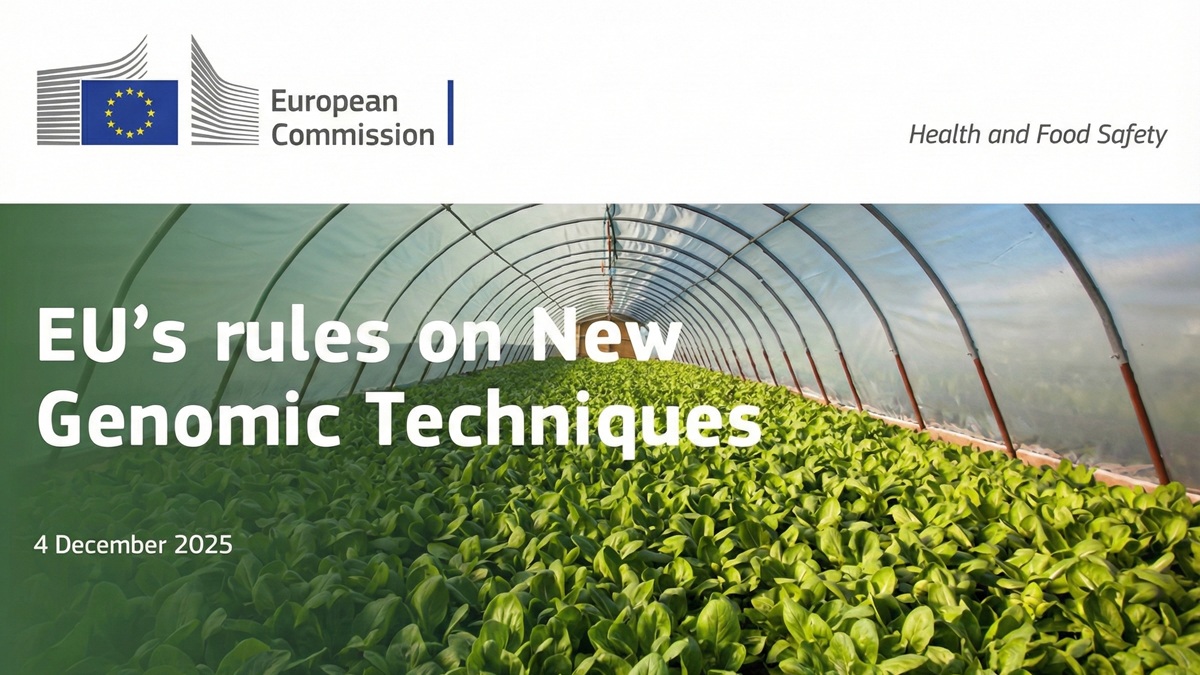
The Council and the European Parliament have reached a provisional political agreement on a regulation creating a specific framework for New Genomic Techniques (NGTs) applied to plants. The aim is to strengthen the competitiveness and sustainability of the European agrifood system, support food security and reduce external dependencies, while maintaining a high level of protection for human, animal and environmental health. The text must now be formally approved by both institutions before it can enter into force.
What are NGTs?
New genomic techniques bring together different plant breeding methods that make it possible to introduce targeted changes into a plant’s DNA more quickly and precisely than with traditional crossing. In many cases these are small modifications, of a type that could also occur naturally or through conventional breeding, but introduced in a directed way.
According to the European Commission, these techniques can help to develop varieties that are more tolerant to drought, temperature extremes or new pests and diseases, that require fewer fertilisers and plant protection products, and that maintain or improve yield. This places NGTs at the centre of the debate on how to adapt European agriculture to climate change and sustainability goals.
Two categories of NGT plants
The agreement distinguishes between Category 1 NGT plants (NGT-1) and Category 2 NGT plants (NGT-2), with different levels of control and regulatory requirements.
NGT-1 plants: equivalent to conventional varieties
NGT-1 plants are those that, after a technical assessment, are considered equivalent to varieties obtained through conventional breeding. To qualify for this category, they must go through a verification procedure by national authorities, which will check that the genetic changes introduced meet the criteria laid down in the regulation (for example, the number and type of genomic changes).
Once a plant has been recognised as NGT-1, its progeny will no longer need to be reassessed. Food and feed produced from these plants will not carry specific NGT labelling, as they are regarded as comparable to products from traditional varieties. The exception is seeds and other reproductive material, which will have to indicate that they originate from an NGT-1 plant. This is intended to provide transparency on the seed market and, where desired, to allow for differentiated supply chains.
The agreement also introduces an exclusion list of traits. For example, herbicide tolerance or the production of a known insecticidal substance cannot be the main intended traits of an NGT-1 plant. If such traits are targeted, the plant will automatically fall under Category 2.
NGT-2 plants: more complex genomic modifications
NGT-2 plants cover cases with more complex modifications or changes considered less "equivalent to nature". For this category, the agreement maintains the current framework applied to Genetically Modified Organisms (GMOs).
In practice, this means that NGT-2 plants and derived products will continue to be subject to prior authorisation, traceability measures and mandatory GMO labelling. Member States will also be able to prohibit the cultivation of NGT-2 plants on their territory (opt-out) and establish coexistence measures to minimise the unintended presence of these plants in other productions.
Patents and access to seeds
One of the sensitive points in the NGT debate is intellectual property. The new regulation does not change EU patent law, but it does introduce transparency measures. Companies or organisations applying to register an NGT-1 plant or product will have to declare all existing or pending patents related to that material. This information will be included in a public database, accessible to other operators.
In addition, companies may voluntarily indicate whether they are prepared to license the use of the variety or product under fair and reasonable conditions. A patent expert group will also be set up, bringing together representatives of Member States and relevant European bodies, to analyse the impact of patents on innovation, seed availability for farmers and the competitiveness of the plant breeding sector.
The European Commission will have to carry out a dedicated study on these aspects after the regulation enters into force and, depending on its conclusions, propose additional measures if needed.
Impact on horticulture and postharvest
For the horticultural and fruit sector, this new regulatory framework may, in the medium term, facilitate the arrival of fruit and vegetable varieties better adapted to climate change, with improved tolerance to water stress, heat waves or new pest and disease pressures. It also opens the door to materials with better postharvest performance, lower susceptibility to physiological disorders and more stable quality during storage and distribution.
For growers, packing houses and postharvest technology companies, such varieties could translate into a reduction in input use, a decrease in losses and waste and a greater ability to meet international market demands on quality and sustainability. At the same time, new requirements may emerge in terms of traceability and the management of different supply chains, depending on the type of plant material used.
The agreement between the Council and the Parliament remains, for the time being, provisional. Once the legislative procedure is completed, the practical implementation of the rules and the response from the sector will determine to what extent new genomic techniques become a key tool for European horticulture and fruit production.
Related news


How long-distance shipping is reshaping ethylene management in climacteric fruit