News
Non-destructive prediction of SSC and storage days in kiwifruit using NIR hyperspectral imaging
A total of 480 kiwifruits were studied over 0–14 days at 20 °C using hyperspectral imaging (858–1700 nm) for non-destructive SSC and maturity estimation. Processing methods, feature selection, and models were compared. MSC+SG+CARS+LSSVM performed best. GA-BP and RBF classified storage days with high accuracy.
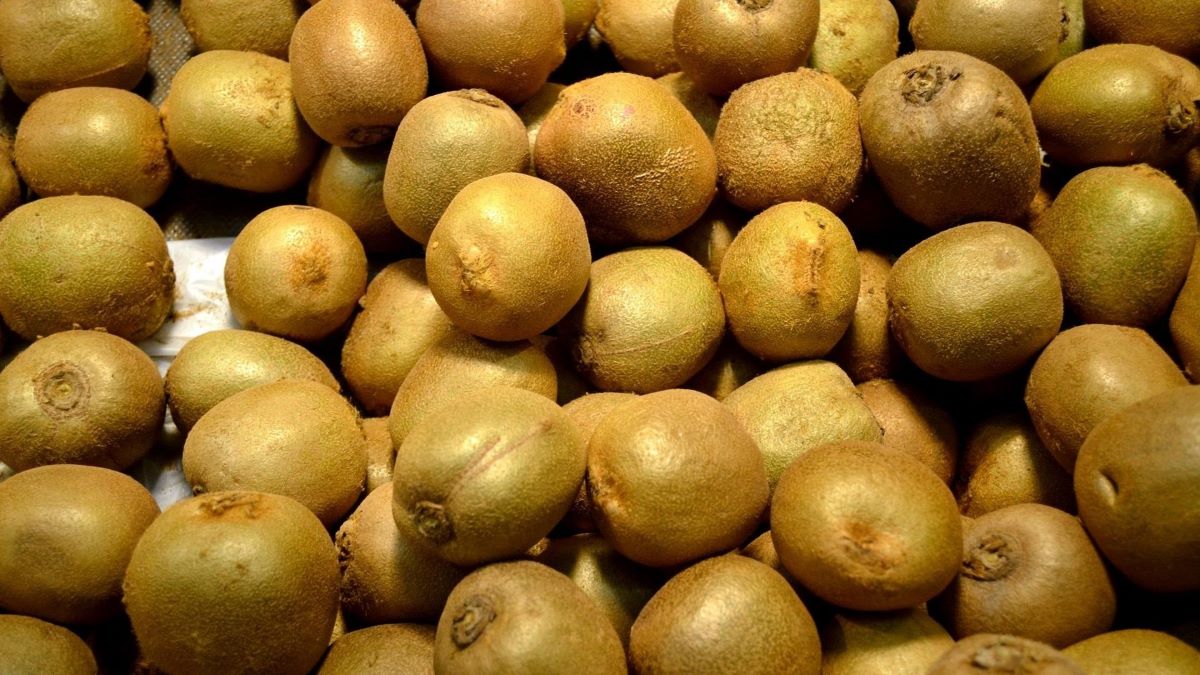
This study used near-infrared hyperspectral imaging (858–1700 nm) to non-destructively determine soluble solids content (SSC) and maturity in 480 kiwifruits stored at room temperature (20 ± 1 °C) over 14 days. Six spectral preprocessing approaches (MSC, SNV, SG, and their combinations) were assessed, together with three wavelength selection techniques (CARS, SPA, and UVE). Based on these inputs, four predictive models—PLSR, BP, LR, and LSSVM—were developed and compared.
The findings showed that the MSC+SG+CARS+LSSVM combination delivered the best performance, with Rc = 0.881 and Rp = 0.927, RMSEC = 0.590 °Brix, RMSEP = 0.597 °Brix, and an RPD of 2.61. In addition, GA-BP and RBF models were implemented to classify storage duration, achieving accuracies of 95.15% and 93.75%. Overall, the results demonstrate that NIR hyperspectral imaging is an effective approach for evaluating internal quality and estimating storage time in kiwifruit, supporting optimal transport decisions and offering strong potential for quality control and maturity classification in the industry.
Source
Li, Y., Qiao, Y., Zhu, R., Wang, J., Sun, Z., Yang, S., Ai, Z., & Song, S. (2026). Non-destructive prediction of SSC and storage days classification of kiwifruit during postharvest storage using near-infrared hyperspectral imaging. Food Analytical Methods.