
Paclife
Packaging
Table grapes: protecting quality at every stage
Maintaining the quality of table grapes during storage and export requires an integrated strategy that covers every stage, from harvest to final packaging. Paclife offers solutions developed for each step of the logistics chain, helping to reduce dehydration, preserve the freshness of the rachis and berries, minimize weight loss, and extend postharvest life. By combining innovation, research, and advanced packaging technologies, these solutions help ensure that fruit reaches international markets with the quality and appearance demanded by the industry
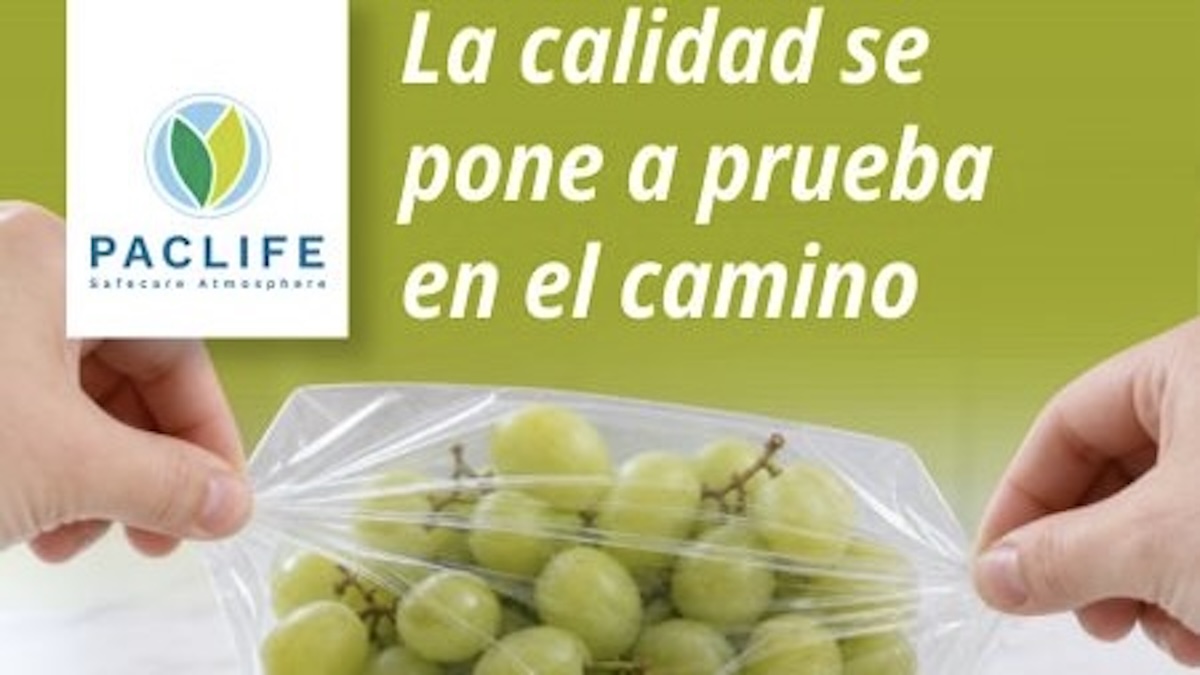
When a box of table grapes arrives at its destination in optimal condition, there is much more behind it than good vineyard management. From the minutes immediately after harvest through storage, transportation, and packaging, every technical decision directly influences the condition in which the fruit will withstand long transit periods and reach export markets.
Maintaining a green rachis, reducing moisture loss, minimizing stress in freshly harvested fruit, and preserving berries with an appropriate balance of soluble solids (°Brix) and acidity, good firmness, and freedom from decay are all part of a process where every detail matters. In an industry where marketing windows are becoming increasingly longer and markets demand fruit with excellent presentation, preserving these attributes depends on solutions capable of meeting the specific requirements of each stage of the logistics chain.
Processes that make the difference
Maintaining the quality of table grapes does not depend on a single technology, but on the ability to protect the fruit throughout its entire journey. From the first minutes after harvest to the final packaging stage, each solution serves a specific purpose and contributes to preserving the fruit's quality during storage and export.
During the period between harvest and entry into the packing line, one of the main objectives is to minimize moisture loss. At this stage, Harvestech Paclife covers help maintain high relative humidity around the fruit, reducing water stress and decreasing rachis dehydration by up to 50%. Their design incorporates UV technology, additives, and selective permeability, the result of a research process aimed at reducing temperature increases in freshly harvested fruit while maintaining high relative humidity during this critical period. In this way, they help preserve the grapes' initial condition during one of the most sensitive stages of the entire operation.
Later, during storage, the challenge is to maintain this performance for weeks or even months. For this purpose, Ultra Fresh Paclife limits weight loss to less than 1%, supports storage periods of more than 90 days, and helps preserve the freshness of both the rachis and the berries.
Packaging represents the final stage before the fruit begins its journey to destination markets. At this point, Flowpack Paclife not only improves efficiency through automated systems but also helps preserve the green color of the rachis and the overall appearance of the fruit—attributes that are increasingly valued by importers, retailers, and consumers.
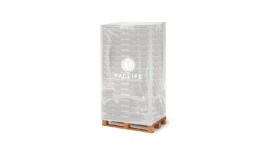
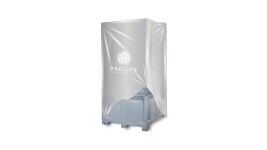
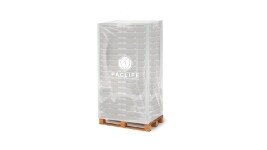
However, industry needs vary depending on storage duration, transit times, and the requirements of each market. For these scenarios, Paclife also offers Pallet Cover covers, developed with selective permeability for use both in raw material storage and during export. This solution helps limit weight loss, maintain fruit freshness, and efficiently support shorter storage operations or export programs.
Although each solution addresses specific needs, they all share the same objective: preserving the fruit's potential throughout the entire export chain. Strong storage performance can hardly compensate for fruit that has already lost freshness during the first hours after harvest, just as technically advanced packaging cannot restore attributes that have already deteriorated. Ultimately, it is the integration of every stage that preserves the commercial value of the grapes until they reach their destination.
These innovations are the result of continuous research, field validation, and close collaboration with growers and exporters. Evaluations across different varieties, production conditions, and transit times have made it possible to refine solutions that address the industry's real challenges while providing technically validated tools to meet the growing demands of international markets.
Marcela Silva, Postharvest Manager at Paclife, explains:
"For fruit to arrive in good condition, there is a great deal of technical work that often goes unseen. Every technology we develop is built on research, field trials, and hands-on experience alongside growers and exporters. This knowledge allows us to design solutions capable of addressing the different challenges table grapes face throughout the entire logistics chain."
In an industry where every day in transit matters, success depends on integrating technical expertise, innovation, and solutions specifically designed for each stage of the process. When every technical decision contributes to the common goal, fruit reaches its destination with the freshness, appearance, and performance that today's international markets demand.
News of Paclife
Paclife