News
Pedro Ruiz highlights data-driven management at Postharvest Technology Course
A university lecture where data and production segmentation become a competitive advantage, with an impact on postharvest quality and consumer satisfaction
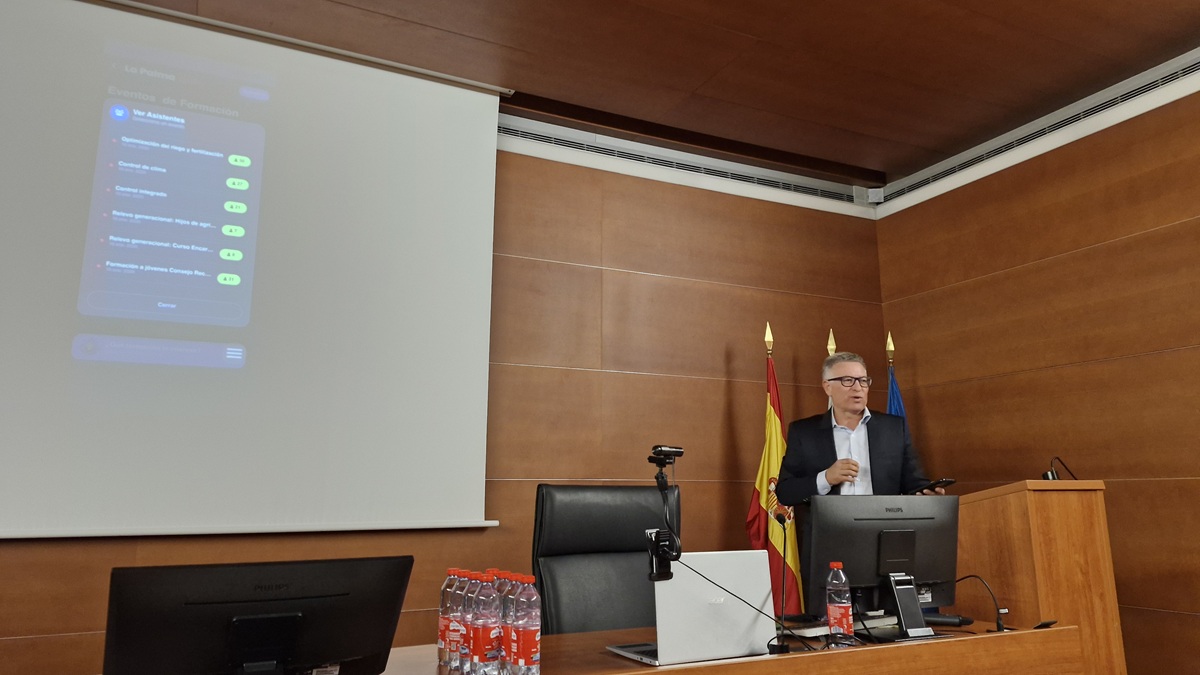
In a masterclass aimed at a university audience, Pedro Ruiz, president of Cooperativa La Palma, shared the key elements of a management model that, as he explained, has combined social and economic results with a sustained commitment to applied innovation. The speaker positioned knowledge transfer as an integral part of the model and framed his presentation within the need to professionalize decision-making in a highly demanding commercial environment. In his presentation, generational renewal appeared as a critical issue, not only due to the sector’s demographic structure but also because of the need to build working systems that make the continuity of farms viable.
Technical data within the farmer’s reach to improve daily management
Pedro Ruiz advocated for action-oriented digitalization, where consolidated information can be consulted from the early hours of the day to understand the status of the cooperative and adjust operational priorities without depending on late closing processes. This early access, he noted, makes it possible to anticipate the day’s needs, schedule arrivals and organize tasks at the packing facility, while maintaining the capacity to make corrections throughout the day when incidents arise during harvesting, reception or packing.
In his approach, the previous day’s data helps with planning, but real control is determined by what happens during the day, especially when activity is concentrated in the final hours and the time between product arrival and dispatch becomes tighter. This logic connects directly with postharvest quality, as better segregation by product condition, smooth operational traceability and more precise scheduling reduce unwanted mixing, improve uniformity and help ensure compliance with customer specifications.
Tomato segmentation, farmer priority and investment guided by competitiveness
The speaker linked commercial growth to a tomato segmentation strategy, differentiating product lines and profiles and highlighting the development of RAF tomato as a specialty supported by innovation and a continuous commitment to the quality perceived by consumers. At the same time, he argued that investment should prioritize the farmer, since the structure cannot be sustained without viability in the greenhouse. He also pointed to improvement areas that reinforce competitiveness, such as water-use efficiency and the adoption of hydroponics when it provides measurable results.
Ruiz also emphasized the importance of internal compliance and cooperative discipline, with agreements applied equally to all members, as the strength of the system depends on avoiding deviations that could ultimately harm the entire organization. From a quality management perspective, this discipline provides the basis for maintaining standards, organizing packing operations and reducing the risk of losses and claims.
Conclusions
The presentation highlighted that the success of the model is based on data-driven decisions and on an organization capable of applying common criteria from the farm to the packing facility. Digitalization is presented as a tool to act in time, improve batch uniformity and protect postharvest quality, while commercial segmentation requires discipline and traceability to maintain standards. Ruiz also linked the continuity of the system to viable generational renewal, supported by advisory services, monitoring and an investment approach that prioritizes farmers as a prerequisite for competitiveness.