News
Putting data to work is the proposar to take profit from AI
Date are the most important element for AI, and many companies count on years of registers
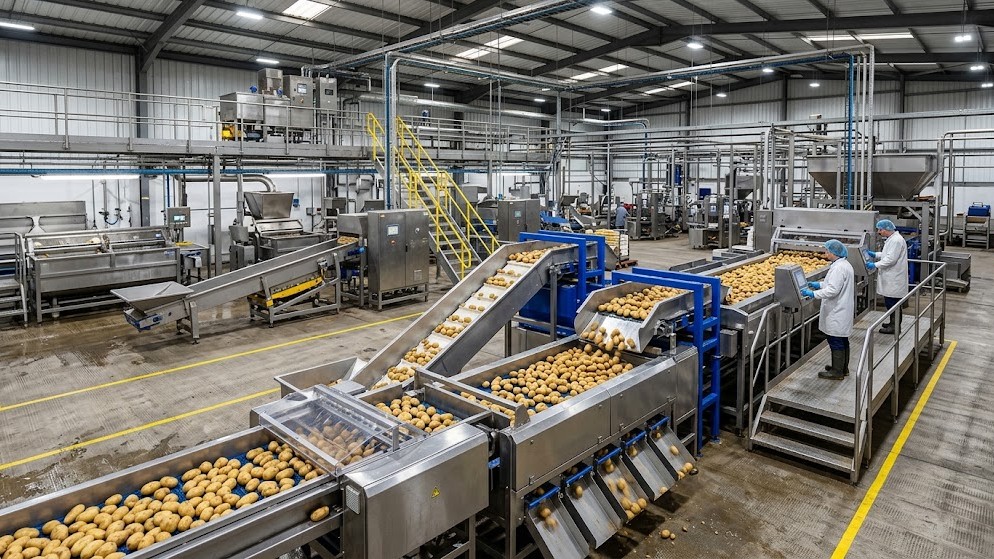
Most companies have a wealth of data from their processes, collected over years. Pedro Medina, from Haystack Data Solutions, gave a talk at the IFT FIRST conference in which he emphasized that, at this time when AI is in the spotlight, they already have the most important element and that now it's a matter of leveraging that data.
The following text is a translation of the article published by Foot Technology Magazine
Food manufacturers looking for energy savings may already have one of the most important ingredients: data.
Motors, compressors, refrigeration systems, programmable logic controllers (PLCs), and plant historians are already generating streams of operating information. The challenge, according to Pedro Medina, founder of Haystack Data Solutions, is turning that information into something plant teams can act on.
Speaking at the IFT FIRST Annual Event and Expo, Medina described energy management as a practical entry point for industrial artificial intelligence (AI), particularly for midsized food and beverage manufacturers.
Rather than starting with futuristic concepts such as fully autonomous plants, he focused on using existing plant data to identify waste, flag equipment problems, and improve operating decisions.
Many plants, he said, do not necessarily need to wait for a new generation of Internet of Things (IoT) sensors before getting started.
Data already stored in plant historians—systems that collect and store time-stamped operating data from equipment and production processes—can be sent to cloud-based systems for analysis. What is often missing is an intelligence layer that gives those data context and connects equipment performance with energy use.
Traditional machine learning and generative AI can play different roles in that system. Machine learning can help identify anomalies and inefficiencies, while generative AI can translate findings into plain language and help operators understand why an issue may be occurring.
The value, Medina said, comes from making plant data easier to interpret and use—not simply collecting more of it.
The possible applications range from predictive motor health and compressed air leak detection to demand-charge management and energy benchmarking. Medina also stressed that not every efficiency gain requires AI. Simply measuring where energy is being used and changing operating behavior can produce savings.
“You don’t always need AI. You don’t need what’s flashy,” Medina said. “Sometimes the basics still deliver the most value.”
Two examples illustrated where more advanced systems may add value.
Sawings in a cleaning process
In one Unilever clean-in-place application cited by Medina, spectral sensors were used to detect liquid states in real time and identify when a true cleaning endpoint had been reached.
The system adjusted factors including detergent levels, temperature, and cycle time. Medina reported a 10% reduction in combined energy and water use, annual savings of $114,000 per line, and cleaning cycles that were 20% faster.
Savings in industrial refrigeration
A second example involved industrial refrigeration at a frozen food plant.
An AI-based virtual operator continuously evaluated combinations of compressors, condensers, and evaporators to determine the most energy-efficient way to maintain a set temperature.
Medina said the system delivered 17% energy savings, $130,000 in annual savings, and a 20% increase in coefficient of performance, a measure of refrigeration efficiency.
Continuous use of data
The examples point to a broader opportunity: using operating data continuously rather than waiting for a problem, monthly utility bill, or maintenance event to reveal where energy is being lost.
But Medina cautioned against trying to transform an entire plant at once. His recommendation is to prove the value on a narrow, measurable problem first.
Sources
IFT Magazine, Putting Plant Data to Work
Picture, Gemini
Related news