News
Analysis of storage materials and their impact on the quality and firmness of the onion
How different onion storage conditions can boost and improve the economy of farmers and traders in Nigeria
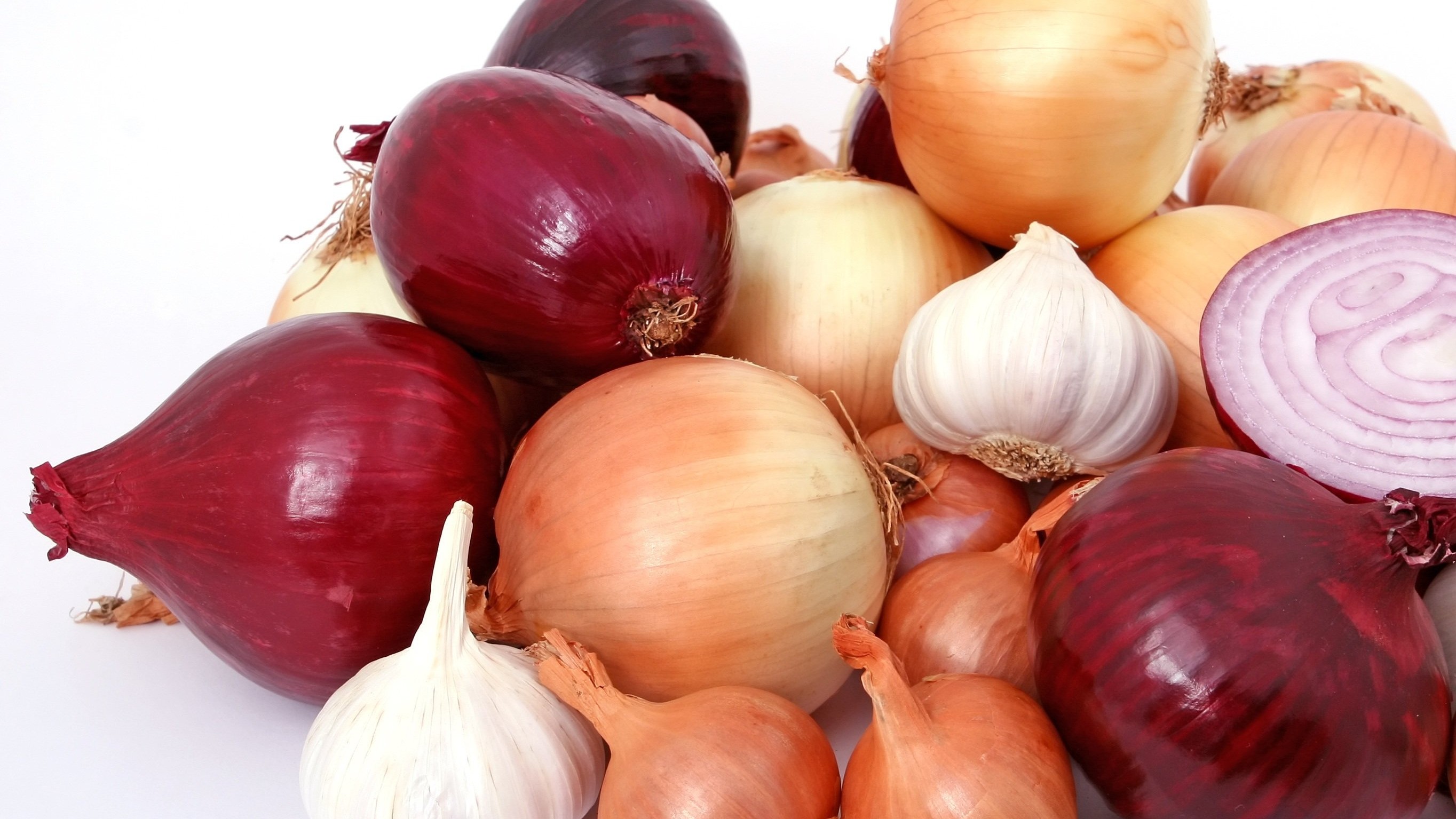
The study investigated the effect of different storage materials on the quality and shelf life of three onion (Allium cepa L.) cultivars—Bichi-red, Geidam-white, and Dan-garko—stored for ninety (90) days under ambient conditions.
The research aimed to determine the most effective local storage material for maintaining bulb quality and reducing postharvest losses.
A Randomized Complete Block Design (RCBD) with three replications was used. The seven storage materials evaluated were False locust pod, Orange peel, Rice husk, Sawdust, River sand, Bare floor, and Basket. Data were collected every ten (10) days on firmness. Results showed that both storage materials and onion cultivars had significant (p < 0.05) effects on firmness.
Progressive changes were observed across the intervals, with more pronounced variations between 10 and 30 days of storage. Among the cultivars, Bichi-red and Dan garko retained the best overall quality, recording the highest mean firmness (5.00) in 2024, while the least of 3.76 was from Geidam-white which deteriorated faster. For storage materials,
bare floor, false locust, basket, saw dust and river sand preserved the bulbs most effectively, exhibiting the highest firmness (4.66) followed by orange peel with 4.44 while the least of 4.33 was obtained from rice husk.
The study concludes that both onion variety and storage material significantly influence postharvest quality and shelf life. Saw dust, false locust and river sand proved to be the most effective and affordable storage medium, especially for the Bichi-red and Dan-garko cultivars, followed by orange peel. The use of these locally available materials is recommended to minimize postharvest losses, maintain bulb quality, and enhance market availability and farmer income.
Quality and firmness of onion: comparison of storage materials
Onions (Allium cepa L.) are an essential and widely cultivated vegetable crop with a rich history deeply entrenched in global culinary traditions and medicinal applications. They hold a unique position as a fundamental ingredient in various cuisines worldwide, enriching dishes with both flavor and nutritional value. The global importance of onions is underscored by the extensive body of different studies addressing various facets of their cultivation, production, and post-harvest handling (Teshika et al., 2018).
Onion (Allium cepa L.), originating in Asia Minor are important vegetables worldwide and is one of the most consumed vegetable crops in Asia and Africa, especially Nigeria (Stan, 2016). The bulb grows underground and is used for energy storage. The interest in onion bulbs worldwide has determined the growers to find new postharvest techniques to extend the storage life of this crop while maintaining their nutritional and organoleptic characteristics (Zudaire et al., 2017).
Onion Production and Challenges in Nigeria
The trend of onion production on a global scale and within Nigeria offers a crucial backdrop to this study. According to the Food and Agriculture Organization (FAO) (2019), there has been a consistent and notable increase in global onion production over the years. Onions are cultivated in diverse climatic conditions and represent a vital crop for numerous countries. However, in Nigeria, while onion production is significant, it grapples with challenges affecting its sustainability.
Research conducted by Awolu (2014) illustrates that onion production in Nigeria experiences fluctuations due to seasonal variations and the impact of post-harvest losses. Studies have indicated a critical concern: post-harvest losses in onion production (Vieira et al., 2022). These losses encompass the deterioration in both the quality and quantity of onions following their harvest. Estimates from the FAO (2011) indicate that post-harvest losses can range from 20% to 50% globally. These losses translate into substantial economic setbacks, as evidenced by studies conducted by Ogunola et al.(2020).
Causes and Impact of Postharvest Losses
Several factors contribute to postharvest losses in onions, as noted
by De Lima et al. (2018). Among the major causes are fungal and bacterial infections, which are pervasive in the absence of adequate storage facilities or when improper storage practices are employed (Hasan et al.,2018). Additionally, mechanical damage incurred during harvesting, packing, and transportation has been identified as a significant contributor to these losses (Saravanan and Pandey, 2017). The severity of post-harvest losses in onions should not be underestimated.
The World Food Programme (WFP) (2015) underscores that these losses lead to decreased yields and increased production costs. They have a direct impact on the income of farmers, thereby perpetuating a cycle of poverty and impeding economic development. Furthermore, these losses directly contribute to food insecurity, a pressing global issue. In a world where millions face food shortages, any reduction in food production becomes a matter of paramount concern.
Storage and Preservation Techniques
Preservation of vegetables is done in order to extend their shelf life by stopping the growth of microorganisms, including a series of processes that inhibit quality deterioration due to enzymatic processes (Maskepatil et al., 2019). Effective storage methods constitute a pivotal element in the reduction of post-harvest losses. Several studies have explored diverse storage materials and technologies. Hasan et al. (2018) suggest that materials such as Prosopis Africana pods powder, sawdust, river sand, rice husk, baskets, and orange peel powder have been investigated for their effectiveness in preserving onion quality. The choice of storage materials significantly influences the maintenance of optimal temperature and humidity conditions, which are critical in mitigating spoilage and sprouting.
Research, such as that conducted by Gol et al. (2020), underscores the importance of embracing improved storage technologies and practices. Adequate management of factors such as humidity, temperature, and proper aeration plays a pivotal role in onion preservation. Maintaining ideal storage conditions can substantially extend the shelf life of onions and reduce losses.
Furthermore, Verma et al. (2019) underscore the importance of making judicious choices when selecting onion cultivars. Onions play an integral role in global agriculture, nutrition, and culinary traditions.
Nevertheless, the high rate of post-harvest losses presents significant threats to food security, economic sustainability, and the livelihoods of farmers.
This study aims to enhance our understanding of how to reduce post-harvest losses of onions by evaluating storage materials, technologies, and cultivar selection, thereby fostering a more secure and sustainable food supply chain. Onion (Allium cepa) production is a crucial component of agricultural activities in Nigeria, contributing significantly to both the national economy and food security (Oladeji, 2018). These losses result from various factors including fungal and bacterial infections (De Lima et al., 2018) and mechanical damage during handling (Saravanan and Pandey, 2017).
In Nigeria, a significant challenge revolves around the inconsistency in onion production caused by seasonal variations and subsequent post-harvest losses (Awolu, 2014). The gravity of this issue becomes apparent when considering its substantial economic ramifications, as outlined
by Ogunola et al. (2020). These consequences encompass reduced yields, elevated production expenses, and a direct negative impact on the income of farmers, thereby fostering poverty within onion-producing communities. Such losses reverberate widely, affecting food security and exacerbating the global predicament of hunger (WFP, 2015). Despite efforts to address postharvest losses, the comprehensive potential of storage materials, technologies, and cultivar selection in mitigating these losses remains largely untapped in the Nigerian context (Oladeji, 2018).
There is a critical necessity to scrutinize and optimize the existing storage materials, technology, and cultivars to ensure their efficient deployment in curtailing post-harvest losses of onions. This involves formulating strategies that guarantee onions are preserved under optimal conditions, thereby prolonging their shelf life and diminishing economic losses for farmers. A thorough investigation is imperative to ascertain how current and potentially enhanced storage materials, technologies, and cultivar selection can be harnessed to alleviate these losses and contribute to a more sustainable and secure food supply chain in the country (Özer and Arın, 2014). This research directly addresses the pressing issue of optimizing post-harvest practices, which, when improved, can greatly benefit local farmers, traders, and consumers.
Promotion of the economic well-being of farmers and merchants
By understanding how different storage conditions affect the longevity and quality of onion bulbs, the study intends to equip farmers with knowledge that can reduce post-harvest losses and enhance the overall productivity of onion cultivation. Beyond the agricultural sphere, the study's findings are poised to impact various dimensions of life in Adamawa State.
The region relies heavily on onion production, making this research essential for enhancing food security. Prolonging the shelf life of onion bulbs can mitigate seasonal shortages and contribute to more consistent food supplies, which are vital for the well-being of the local population. Furthermore, by reducing losses and improving onion quality, the study offers the potential to boost the economic well-being of farmers and traders. It aligns with sustainable agricultural practices by optimizing resource usage and minimizes waste.
This study, by assessing different onion cultivars, provides valuable insights that can assist local farmers in making informed choices about the onion varieties they cultivate.
Overall, this research is not just academically significant but holds practical relevance by benefiting the community, economy, and sustainable agricultural practices in Yobe State. Given these, this study was carried out in Yobe with the following objectives of determining the firmness of onion under different storage methods/conditions.
Sources
Nangere, M & Gungula, D. & Tame, Vadlya & Ahmad, Abubakar (2026). Effect of storage conditions on firmness of Onion Bulb (Allium cepa L) from three Cultivars.
https://www.researchgate.net/profile/Abubakar-Ahmad-16/publication/401926435_Effect_of_storage_conditions_on_firmness_of_Onion_Bulb_Allium_cepa_L_from_three_Cultivars/links/69b3ba87a5bf176ab54f3540/Effect-of-storage-conditions-on-firmness-of-Onion-Bulb-Allium-cepa-L-from-three-Cultivars.pdf
image: Pixabay https://pixabay.com/es/photos/cebollas-ajo-verduras-cebolla-com%c3%ban-1238332/