Services
IBERIAN FOODS | Interview
Jesús Cruz · CEO of Iberian Foods. «The key is not to offer isolated services»
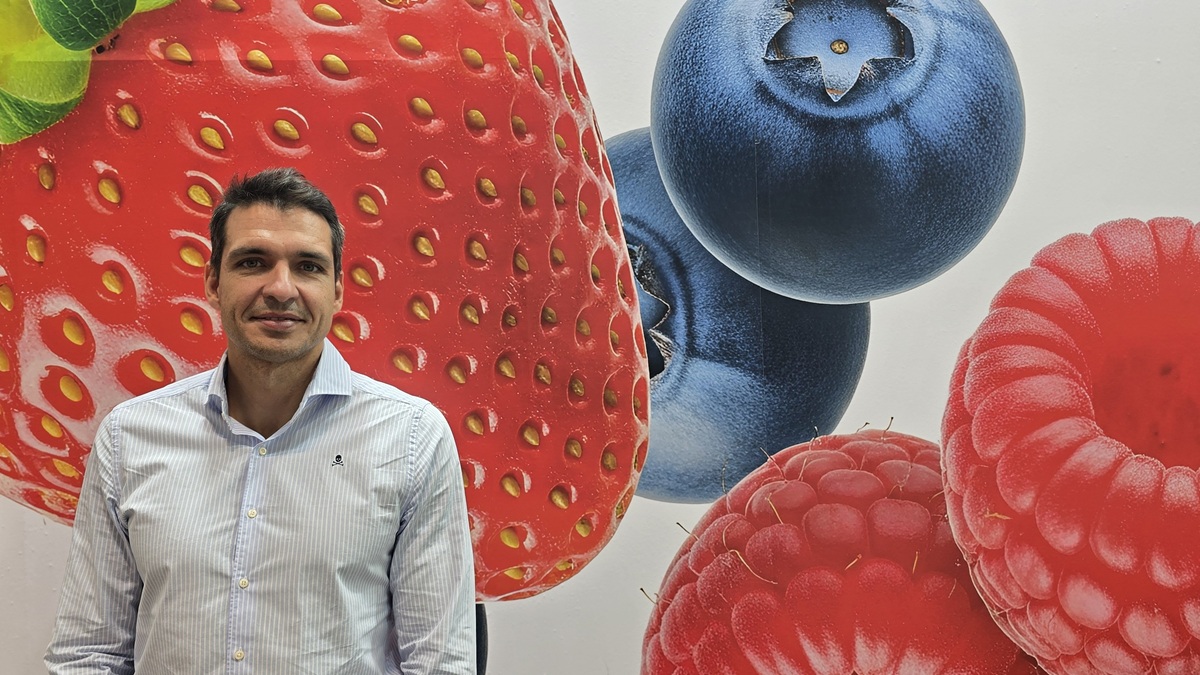
Strategically located in Huelva, Iberian Foods has established itself as a key benchmark in Southern Europe’s fruit and vegetable sector thanks to its 360° industrial and logistics hub model. We sat down with its CEO to discuss the pillars of the company’s growth: the centralization of post-harvest operations, its commitment to IQF freezing, the integration of cutting-edge technology for controlled avocado ripening, and the importance of maintaining absolute commercial independence from growers and distributors.
 Iberian Foods' main facilities in Huelva.
Business activities and model
1. Iberian Foods describes itself as a 360-degree agri-food hub. What are your main business lines and what services do you provide to fruit and vegetable growers, exporters and marketers?
Iberian Foods has a very clear ambition: to become the leading industrial and logistics partner for fruit and vegetable companies operating in Southern Europe. Our model allows growers, exporters and marketers to focus on growing and selling produce, while we take responsibility for a significant part of their post-harvest operations.
At our approximately 30,000 m² facility in Huelva, we bring together receiving, quality control, cold storage, sorting and grading, packing, IQF freezing, avocado ripening, warehousing and order preparation. The key is not to offer isolated services, but to combine them flexibly according to each customer’s programme and needs.
2. Which products do you currently handle, and which account for the largest share of your activity? What growth opportunities do you see in new fruit and vegetable categories?
Blueberries are one of our core products, both fresh and frozen. We also handle strawberries, raspberries and kiwi for IQF processing, grapes for conditioning and packing operations, and we are strongly developing our avocado business, including grading, packing and ripening.
Our strategy is not to add categories indiscriminately, but to leverage shared industrial capabilities. We see opportunities in other berries, citrus fruit and tropical fruit, including mango, provided there is a solid commercial programme and we can add value through quality, productivity and service. Our goal is to diversify activity and reduce seasonality at the plant.
3. What advantages does a centralised, flexible platform in Huelva offer? How far can you tailor product presentation?
For an international exporter, having a single operational point of contact at destination greatly simplifies the supply chain. Rather than coordinating several providers for storage, inspection, conditioning, packing and dispatch, they can centralise these operations on one platform. This reduces handling, response times and complexity, while facilitating traceability. Alongside this integration, we offer specialisation: dedicated teams, technology and product- and process-specific expertise, which are essential when handling delicate, demanding fruit such as blueberries or managing avocado ripening correctly. It is not just about bringing operations together, but executing them to industrial and quality standards tailored to each category.
We can tailor produce to each buyer’s specifications: selection by quality and size, different punnet formats, flow-wrap, heat sealing, bagging, relabelling and order preparation. Flexibility is particularly valuable when retail requirements change or produce needs to be redirected to another market.
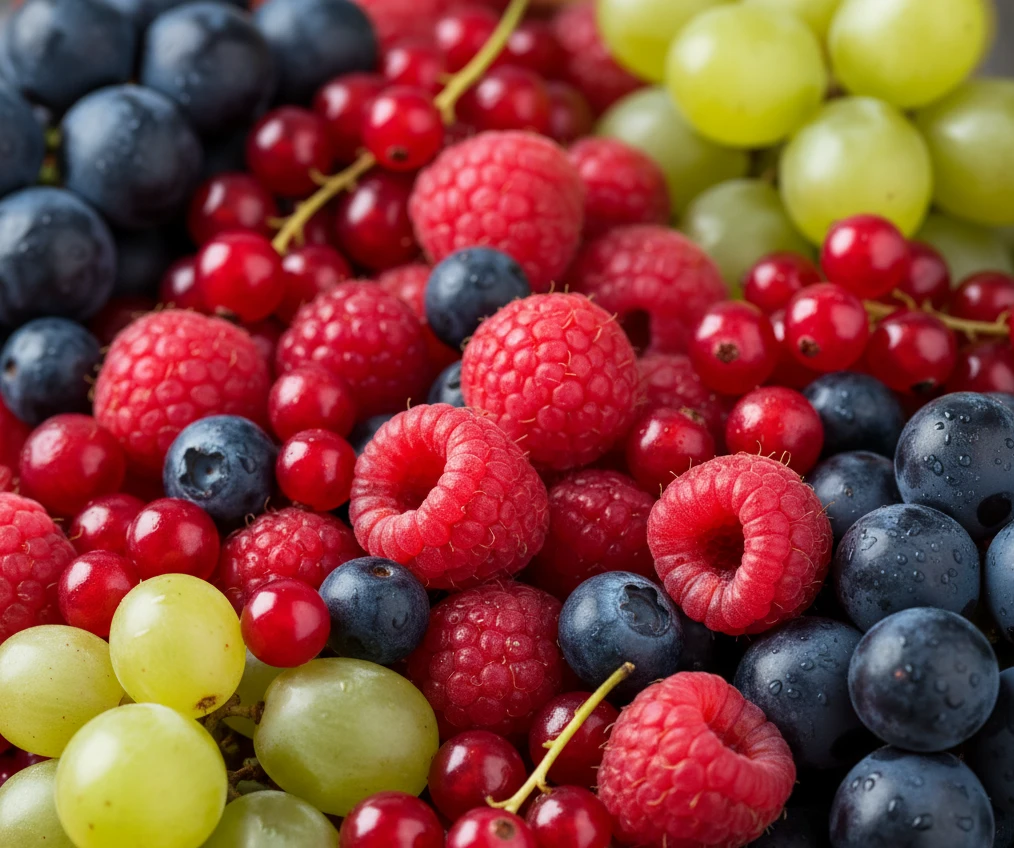 Fresh fruit and berries destined for the European market.
Post-harvest services and product utilisation
4. How do your post-harvest services help reduce waste and optimise shelf life? Do you provide follow-up through to destination and manage incidents?
We have our own quality team, which monitors fruit from receipt through processing. Daily reports and direct communication with customers help them make informed decisions about their lots. These controls, together with appropriate storage and responsiveness, help direct each batch to the most suitable commercial outlet and prevent loss of value.
For blueberries, sorting technology helps match fruit to buyers’ quality specifications, making better use of each lot and reducing rejections. For avocados, controlled ripening supports greater consistency and helps limit losses linked to overripening or uneven ripeness, although results also depend on the fruit’s condition at origin.
We work with customers on traceability and incidents related to our services. Any follow-up after dispatch or inspections at destination is agreed for each programme with the customer and logistics operators.
5. What role does IQF freezing play, and what opportunities does it offer for fruit that does not meet fresh-market specifications?
IQF is a strategic business line because it expands the commercial opportunities for fruit and supports better use of raw materials. Produce that does not meet certain aesthetic or format requirements for the fresh market may still be suitable for freezing, provided it meets the required quality and food safety standards.
We handle different presentations of blueberries, strawberries, raspberries and kiwi. Individual quick freezing helps preserve product characteristics and provides solutions for the food industry and other channels. For our customers, having this alternative within the same platform improves decision-making and can reduce value losses during the season. IQF also gives our own plant greater flexibility: unlike fresh produce, frozen product does not necessarily need to be dispatched on the day it is processed. This allows us to plan production and dispatch more effectively, manage seasonal peaks and balance the utilisation of our industrial resources.
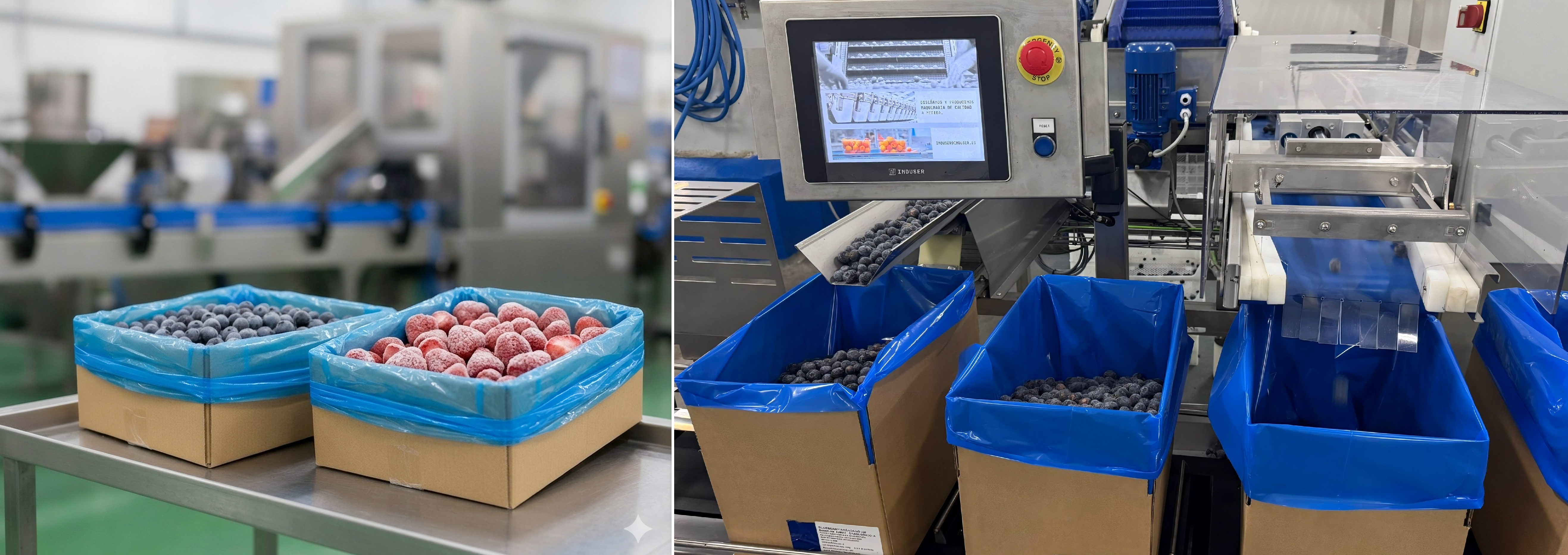 Processing of berries in IQF format for the industrial and frozen product sectors.
Ripening and new technologies
6. At Fruit Attraction you presented your collaboration with Talsa/Onesta Europe and SoftRipe. How does it work, and what does Iberian Foods contribute?
The collaboration aims to integrate sourcing, ripening technology and service to the end customer into a single avocado supply model. Talsa/Onesta contributes its sourcing and commercial expertise, SoftRipe technology enables ripening management, and Iberian Foods handles industrial and logistics execution: receiving, inspection, storage, grading, ripening, packing and order preparation.
The value lies in moving beyond conventional fruit trading towards a more predictable supply programme tailored to each retailer’s specifications. For retailers, consistency at the point of consumption and responsiveness are just as important as product origin.
7. You have invested €4 million in new avocado facilities with three SoftRipe® chambers. What does this mean for your business and what advantages does it offer?
Our investment in avocados represents an important step in diversifying Iberian Foods and expanding our ability to deliver higher-value services. We have three SoftRipe ripening chambers, each with an approximate capacity of 20 tonnes per cycle.
The technology is designed to achieve more uniform, controlled ripening, which is particularly relevant for retailers selling ready-to-eat avocados. Our role is to combine the technological process with appropriate raw-material selection, lot monitoring and quality control.
Our aim is to provide retailers with consistency, less variation between individual fruit and a reliable consumer experience. It is not simply about ripening avocados, but building dependable, repeatable programmes throughout the year.
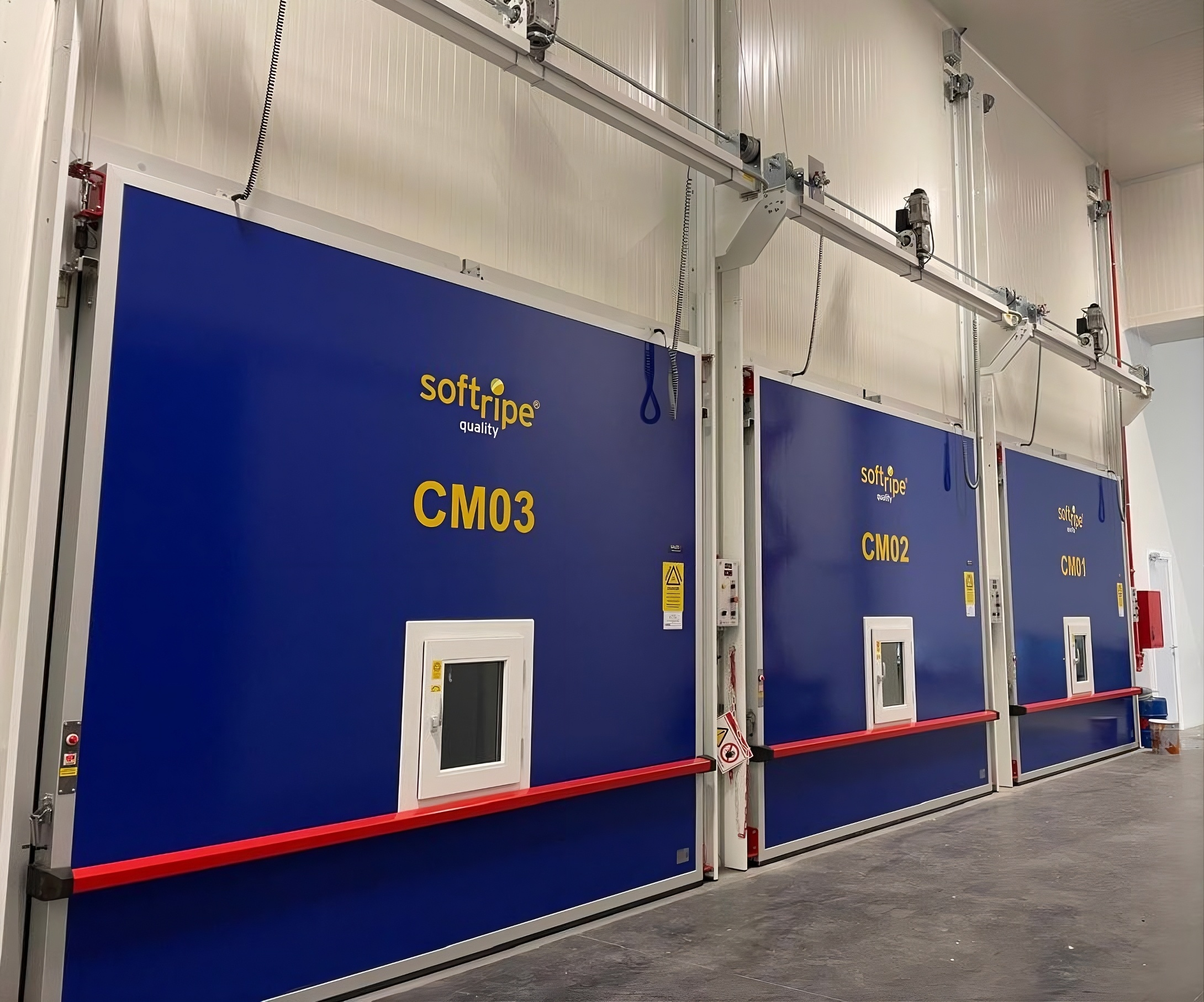 SoftRipe ripening chambers for controlled and uniform treatment of avocados.
Customers and growth prospects
8. How important is your commercial independence, and what type of customers do you want to attract?
Independence is one of the pillars of our model. Iberian Foods primarily provides services to third parties and does not seek to compete with its customers in their markets. This allows us to work with different growers, exporters and marketers, even when they compete with one another, while maintaining confidentiality and operational neutrality.
We want to attract companies seeking long-term relationships and valuing a partner capable of supporting their growth in Europe: major international growers, berry operators, avocado marketers, industrial food companies and retail chains with specific conditioning and service needs. Our priority is recurring programmes with volume, planning and demanding standards.
9. What potential does Huelva have as a European platform? Will you expand cooperation with retailers and your facility’s capabilities?
Huelva enjoys a privileged position thanks to its horticultural specialisation, business ecosystem and connections to import and export flows. We believe it can evolve from a major production region into a post-harvest services and distribution hub for fruit originating in different countries and destined for markets across Europe.
At Iberian Foods, we want to contribute to that evolution. We are strengthening our grading, packing, ripening and cold-storage capabilities, and we see scope to develop increasingly integrated programmes with growers and retail chains.
Our vision is simple: customers should be able to use Iberian Foods as their operational platform in Southern Europe without having to replicate their own infrastructure. In a sense, we aspire to be the equivalent of a major logistics operator specialised in fruit, but with industrial capabilities and deep product expertise.
In a global market where demands from consumers and retail chains continue to escalate, initiatives like Iberian Foods demonstrate that the key to success in modern post-harvest lies in pairing industrial strength with technological flexibility. As Huelva consolidates its position as a strategic logistics hub for Southern Europe, the company moves forward into a future where efficiency, specialization, and operational neutrality will continue to set the benchmark.