News
Advanced anti-browning protection for sliced apples
Utilizing HPMC-based matrices plus mineral salts to inhibit enzymatic degradation. Analyzes gas dynamics and consumer preferences over sixteen days of chilled storage
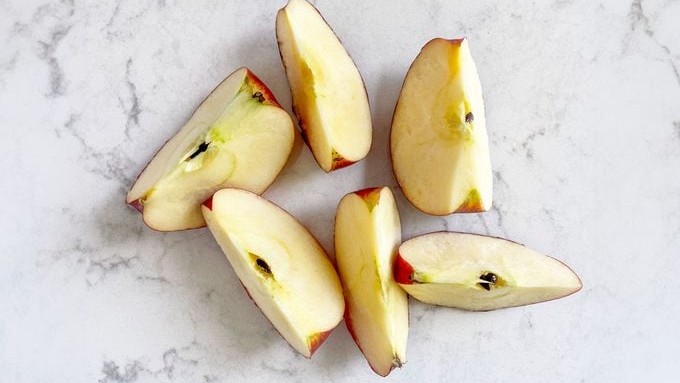
Fresh-cut apples are highly valued for their convenience and nutritional value, yet their marketability is constrained by rapid enzymatic browning, tissue softening and loss of sensory quality during storage.
Conventional preservation methods such as refrigeration and chemical additives offer only partial protection and often conflict with consumer demand for minimally processed, clean-label foods.
Previous studies have evaluated either single or anti-browning agents over short storage periods with limited focus on browning or colour changes.
There is still a significant research gap in the systematic evaluation of composite edible coatings, particularly those based on hydroxypropyl methylcellulose (HPMC) and anti-browning agents, evaluated across a variety of quality indicators over an extended storage period.
The combined effects of edible coatings and anti-browning agents on the quality and shelf life of fresh-cut "Royal Gala" apples over 16 days of refrigeration (5 ± 2 °C) were examined in this study. Themost effective treatment (T8: 1% HPMC + 0.5% CaCl₂ + 1.5% ascorbic acid) significantly reduced browning index and maintained quality attributes during storage.
Aloe vera gel, Tulsi extract, cysteine, CaCl₂ + ascorbic acid and their combinations were the treatments. Browning index (BI), whiteness index (WI), browning potential (BP), headspace gas composition, and sensory attributes were used to evaluate quality.
Among treatments, HPMC + CaCl₂ + ascorbic acid (T8) was most effective, significantly reducing BI to 53.52 ± 4.05 versus 246.3 ± 20.17 in the control, maintaining a WI of 54.04 ± 0.52 compared with 23.15 ± 1.32, reducing mean CO₂ accumulation to 16.7% versus 40.2%, and sustaining higher O₂ levels (−17.8% versus −40.6%).
T8 also achieved the highest sensory ratings for firmness, flavour, and overall acceptability. This study provides a comparative evaluation of composite edible coatings incorporating hydrocolloids and anti-browning agents, highlighting their combined effectiveness in maintaining quality and extending the shelf life of fresh-cut apples.
These results offer a practical, clean-label approach for the fresh-cut fruit industry to mitigate postharvest losses, enhance marketability and promote sustainable food supply chains.
Postharvest Challenges and Enzymatic Browning
Fresh-cut apples (Malus × domestica Borkh.) are among the most popular minimally processed fruits worldwide due to their pleasant flavour, convenience, and high content of dietary fiber, vitamins, and polyphenols.
But as soon as they are cut, apples experience physiological and biochemical changes that make them less appealing to consumers and less marketable. The primary issue is enzymatic browning, which is mostly caused by enzymes such as polyphenol oxidase (PPO) and peroxidase (POD). When these enzymes are exposed to oxygen, they oxidize phenolic compounds.
During enzymatic browning, the oxidation of phenolic compounds leads to the generation of reactive oxygen species and free radicals, which further accelerate pigment formation and quality deterioration. Browning reduces consumer interest by altering the product's flavour, aroma and nutritional content.
Furthermore, during storage, fresh-cut apples may become softer, lose moisture, become contaminated by microorganisms and undergo changes in gas composition. All of these factors may reduce the apples' shelf life.
Sustainable Preservation and Edible Coatings
In order to address these challenges, researchers and industry participants have investigated a variety of postharvest techniques, most commonly using conventional preservation techniques such as refrigeration and chemical preservatives to slow downspoiling, but these techniques are frequently ineffective.
As consumers seek out less processed and safe food products, interest in sustainable options has increased, especially in the form of edible coatings and natural anti-browning agents, such as calcium salts and ascorbic acid, which help prevent oxidation, stabilize cell membranes, and lower enzymatic activity.
Edible coatings form semi-permeable barriers that can contain antioxidants or antimicrobials, slow respiration, limit oxygen diffusion and minimise water loss.
Research Gaps in Composite Systems
The efficacy of these treatments, both separately and in combination, has been validated by numerous studies. For example, chitosan-ascorbic acid coatings or carboxymethyl cellulose with calcium chloride can stop fresh-cut apples from browning and keep them firm for 14 days.
According to Kumar et al. (2018), coatings made of polysaccharides and enhanced with organic acids can also preserve color and lower enzymatic activity.
Although these findings are promising, the majority of research has a very narrow focus. They frequently look at just one treatment or a limited number of quality attributes, like enzymatic activity or color.
Additionally, the majority of studies have examined comparatively brief storage times, typically less than two weeks.
This draws attention to a significant research gap regarding the methodical assessment of approaches that incorporate both edible coatings and anti-browning agents.
In this study, fresh-cut apples that have been stored for a long period of time are the subject of thorough quality evaluations.
Although hydroxypropyl methylcellulose (HPMC) coatings have good film-forming and barrier qualities, little is known about them.
Furthermore, it is uncommon to examine quality indicators such as headspace gas composition, whiteness index, and overall acceptability in addition to conventional browning evaluations.
Study Objectives and Innovation
The aim of this study was to examine the effects of edible coatings and anti-browning agents on the quality and shelf life of fresh-cut apples stored for 16 days.
This research extends existing knowledge by assessing multi-component coating systems using comprehensive indicators, such as headspace gas composition, whiteness index, and overall acceptability, alongside traditional browning evaluations.
The study offers an effective strategy for preserving minimally processed fruits and provides insights to improve the market appeal and sustainability of the fresh-cut apple industry.
Sources
Dubey, Aastha, and Uzma Manzoor “Postharvest Application of Anti-Browning Agents and Edible Coatings for Shelf-Life Extension and Quality Maintenance of Fresh-Cut Apples”.Journal of Advances in Biology & Biotechnology 29
https://journaljabb.com/index.php/JABB/article/view/3812/10188
https://doi.org/10.9734/jabb/2026/v29i43812.