.jpg)

AgroFresh
Phytosanitaries
AgroFresh consultant Óscar Salgado calls for the implementation of new postharvest techniques to protect table grape crops
In August, South Africa hosted the first South African Table Grape Conference, a key forum for addressing the future of the table grape sector. During his presentation, Óscar Salgado, international technical consultant at AgroFresh, stated that the industry’s current transformation presents a great opportunity to rethink our approach to grape post-harvest management
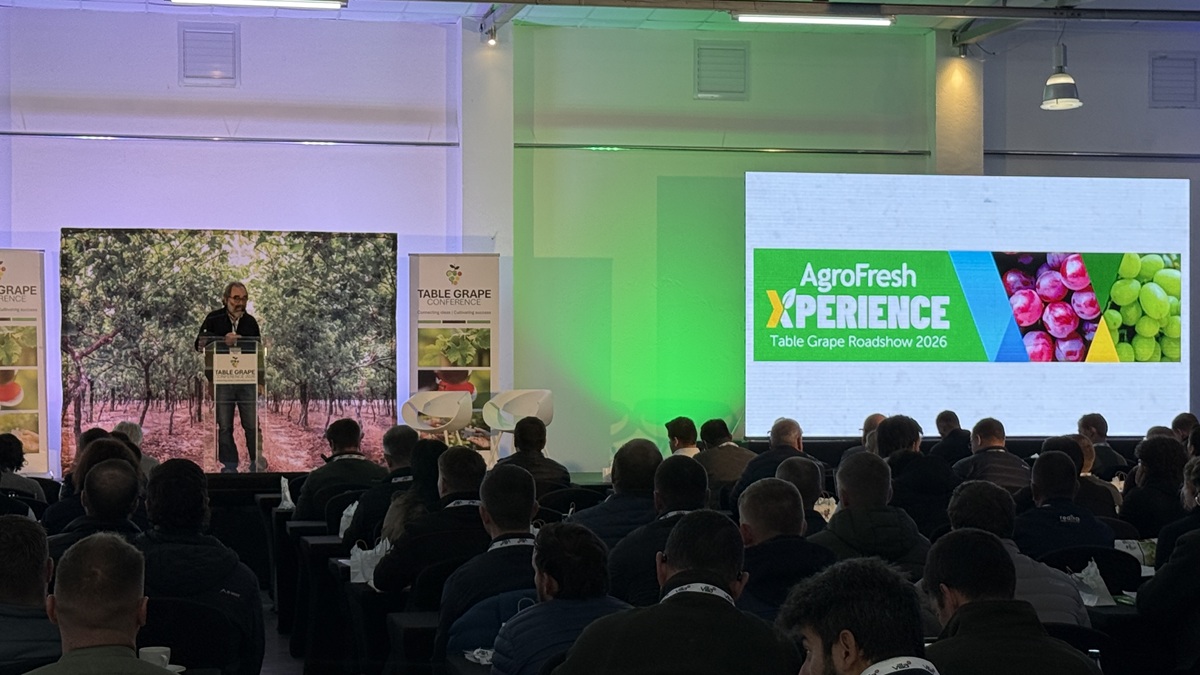
The South African Table Grape Industry (SATI), in collaboration with the South African Society for Enology & Viticulture (SASEV), has organized the South African Table Grape Conference 2026 in the city of Franschhoek to analyze the industry’s current state. The conference had a strong technical and scientific focus, where growers, exporters, suppliers and other stakeholders were able to discuss new approaches to drive progress across the value chain.
With a strong scientific foundation and commitment to innovation, multinational company AgroFresh took part in the forum represented by Óscar Salgado, the company's international technical consultant, who shed light on the methods and tools that table grape growers can implement in their harvests.
Essential tools for maintaining table grape quality
In his presentation, ‘What’s in the Postharvest Toolbox? Essential Tools for Maintaining Table Grape Condition’, Salgado stated:
“The industry continues to grow and is going through an important transformation. This is an opportunity to rethink how we approach postharvest management, evaluate the tools available and identify practices that can deliver stronger outcomes.”
The expert therefore urged the table grape industry to rethink existing practices, assess how they are being implemented, and critically evaluate delivery outcomes. This is particularly important in a context marked by extreme weather events, where high temperatures and torrential rainfall exacerbate food waste and make it more difficult to maintain product quality.
South Africa, a key player in the fruit industry
The AgroFresh consultant also highlighted South Africa's role in global fruit production. The country has become one of the world's leading fruit-producing powers, with table grapes, wine grapes and citrus playing an essential role in European Union imports.
In this regard, Salgado noted:
“South Africa is a well-established player with a long history of fruit production. Today, there is a strong focus on improving postharvest practices so that fruit can become more resilient and maintain its condition throughout the supply chain.”
AgroFresh is contributing to the advancement of postharvest techniques by supporting growers and packers in their shared goal of preserving fruit quality and reducing crop losses. These solutions help improve logistical efficiency, maintain the fruit's commercial properties for longer, and ultimately increase the value of production, contributing to a more efficient and sustainable table grape industry.
News of AgroFresh
AgroFresh