News
FRUTIC 2026, an update on innovation for the global fresh produce industry
Manuela Zude, ATB, summarizes the contents of the FRUTIC Science Symposium to be held at Fruit Logistica, Friday, 6 February 2026 in Berlin, focused on the future of innovation in horticulture
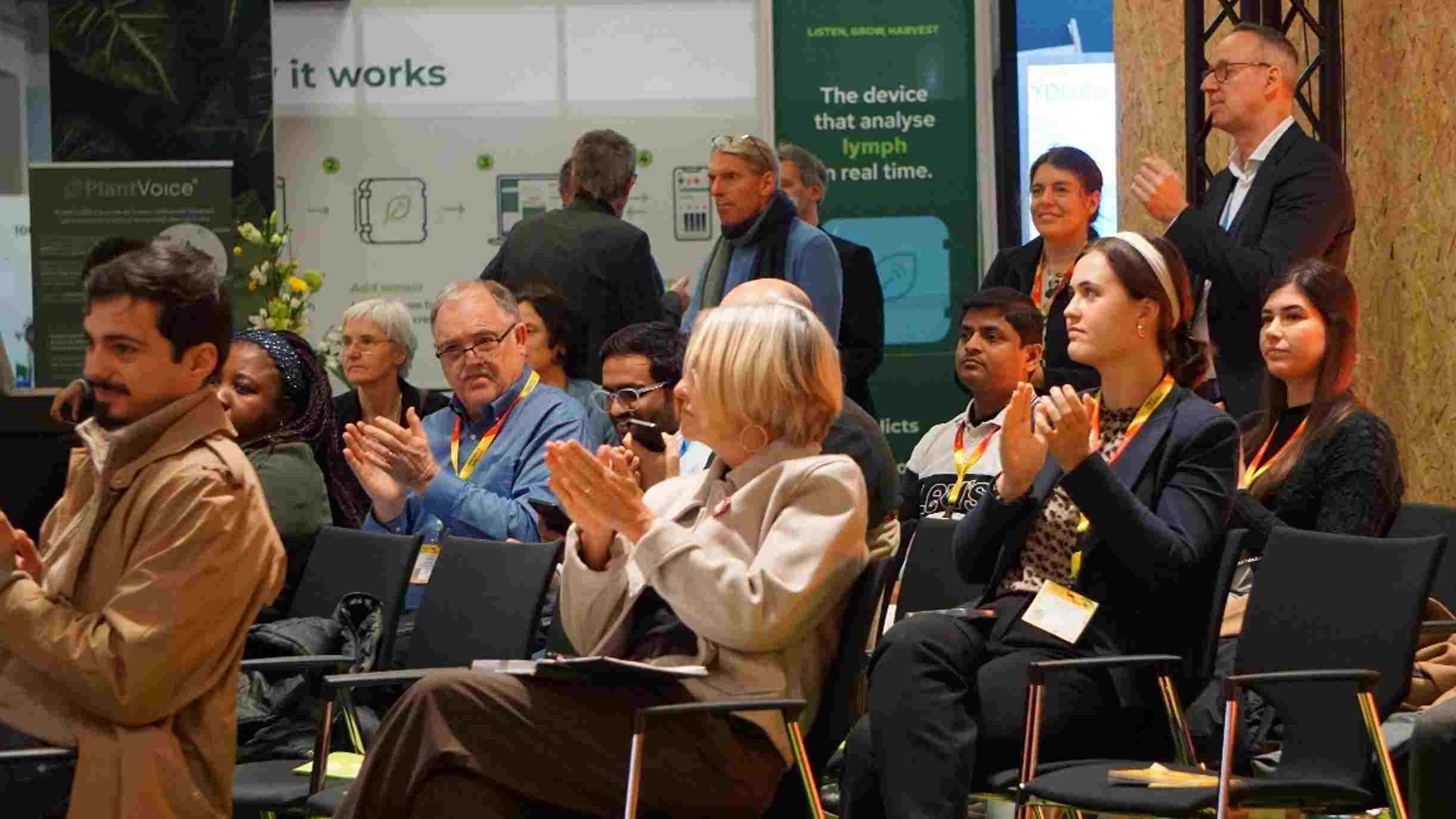
The FRUTIC Science Symposium will serve as a pivotal bridge connecting cutting-edge academic research with the practical needs of the global fresh produce industry at the prestigious Fruit Logistica event.
With a long-standing tradition of fostering international exchange, its primary goal will be to accelerate the translation of scientific advancements into tangible solutions for the entire value chain.
The symposium will address a broad spectrum of critical topics, including advanced sensor technologies for pre- and postharvest monitoring, the integration of artificial intelligence and robotics in orchard management, innovative strategies for optimizing irrigation and storage, and the development of non-destructive quality prediction models.
This collaborative platform will aim to drive innovation that enhances crop resilience, improves resource efficiency, reduces postharvest losses, and ultimately delivers higher-quality produce to consumers worldwide.
Alliance for Fruit Growing, Viticulture and Vegetable Cultivation activities
The initial session will outline the present activities of the Alliance for Fruit Growing, Viticulture and Vegetable Cultivation.
The session will highlight innovations from pre-harvest management to postharvest storage, emphasizing the role of advanced sensing and AI.
Henryk Flachowsky presents the use of novel sensor-based systems, such as bud dendrometers and transpiration sensors, for phenotyping fruit trees. This technology enables precise monitoring of flower bud development during drought stress.
Addressing the shortage of skilled labor, Frederik Kurz will introduce the "AI pruning" project. This system leverages artificial intelligence to analyze 3D models of trees generated from videos, providing customized pruning recommendations to guide workers and ensure proper tree management.
Transitioning to postharvest care, Angelo Zanella details the benefits of Dynamic Controlled Atmosphere (DCA) storage, particularly the DCA-CF method. By using chlorophyll fluorescence to actively monitor fruit stress, this technique can lower oxygen levels to the minimum tolerated threshold, effectively extending shelf life and maintaining apple quality without chemical residues.
Finally, Nico Tapia Zapata’s research explores the implementation of highly innovative close-range remote sensing, capturing 3D geometric and temperature data, which are critical for analysing the growing degree days in vegetables. His presentation will demonstrate how ambient and actual tomato fruit temperatures during cultivation directly influence the development and subsequent shelf life of tomatoes.
A major focus of the symposium will be the application of hyperspectral and multispectral imaging for non-destructive quality assessment and early disease detection.
George Manganaris will discuss the dual-use potential of agrivoltaics, examining how combining photovoltaic systems and netting affects the yield, quality, and secondary metabolism of raspberries grown under Mediterranean heat stress conditions.
Atsushi Hashimoto will present a comprehensive approach to monitoring citrus growth using multispectral and color imaging. His work demonstrates the ability to quantitatively measure sugar, acid, and elemental contents in fruit and leaves without destructive sampling, moving from experimental to data-driven cultivation.
Addressing postharvest losses, Norhashila Hashim will showcase the integration of hyperspectral imaging with machine learning algorithms. Her research demonstrates high accuracy in the early, asymptomatic detection of mango anthracnose, a critical step for timely disease management.
Similarly, Jose Blasco will present the successful use of hyperspectral imaging combined with regression models like Lasso Regression to predict the Brix content of loquats at harvest, providing a robust tool for real-time quality control.
Synergies between plant-based sensing, modeling, and decision-support tools
The FruitCREWS session will be dedicated to advancing smart irrigation practices, exploring the synergy between plant-based sensing, modeling, and decision-support tools.
Pasquale Losciale will open the session by outlining the synergistic work of the FruitCREWS COST Action, highlighting the complexity of interpreting physiological variables to determine a tree's water status versus its functionality.
Martin Mészáros emphasizes the practical aspects of irrigation scheduling, moving beyond the question of when to irrigate to focus on the crucial determination of how much water to apply for maximum efficiency.
Kathy Steppe will present a compelling case for integrating real-time sensor data with mechanistic plant models. This approach helps to interpret complex signals like sap flow and stem diameter variations, enabling growers to define and achieve optimal irrigation strategies tailored to specific goals.
Concluding the session, Alon Ben-Gal discusses the development and adoption of decision-support tools (DSTs). He will share findings that identify promising DSTs while also revealing significant barriers to their practical implementation by growers.
Automation and postharvest technologies
The final session will cover automation and postharvest technologies, from in-field robotics to sophisticated storage solutions.
Ehsani Reza will introduce an autonomous robotic platform designed for precise, leaf-level sensing in orchards. Integrating a robotic arm with a vision-guided system on a mobile base, the platform enables to autonomously identify, grasp, and analyze individual leaves, paving the way for scalable in-field phenotyping.
Amnon Lichter will present three versatile applications of ethanol for extending the storage life of fruits. These methods—ranging from direct disinfection for grapes to inducing anaerobic stress in peaches—offer natural and effective tools to mitigate postharvest disorders.
Angelos Deltsidis focuses on using NIR spectroscopy for the non-destructive classification of peach maturity at harvest, linking these classifications to the development of chilling injury during cold storage to optimize harvest timing.
Finally, Tuany Hoffmann will unveil the "SensorTwin," a multi-parameter sensor node designed to revolutionize apple cold storage by capturing real-time data on the in-bin microclimate, facilitating predictive models and resource-efficient storage optimization.
Poster session
The poster session captures pitches, broading the scope of innovation, presenting a wide array of research from digital process monitoring to climate-resilient cultivation strategies.
Several short pitch talks will highlight advancements in digital sensing and automation, including the use of 3D point cloud imaging to track quality changes during fruit drying, a stereo vision-based system for variable-rate spraying, and cost-effective UAV platforms with hyperspectral and thermal sensors for precision viticulture.
Digital modeling will be another key theme, with studies developing dynamic structural models to optimize the design of narrow-row apple orchards and adapting the APSIM model to simulate the complex phenology of kiwifruit.
Resource efficiency will be addressed through research on how rootstock choice impacts water consumption in sweet cherries and innovative concepts for smarter cold storage management by aligning energy use with dynamic electricity pricing.
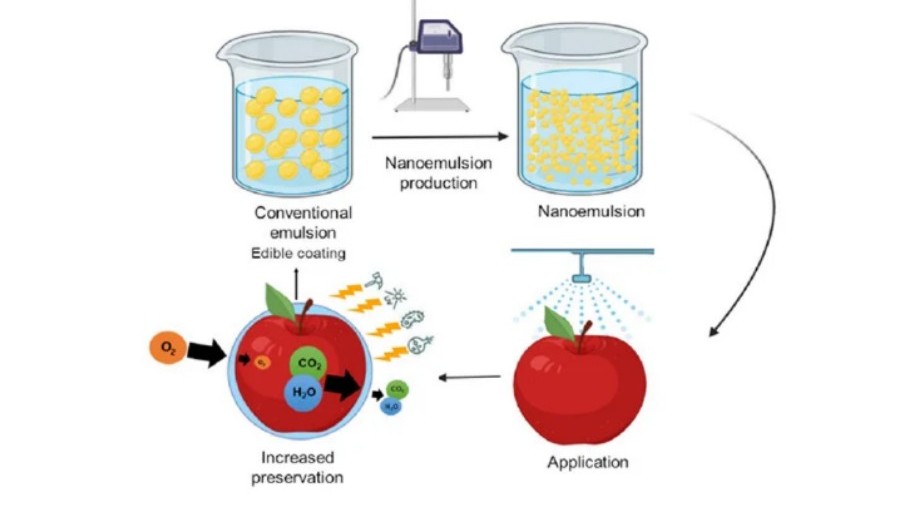
Finally, novel approaches to crop protection and quality preservation are explored, including the use of natural elicitors to mitigate frost damage in apricots and the application of sustainable coatings like cactus pear mucilage to extend the shelf life of plums.