News
Managing Botrytis risk in strawberries under rainy and windy conditions
Rapid cooling, humidity control and carbon dioxide atmospheres show the strongest evidence for reducing Botrytis after rainfall events
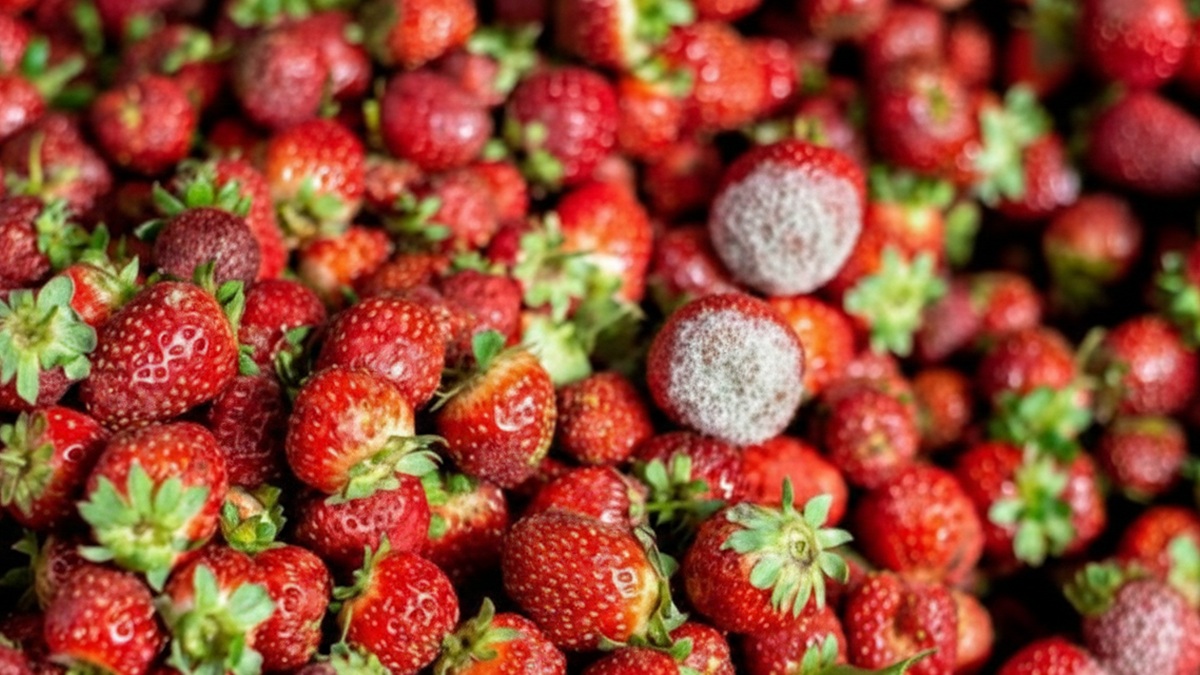
Recent rainfall and wind episodes in the past weeks have increased the arrival of wet and more vulnerable fruit, raising the risk of Botrytis cinerea from the point of reception. When harvesting is interrupted and later resumed, packinghouses receive lots with greater pulp temperature variability, more micro-wounds and more free water, three direct triggers of grey mould during storage and transport. The encouraging aspect is that scientific evidence identifies process measures available within the European Union that reduce incidence and help maintain firmness and shelf life without relying on unverified postharvest chemical treatments (Nunes et al., 2005).
Weather context and operational implications
Official alerts from the Spanish State Meteorological Agency allow production areas to quantify when rainfall thresholds and wind gusts complicate harvesting and damage protective structures.
From a postharvest perspective, the recurring effect is not only field losses but increased time from harvest to precooling, as arrivals become concentrated and packinghouses operate with reduced margins. Under these conditions, the technical priority is to minimise warm holding time and turn reception into a rapid decision point based on pulp temperature and sanitary condition.
Scientific evidence on effective and applicable measures in the European Union
Immediate cooling and measurable decay reduction
The study by Nunes and colleagues compared immediate cooling with delayed cooling initiation using inoculated and non-inoculated fruit, measuring incidence and severity of Botrytis and Rhizopus after storage and a simulated market period (Nunes et al., 2005).
In the experimental design, fruit was held at 35°C for one or six hours before cooling. Forced-air cooling to 5°C was then applied within one hour, followed by storage at 2°C for seven days and one day at 20°C. In non-inoculated fruit, immediate cooling reduced average decay incidence by approximately 25 percent and severity by about 24 percent compared with a six-hour delay before cooling (Nunes et al., 2005).
In inoculated fruit, the specific benefit against Botrytis was smaller but consistent, with roughly a 5 percent reduction in incidence and a 22 percent reduction in severity. The study highlights that early thermal control is necessary, though not always sufficient under high infection pressure.
Carbon dioxide atmospheres and quality constraints
Agar, Streif and Bangerth evaluated strawberries and blackberries under high carbon dioxide and low oxygen atmospheres, monitoring ascorbic acid, dehydroascorbic acid and total vitamin C during storage (Agar et al., 1995).
Their key finding was that high carbon dioxide accelerated the degradation of ascorbic acid into dehydroascorbic acid and subsequent compounds, whereas low oxygen atmospheres reduced overall vitamin C degradation. This underscores the need to design atmospheres that suppress pathogens without compromising sensitive quality attributes (Agar et al., 1995).
For strawberries, the practical implication is clear: carbon dioxide may help reduce deterioration and slow Botrytis, but the effective range depends on cultivar, maturity stage and logistical duration and must be validated to avoid quality defects.
Ultraviolet C as a physical intervention
Baka and collaborators applied ultraviolet C as a photonic treatment and evaluated Botrytis decay control at different storage temperatures (Baka et al., 1999).
The study reported decay control at both temperatures tested and an extension of shelf life by several days, supporting its use as a physical intervention provided dose, uniformity and compatibility with commercial quality are properly controlled (Baka et al., 1999).
Ozone in storage rooms
Nadas, Olmo and García evaluated cold storage under ozone-enriched atmospheres in naturally infected ‘Camarosa’ strawberries, measuring decay incidence, weight loss and softening (Nadas et al., 2003).
The article describes reduced decay incidence, lower weight loss and reduced softening, but also reports reversible sensory alterations under certain conditions. This requires strict control of concentration, exposure time and occupational safety (Nadas et al., 2003).
In commercial operations, ozone is best interpreted as a storage room air hygiene and environmental load reduction tool rather than a substitute for sanitary sorting and a stable cold chain.

Practical implications for reception, sorting, precooling, humidity and dispatch
At reception, rapid decision-making should be based on pulp temperature and surface moisture, separating wet lots and prioritising their entry into precooling to shorten the fungal growth window. During sorting, stricter rejection of fruit with wind damage, calyx abrasions and exudates is advisable, as these units often initiate decay that later spreads within the package. In precooling, completion should be defined by homogeneous pulp temperature throughout the pallet, since warm cores act as incubators and trigger internal condensation once the lot enters cold storage.
In storage rooms, relative humidity should remain high to limit dehydration, but avoiding free water is critical. Dew point control and disciplined door management directly reduce Botrytis risk. At dispatch, minimising temperature fluctuations and dock time is technically essential, as thermal oscillations condense moisture inside packages and can accelerate fungal colonisation within hours.
Operationally, weekly review of decay claims linked to simple records of arrival pulp temperature, time to precooling and evidence of condensation helps explain most failures following rainfall events.
Sources
Agar, I. T., Streif, J., & Bangerth, F. (1995). Effect of high CO2 and controlled atmosphere concentrations on the ascorbic acid, dehydroascorbic acid and total vitamin C content of berry fruits. Acta Horticulturae, 398, 93–100. https://doi.org/10.17660/ActaHortic.1995.398.9
Baka, M., Mercier, J., Corcuff, R., Castaigne, F., & Arul, J. (1999). Photochemical treatment to improve storability of fresh strawberries. Journal of Food Science, 64(6).
Li, H., et al. (2022). High CO2 reduces spoilage caused by Botrytis cinerea in strawberry without impairing fruit quality. Frontiers in Plant Science, 13, 842317. https://doi.org/10.3389/fpls.2022.842317
Nadas, A., Olmo, M., & García, J. M. (2003). Growth of Botrytis cinerea and strawberry quality in ozone enriched atmospheres. Journal of Food Science, 68(5), 1798–1802. https://doi.org/10.1111/j.1365-2621.2003.tb12332.x
Nunes, M. C. N., Morais, A. M. M. B., Brecht, J. K., Sargent, S. A., & Bartz, J. A. (2005). Prompt cooling reduces incidence and severity of decay caused by Botrytis cinerea and Rhizopus stolonifer in strawberry. HortTechnology, 15(1), 153–156. https://doi.org/10.21273/HORTTECH.15.1.0153
Spanish State Meteorological Agency. (2026). Weather alerts. https://www.aemet.es
El Pinar. (n.d.). Arabella variety information. https://elpinar.eu
Reuters. (2026, February 17). Spain approves aid for storm battered regions. Reuters.