Met Mann
Conditioning
Innovation for sustainable industrial climate control
High-efficiency evaporative systems reducing energy consumption and eliminating polluting emissions in post-harvest operations
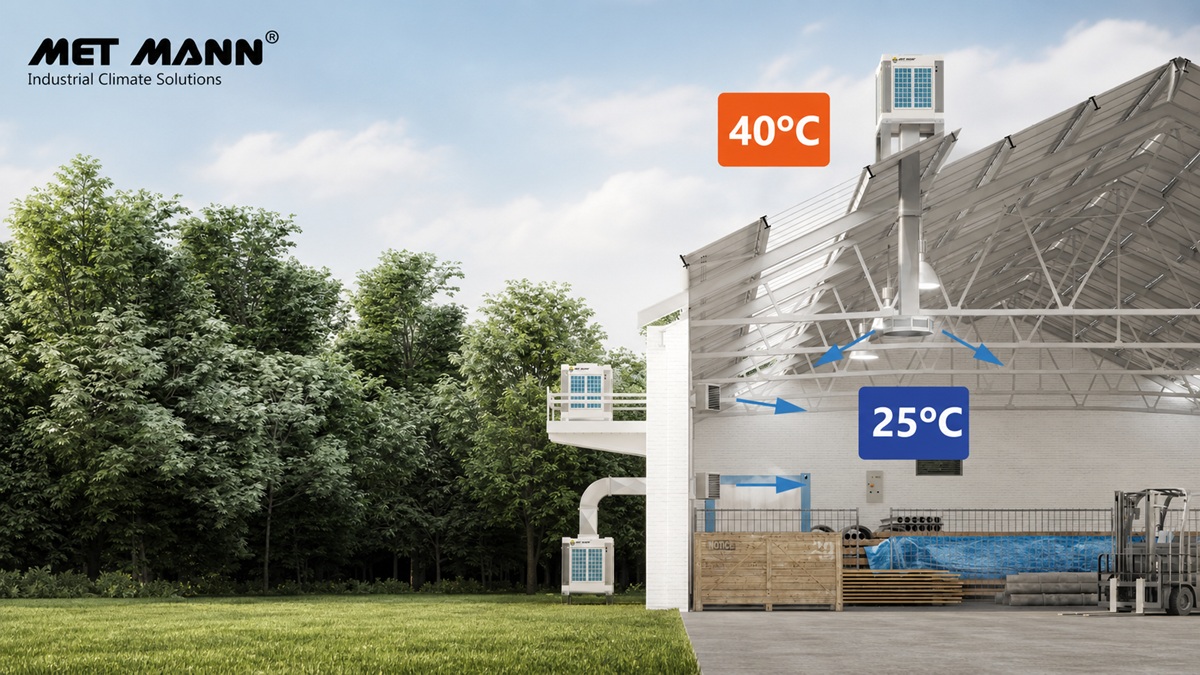
Industrial decarbonization requires eco-friendly alternatives to traditional refrigeration. MET MANN leads this shift through evaporative cooling systems that completely dispense with greenhouse gases, significantly reducing the carbon footprint in industrial buildings and horticultural warehouses.
Evaporative cooling: natural cooling technology
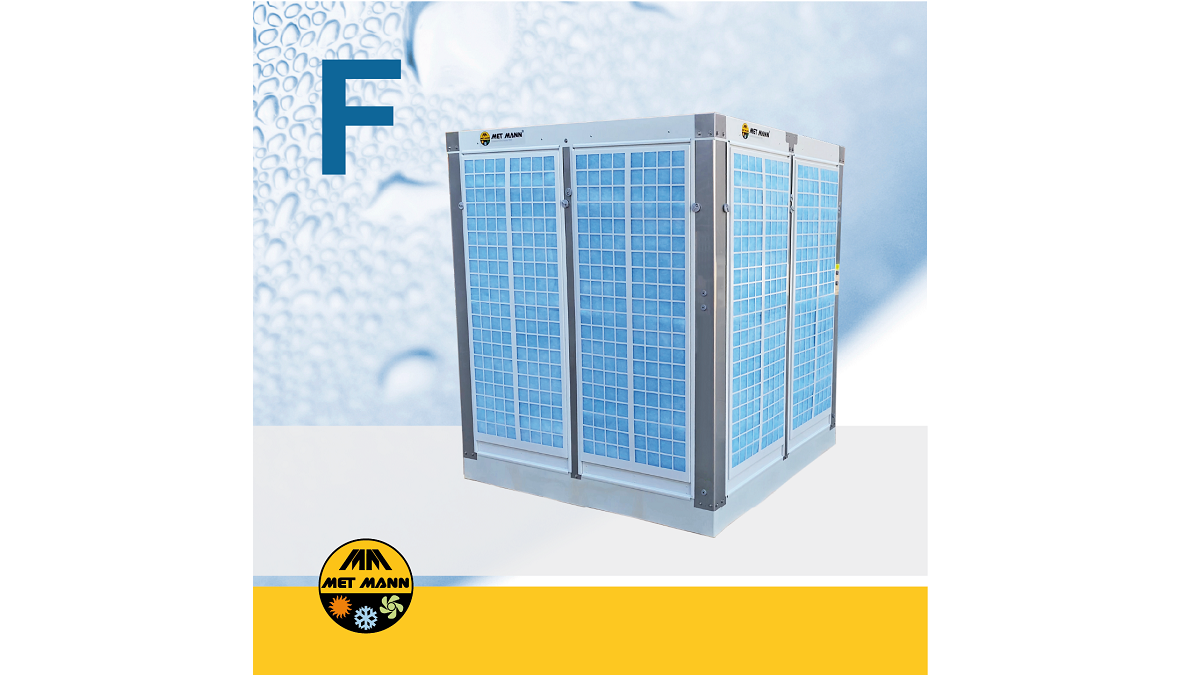
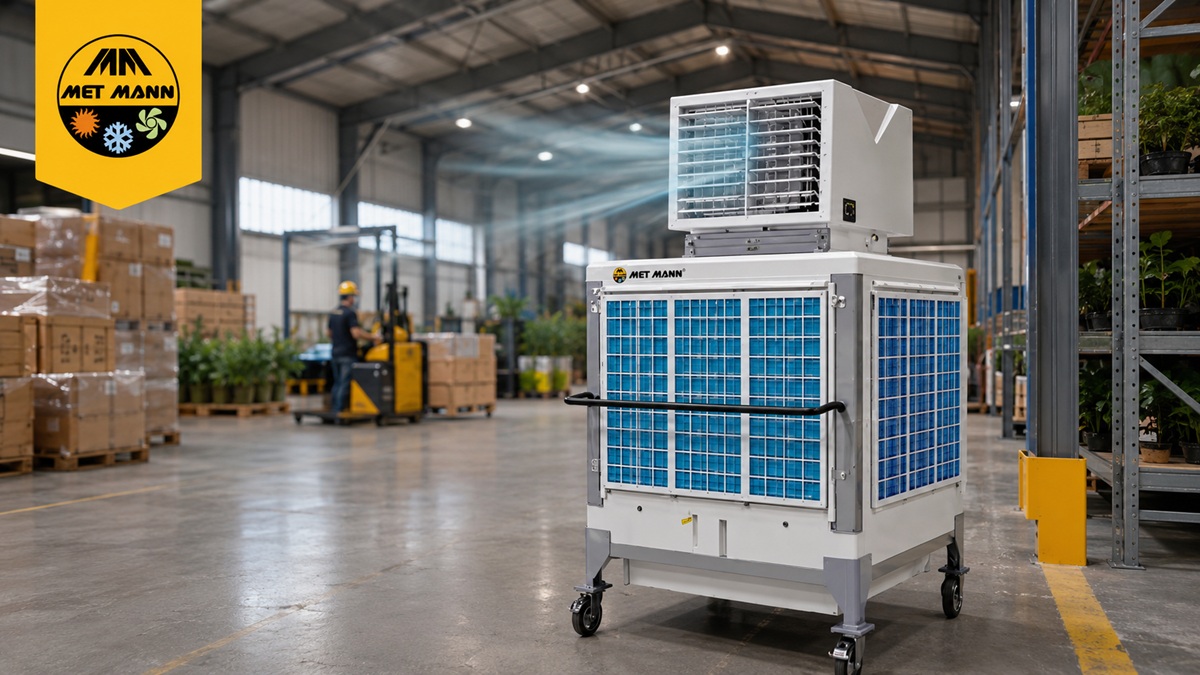
These systems operate on the physical principle of water evaporation to cool the air ecologically. Outdoor air passes through moistened cooling pads, immediately reducing its temperature before being supplied into the facility.
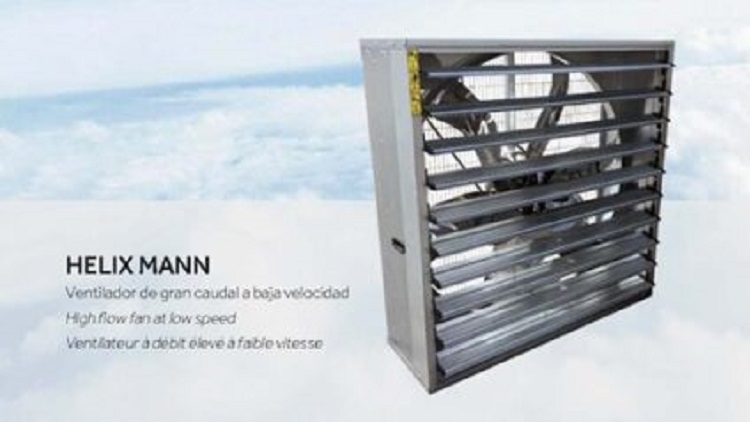
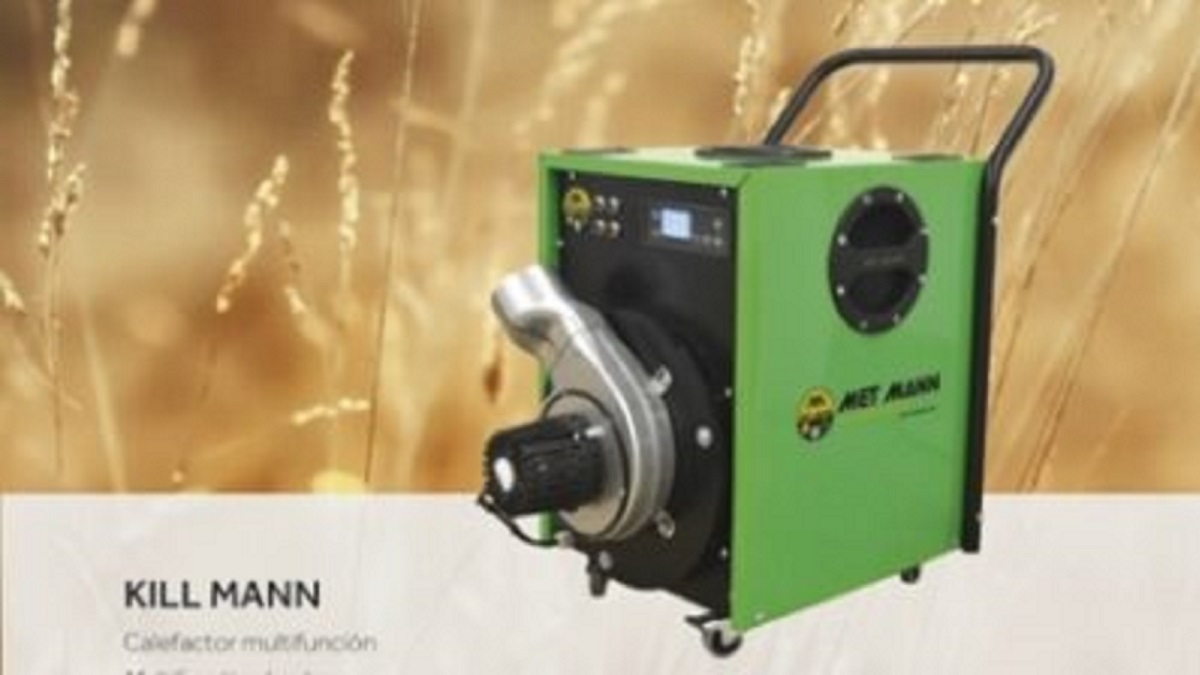
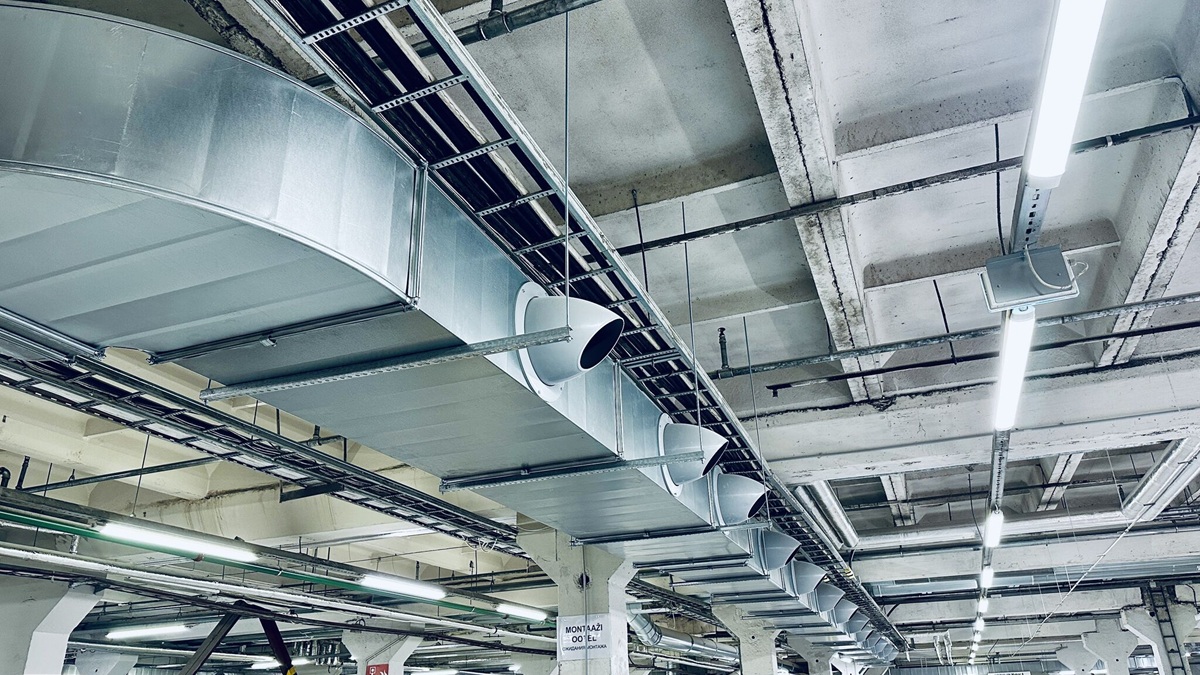
The technology provides a constant fresh and renewed environment, making it ideal for large areas where conventional air conditioning would be inefficient. Furthermore, the company complements these solutions with high-flow industrial extractors, such as the HELIX BOX MANN and HELIX MANN models, designed to optimize air renewal and exhaust accumulated heat or moisture from roofs and walls.
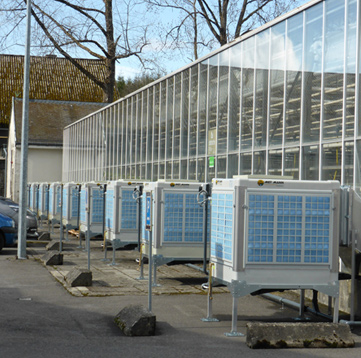
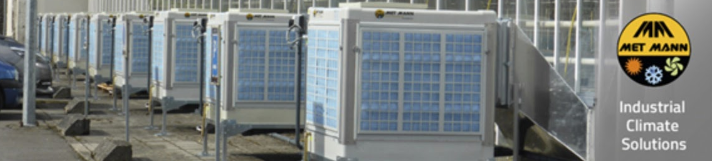
Industrial evaporative coolers
Sustainable commitment
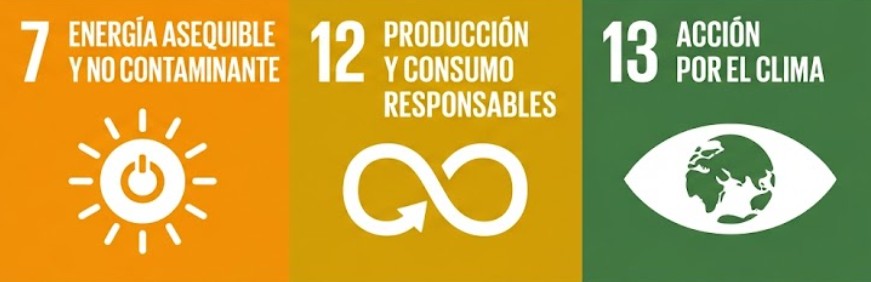
MET MANN's innovation strategy is designed to mitigate the environmental impact of the industry by integrating efficient solutions that address global climate challenges. This commitment is reflected in its direct contribution to the following Sustainable Development Goals (SDGs):
- SDG 7 (Affordable and Clean Energy): Achieving 80% savings in electricity consumption compared to traditional systems.
- SDG 12 (Responsible Consumption and Production): Promoting clean industrial processes that utilize water as a natural coolant.
- SDG 13 (Climate Action): Eliminating the use of greenhouse gases and reducing CO2 emissions associated with climate control.
News of Met Mann
Met Mann