News
Planting data and artificial illumination influence chrysanthemum postharvest
The findings by M. Chuber et al. findings highlight the effect of pre-harvest environmental conditions on the postharvest life of cut chrysanthemum stems, as well as the potential role of physiological and biochemical markers in improving stress tolerance and vase life
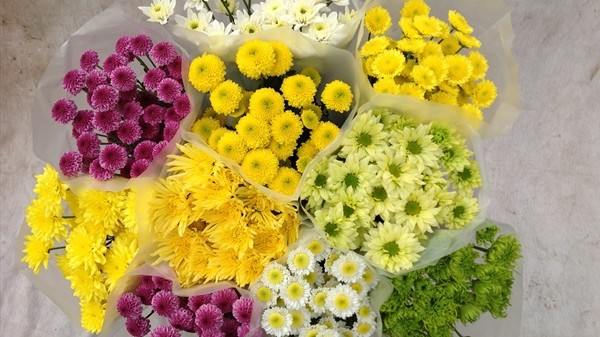
Chrysanthemum is renowned in the floriculture market for its cut flowers, with commercial value highly dependent on its postharvest longevity. Both pre- and postharvest factors influence the postharvest life of oranamental crops.
This study evaluated the postharvest performance of five spray chrysanthemum varieties grown under three treatments:
- early planting in March (P1),
- early planting along artificial SDs (P2) in March and
- normal planting (P3) in August.
The analyzed results for postharvest quality parameters were found to be significantly affected with planting treatments.
Results
Yellow Delight flowered earlier under manipulated photoperiod and temperature (P1 and P2) but exhibited shorter vase life (took 16.83 and 13.00 days for complete floret senescence and 12.00 and 11.00 days for 50% leaf yellowing under P1 and P2, respectively).
In contrast, Punjab Shyamli, despite delayed flowering under P1 and P2 synchronized blooming with P3 and had the longest vase life (took 20.50 and 21.83 days for complete floret senescence and 16.67 and 17.83 days for 50% leaf yellowing under P1 and P2, respectively).
The planting treatments P1 and P2 also had a negative impact on postharvest quality due to the suboptimal temperatures experienced during both the growth stage and the postharvest life.
Pearson Correlation analysis revealed strong direct correlations between RWC, MSI, TSS, and TSP. RWC was inversely related to peroxidase (POD) activity, implying that lower water retentions and membrane stability under stress were associated with increased POD activity, which served to scavenge stress.
Proline and (POD) activity were found to be negatively correlated with senescence, indicating that they may play a role in stress tolerance.
These findings highlighted the effect of pre-harvest environmental conditions on the postharvest life of cut chrysanthemum stems, as well as the potential role of physiological and biochemical markers in improving stress tolerance and vase life of cut chrysanthemum flowers.
Sources
Chumber M., S. Jhanji, M. Bala and M. Dhingra, 2025. Evaluation of postharvest keeping quality of chrysanthemum varieties in response to pre-harvest photoperiodic manipulation .
J. Appl. Hortic., 27(4): 684-688.
DOI: https://doi.org/10.37855/jah.2025.v27i04.120
Picture, Sierraflowerfinder, Spray Assorted Local Chrysanthemums
Related news