Services
Competitiveness, water, and generational renewal as the keys to SIVAL 2026
Albert Richard identified the DNA of the exhibition as its professional nature and summarized three priorities for the sector: competitiveness and added value, water management in the face of climate change, and generational renewal
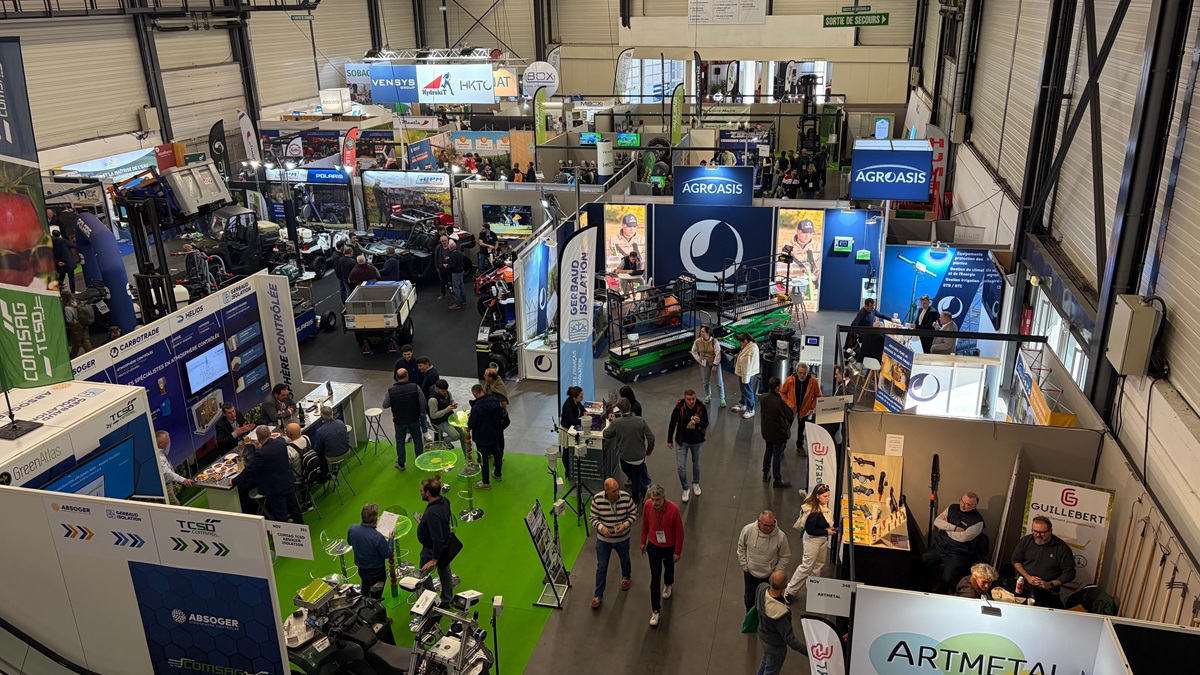
SIVAL 2026 was held from January 13 to 15 at the Parc des Expositions d'Angers (France), bringing together companies, technical centers, and professionals specializing in “specialized plant production” to discuss innovation, knowledge transfer, and industry issues. At a time marked by pressure on costs, resource availability, and technical adaptation, the show once again served as a showcase for solutions and a space to compare trends that are already impacting farms.
Interview with Albert Richard, president of SIVAL
Albert Richard defined SIVAL's DNA as a professional trade show created by professionals for professionals. Based on this idea, he framed the edition around three priorities that, according to his vision as a producer, are shaping the present and the short term for the sector. Competitiveness and added value, climate adaptation with water as the focus, and generational renewal.
Competitiveness and added value
Richard linked competitiveness to very “workshop” issues. Improving processes, gaining efficiency, and finding tools that allow results to be sustained with tighter margins. In this context, he positioned innovation not as a broad concept, but as applicable solutions. He included operational adjustments and changes in plant material to help produce and market with greater stability. Along the same lines, he mentioned interest in digital tools, including artificial intelligence, as support for optimizing processes and decision-making, with a practical logic.
Climate adaptation and water management
The second block focused on adaptation. Not “changing the climate,” but working to respond to cycles that are increasingly difficult to manage. Within this challenge, water emerged as a determining factor. The message focused on how to make better use of water when it is available, how to plan its management, and how to reduce the risk of losses when water irregularity becomes a constraint on production and quality.
Generational change and farm transfer
The third pillar was the transfer of farms and businesses. Richard advocated strengthening the sector's appeal and its links with universities and specialized schools to facilitate the incorporation of young people capable of taking on farms and managing increasingly complex campaigns. Technification, team organization, technical and market demands.
News and highlights of the edition: variety, content, and digital tools
Beyond the main messages, the conversation with Richard also drew on examples seen at the show. One of the most talked-about was varietal innovation, with the Kiara pear as a notable reference in this edition. It was presented as a new variety in the Williams segment and its commercial potential was highlighted due to its organoleptic profile and storage performance. In this context, the new variety was compared to Pink Lady. A varietal innovation can become a market benchmark over time, beyond the initial launch.
In terms of content and transfer, the show focused on extending the technical scope beyond the three days of the fair with the launch of the podcast “Les Racines du Futur®,” developed in collaboration with CTIFL, with the idea of maintaining an informative and technical thread throughout the year.
And in terms of applied digitalization, SIVAL included the Agreen Défi, a hackathon focused on artificial intelligence aimed at proposing concrete responses to problems in the agricultural field. It connected with the idea repeated throughout the fair that AI is beginning to find practical uses beyond the concept.
Visit to the CTIFL experimental center in Carquefou
In parallel with the fair, our team visited the CTIFL experimental center in Carquefou. The CTIFL (Centre technique interprofessionnel des fruits et légumes) is a French technical organization dedicated to applied research, experimentation, and the transfer of solutions for the fruit and vegetable chain, from production and preservation to aspects related to quality, technologies, and practices.
During the visit, lines of work focused on very specific problems in the sector were presented. In greenhouses, trials related to energy efficiency and climate management were presented, with strategies based on screens and condition control to reduce consumption without penalizing production. In crop protection, approaches to reduce inputs were discussed, with strategies based on companion plants, natural compounds, and biological control through conservation. The use of controlled trials and laboratory screening methodologies to filter solutions before validating them in conditions closer to the field was also explained, with the aim of shortening response times. This content will be developed in a specific article focusing on the visit to Carquefou and the lines of work seen at the center.