
StepacPPC
Packaging
How functional packaging can help the foodservice sector meet food waste reduction targets
Functional packaging is emerging as an effective tool to reduce fresh produce waste in the foodservice sector. Modified atmosphere and humidity solutions help extend shelf life, optimise transport and improve operational efficiency
The UN's Sustainable Development Goal 12.3 calls for halving global food waste by 2030. For the foodservice sector, achieving this goal is more than a sustainability commitment; it is a business necessity. Every kilogram of fresh produce lost during transport, storage or distribution not only represents wasted resources and unnecessary greenhouse gas emissions, it also means reduced profitability.
Fresh fruits and vegetables are among the most perishable foods in the supply chain. Maintaining freshness and quality from harvest to the commercial kitchen requires careful management of temperature, humidity and respiration. Functional packaging, particularly modified atmosphere and modified humidity (MA/MH) packaging, has become an important tool for helping growers, packers and distributors reduce waste while delivering consistently high-quality produce.
Food Waste Reduction and the Environment
Food waste accounts for approximately 35% of global food production and is responsible for around 8% of global greenhouse gas emissions, making it a major contributor to climate change. At a time when flexible plastic packaging is being demonized, it is important to recognize that functional packaging can be part of the solution. Well-designed MA/MH packaging can significantly reduce spoilage of fresh produce throughout the supply chain, thereby reducing food waste and its associated environmental impact. The environmental benefits of preventing food waste far outweigh the environmental footprint of the plastic packaging.
End of Ice Age for Broccoli
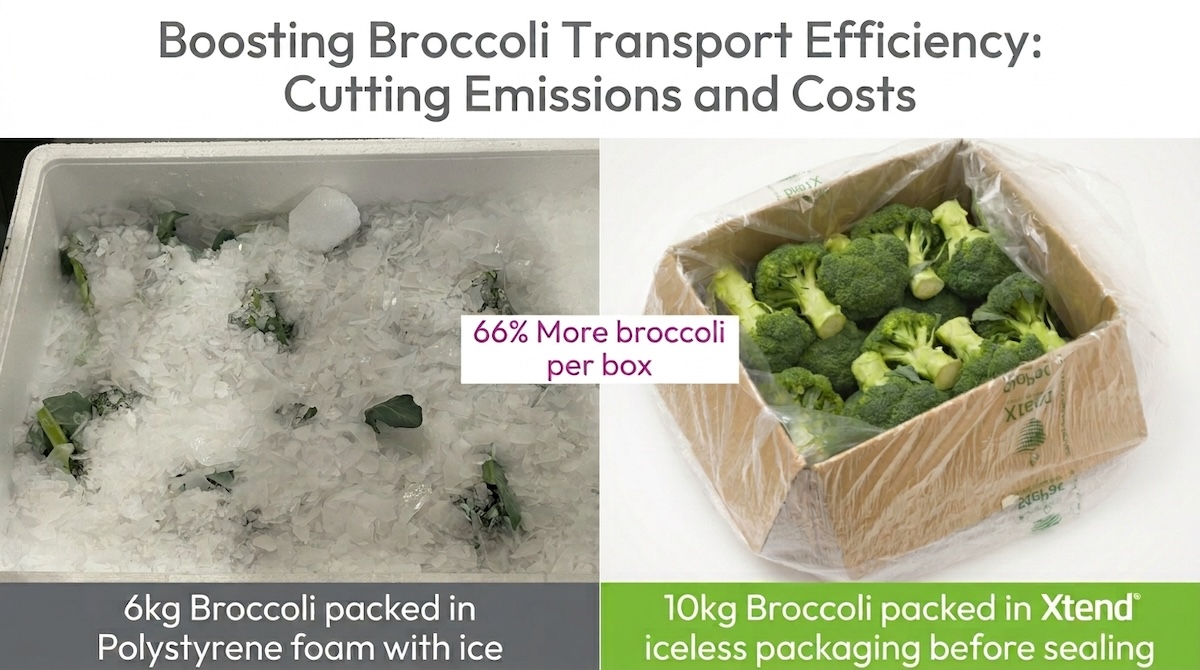
A good example is broccoli. Traditionally, broccoli destined for foodservice is often transported in polystyrene boxes or waxed cartons packed with ice. While effective at cooling the product, the ice occupies valuable cargo space, adds significant weight, increases freight costs per unit weight of broccoli, and creates contamination risks associated with melting ice.
Working with JA Otofuke, one of Japan's largest broccoli producers, StePacPPC replaced conventional iced packaging with Xtend® iceless MA/MH bulk packaging. Eliminating the ice increased the amount of broccoli that could be shipped in each container by approximately 66%, increasing pack weight from 6 kg to 10 kg per box.
According to Akio Yamagishi, Manager of the Fruit and Vegetable Sales Department at JA Otofuke, transport and handling costs were reduced by more than 30%.
In addition, research conducted with Wageningen Food & Biobased Research demonstrated that replacing iced packaging with Xtend® iceless packaging on a shipment of broccoli from Salinas Valley to New York reduced the carbon footprint of the delivered broccoli by approximately 40% in comparison to broccoli packed in ice.
Automation in the Foodservice Sector
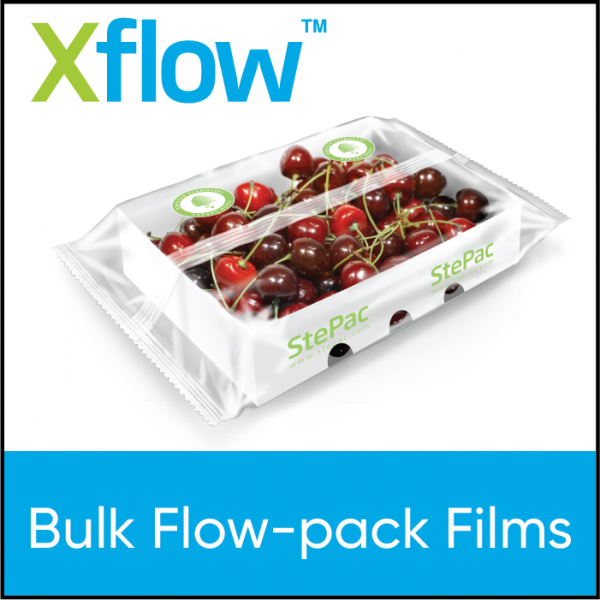
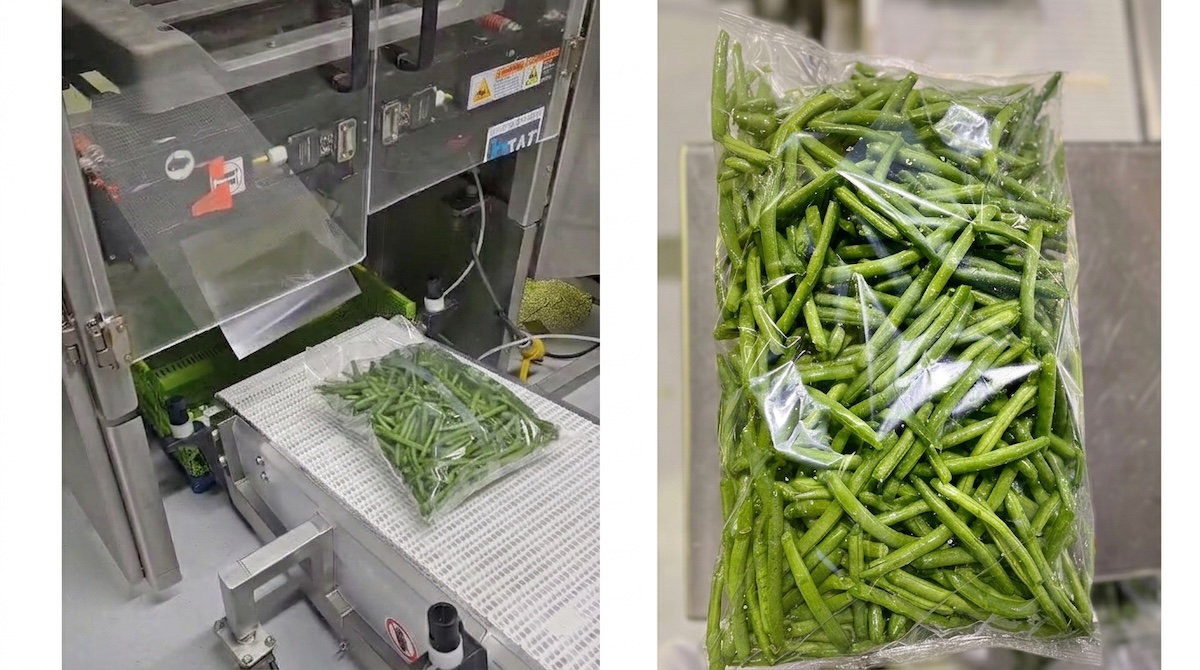
Automation is becoming equally important in the foodservice sector as growers and packers respond to increasing labor shortages and rising operating costs. StePacPPC's Xflow™ roll-stock films have been developed specifically for high-speed horizontal and vertical form-fill-seal (HFFS and VFFS) systems, replacing preformed bulk packaging while reducing packaging material usage by up to 40%.
PEA King Produce experienced these benefits firsthand when introducing Xflow™ films for packing 5lb green beans for the foodservice sector.
According to Operations Manager Miguel Ibarra, the company achieved faster sealing speeds than with previous films that were used, reduced packaging scrap by approximately 5%, and extended product shelf life by around 10%, helping deliver higher quality produce while reducing waste.
Customized Solutions
Functional packaging is not a one-size-fits-all solution. Different produce items have unique respiration rates, moisture requirements and sensitivities, requiring packaging to be carefully matched to each produce type and its intended supply chain.
Whether using Xtend® bulk packaging for manual packing or Xflow™ films on automated packaging lines, tailored MA/MH packaging enables foodservice suppliers to reduce waste and, with it, reduce greenhouse gas emissions.
As the foodservice industry works towards achieving the UN Sustainability Development Goal, reducing food waste will require innovation throughout the supply chain. Functional MA/MH packaging is proving to be one of the simplest and most effective technologies available, helping businesses improve sustainability while simultaneously strengthening operational performance and profitability.
Next Steps
If you supply the foodservice sector and want to know what this could look like for your own produce and operation, talk to a StePacPPC specialist. We will assess your produce, supply chain, and operational requirements, then recommend a packaging solution tailored to your needs.
News of StepacPPC

StepacPPC