
Wyma Solutions
Processing
The Judgement Is Moving: Why Packhouse Automation Isn't a Headcount Story
Labour shortages are pushing processors toward automation, but the real shift isn't fewer people, it's a different kind of work. This article looks at where judgement is moving on the line, and how Frederick Hiam cut its trimming team from 20 to 2 while doubling throughput
Automation Isn't Removing People From the Packhouse. It's Redefining What They Do, Wyma Solutions.
Labour is the constraint every processor is planning around. Across the world, the same pressures show up on every site visit: ageing inspection teams, rising wage costs, and a shrinking pool of people willing to do repetitive, physically demanding work under food-safety pressure. The instinct is to treat automation as a headcount problem, fewer people, lower cost. That framing undersells what's actually happening on well-designed lines, and it can lead to the wrong investment decisions.
The more accurate description is that automation is moving the judgement point. Tasks that used to depend on a person watching every item are being replaced by systems that make that judgement continuously, and the person's role shifts to supervising the decision rather than making it item by item.
Where the judgement used to sit
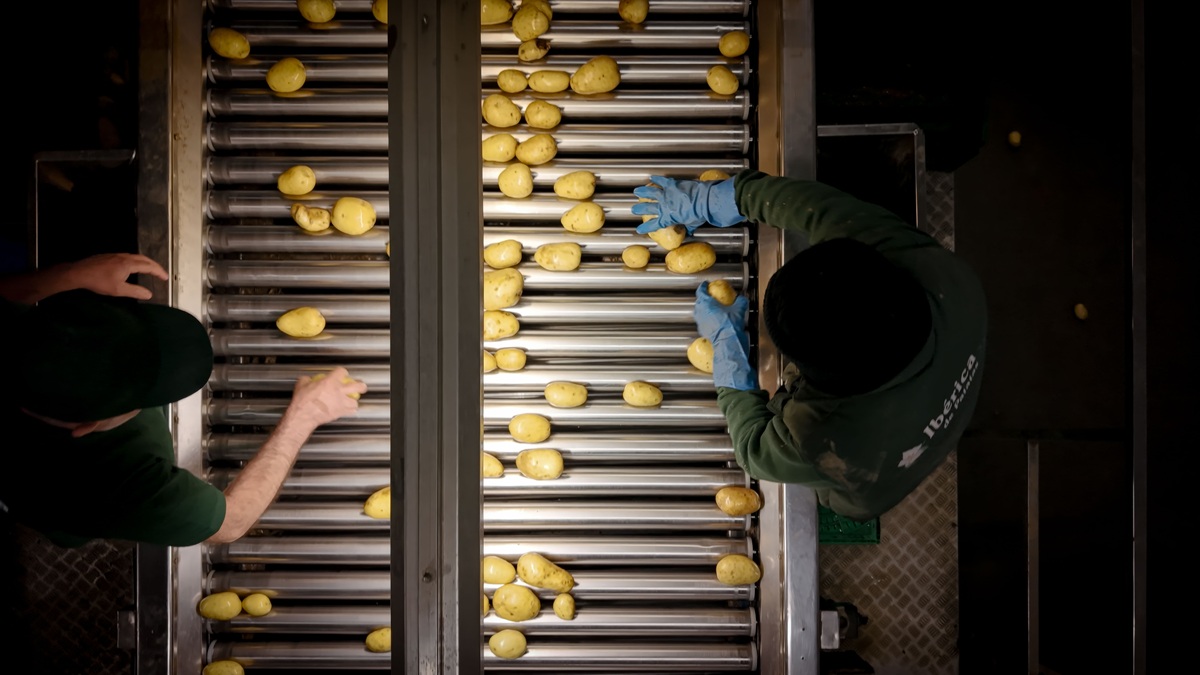
On a conventional line, produce quality is decided at the inspection table. Wyma's Roller Inspection Table and Belt Inspection Conveyor were built for exactly this: rollers rotate produce past an operator so defects, foreign material and off-spec pieces are visible from every angle, with blue PVC surfaces chosen specifically for colour contrast. That equipment isn't going anywhere, manual inspection is still the right tool in a great many operations. But it depends entirely on sustained human attention, shift after shift, and attention is precisely the resource that's getting harder to secure.
Where the judgement moves
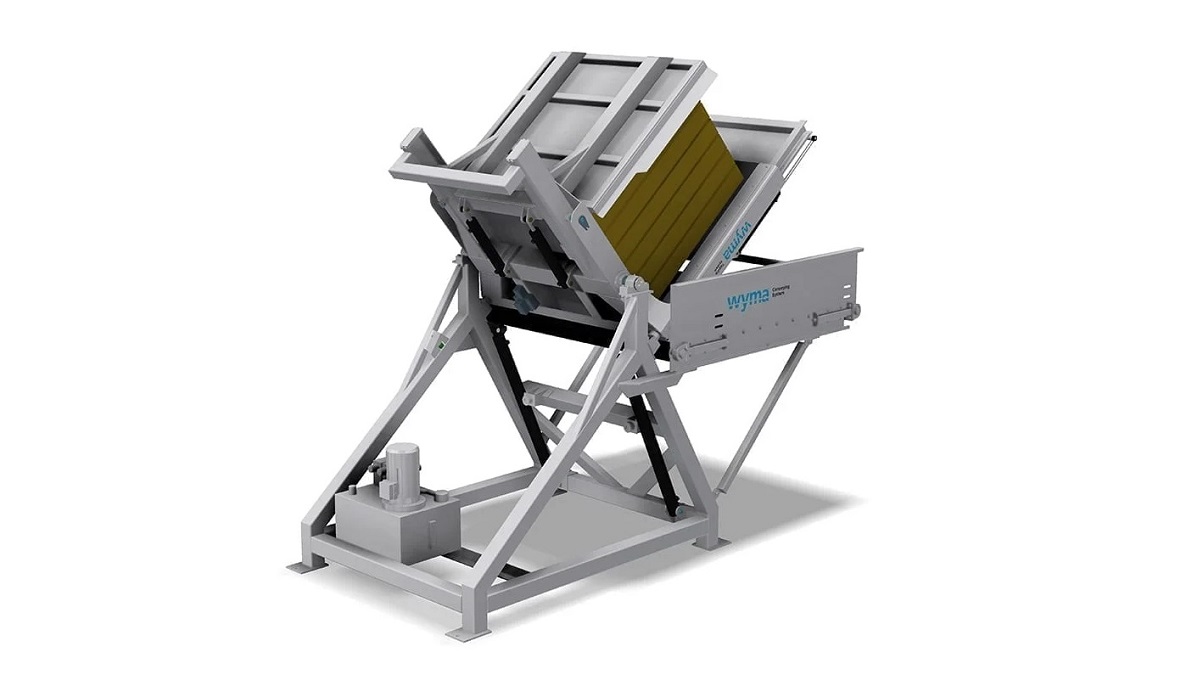
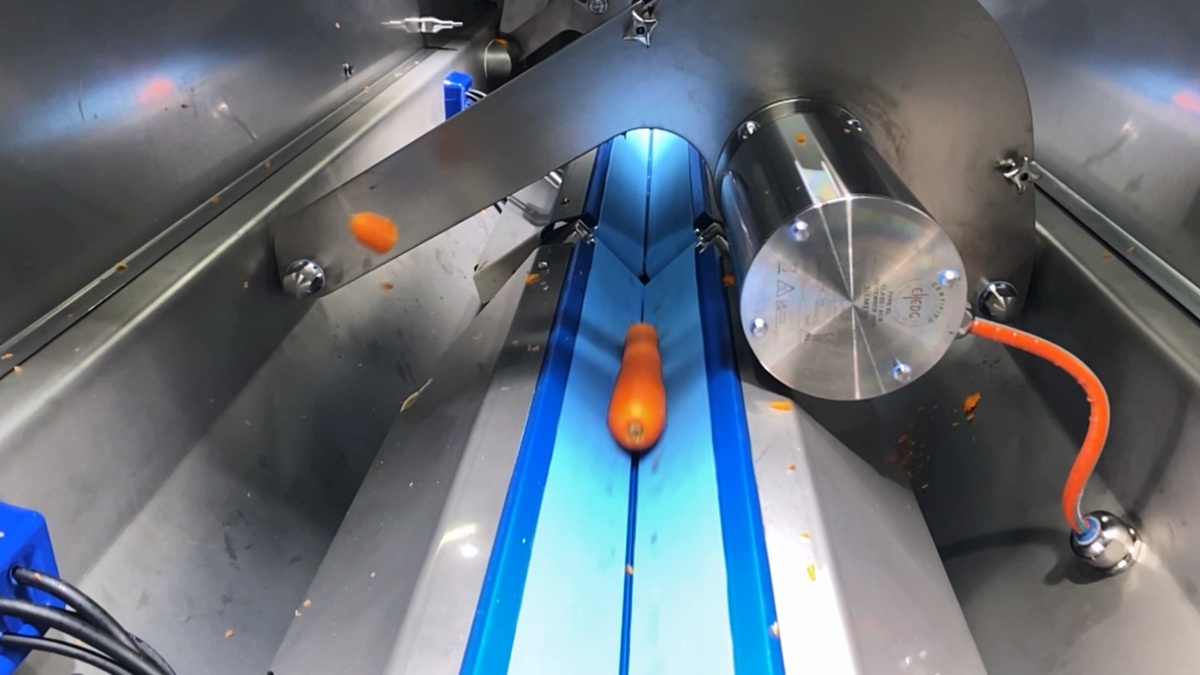
The Optical Vege-Trimmer™ is a useful illustration of what replacing that judgement actually looks like in practice. Rather than an operator deciding, piece by piece, where to cut a carrot or parsnip, vision technology identifies each vegetable's shape and executes top-and-tail cuts in roughly 0.2 seconds, with cut length adjusted automatically per item rather than fixed for the batch. Run as a line with the Produce Singulator the system replaces a task that traditionally required continuous manual judgement, and Wyma's data shows it doing so with a meaningful yield gain, up to 20%, from more consistent, more accurate cuts than manual trimming typically achieves.
Parsnips: a crop where off-the-shelf automation doesn't work
Nowhere is the labour pressure or the case for automation clearer than at Frederick Hiam, a processor that had grown increasingly unable to source the manual labour its trimming lines depended on. Parsnips complicate the picture further: as a niche crop with irregular shapes and inconsistent crop conditions, they don't suit generic, off-the-shelf sorting or trimming equipment. A tailored solution was the only realistic option.
Wyma worked directly with Frederick Hiam to develop and install the Optical Vege-Trimmer, a computer-vision-based trimming system optimised on site to handle the crop's natural variability, and integrated into the existing factory layout despite the logistical complexity of a phased installation.
The results moved well beyond a labour headcount reduction:
- Labour: the manual trimming line went from 20 operators to 2, with automation absorbing the repetitive judgement work those roles previously carried.
- Throughput: the line now runs a consistent 6 tonnes per hour - double its previous throughput — while trimming accuracy reached 95%, cutting crop damage and waste.
- Resource use: electricity usage dropped 25%, and water use fell 25–30%, helping the site meet stricter water licensing requirements as well as rising energy costs.
That combination - labour, throughput, accuracy and resource use all improving together - is the pattern that makes the investment case straightforward. It wasn't a single bottleneck being solved; it was a crop that genuinely couldn't be processed reliably at the volumes the business needed without a purpose-built system, and 18 operators freed to do work that didn't depend on constant repetitive judgement.
The parts of the line no one watches until they can't be ignored
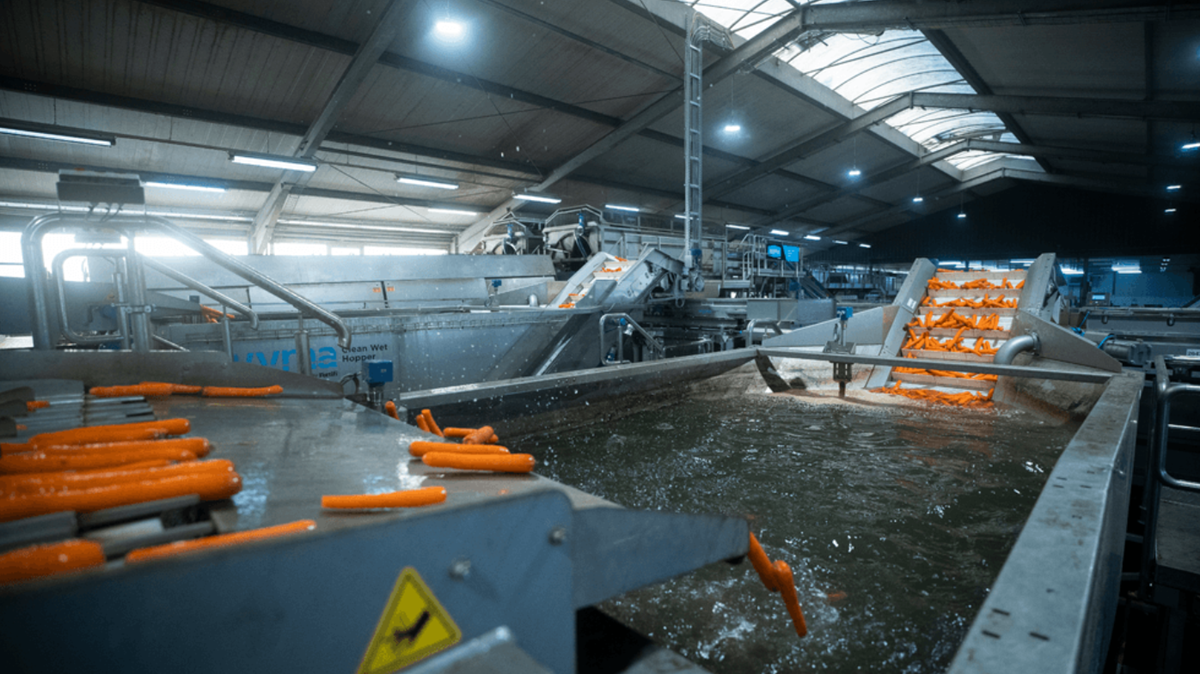
Some of the clearest automation gains sit in places operators rarely think of as "automation" at all: water and soil management. The Wyma Mud Tower removes solids from wash water through a gravity-based lamella system with smart sensors, fully automated and chemical-free, cutting Total Suspended Solids by up to 76% with no manual intervention. Paired with the Micron Filter XL self-cleaning, fully automated, removing material down to 0.15mm, this is infrastructure that used to require regular manual monitoring and adjustment, now running unattended and freeing technical staff for higher-value work elsewhere on site.
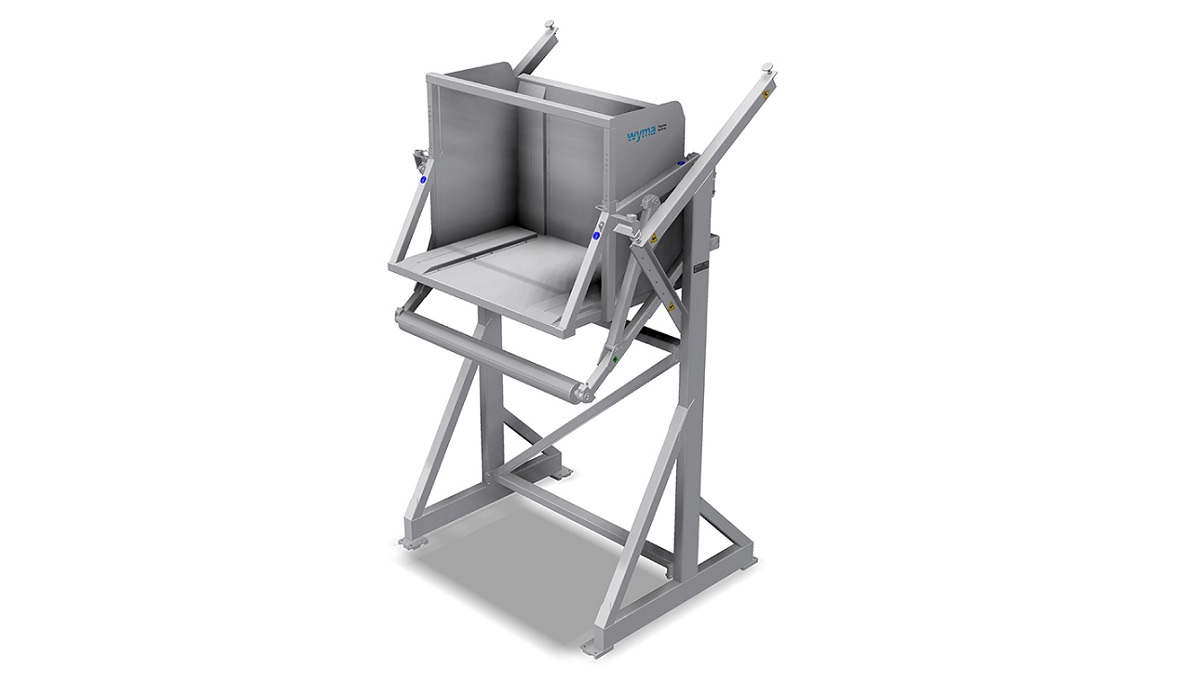
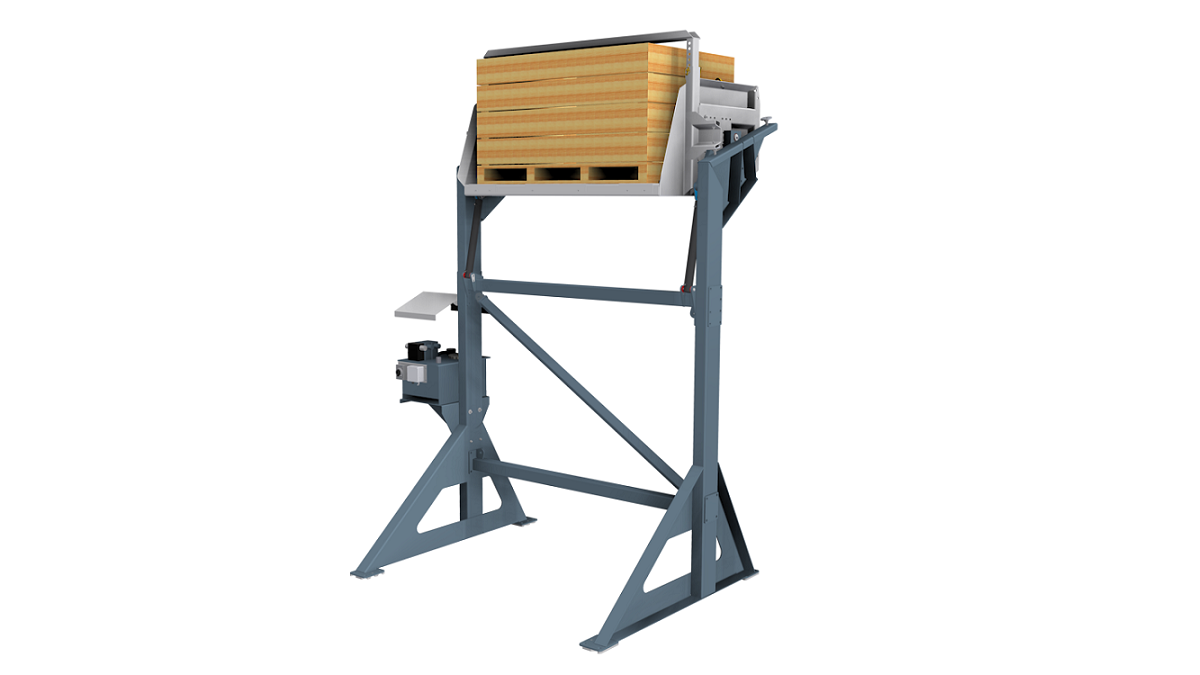
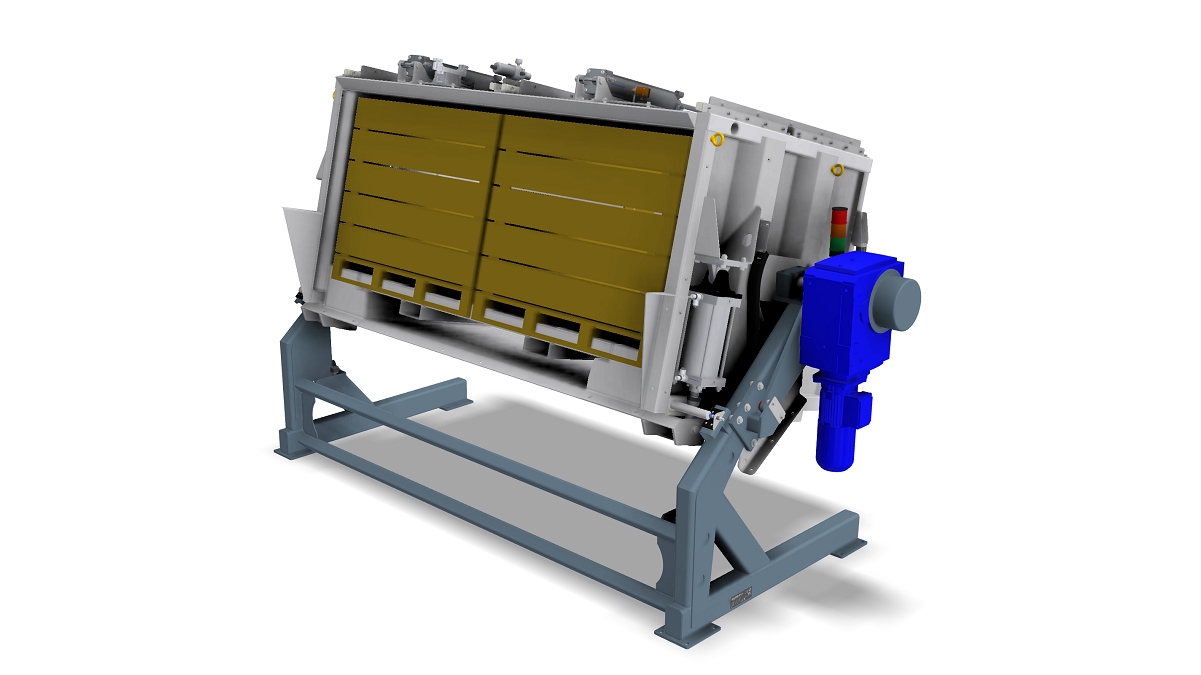
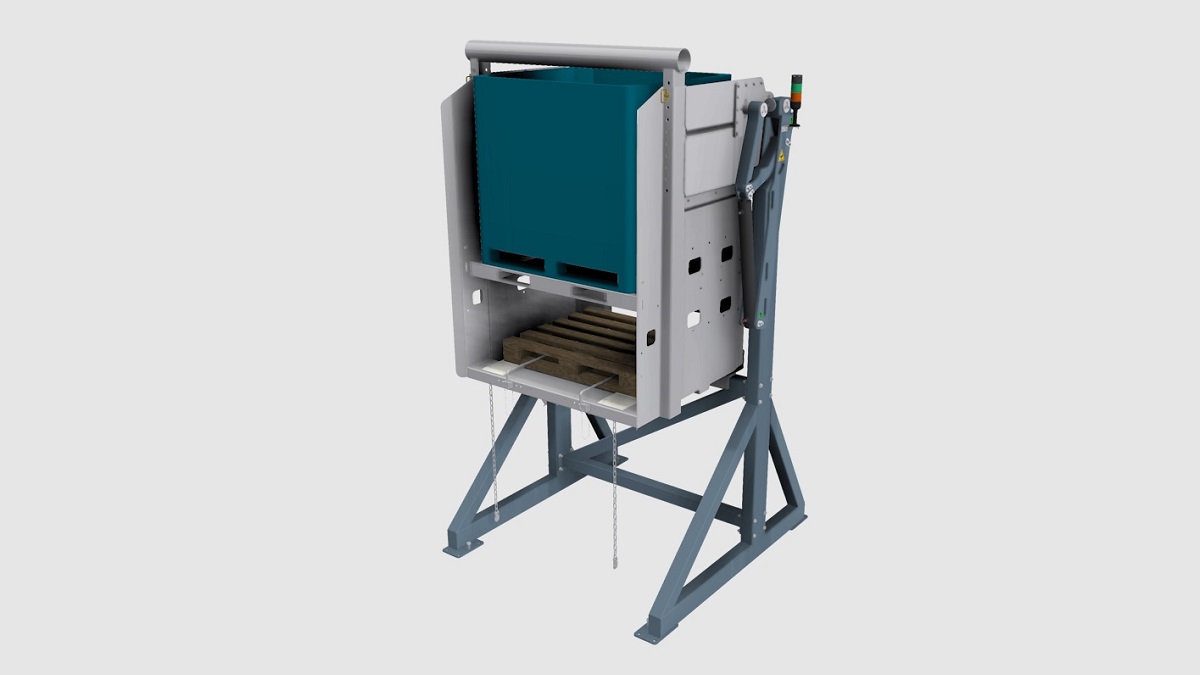
The same principle shows up in Wyma's Vertical Bin & Bag Filler, where sensors automatically adjust de-elevator height as a bin fills to maintain a minimal, gentle drop, and bin-detection sensors stop the system from running until a container is correctly positioned. It's a small example of a larger pattern: automation absorbing the continuous, repetitive monitoring tasks that are hardest to staff, while leaving the decisions that require real judgement - line balancing, exception handling, quality calls with people.
Why this matters for the investment decision
Framing automation as a labour-replacement calculation alone tends to produce disappointing paybacks and frustrated operators. The businesses getting the most from automation investment, Frederick Hiam included, are asking a different question: which specific bottleneck is being constrained by the availability, cost or fatigue of skilled people, and where does removing that constraint free those people to do work that actually needs them?
That reframing also changes what "support" needs to mean from a supplier. A vision system, a sensor-driven filler or an automated water tower doesn't eliminate the need for a skilled team, it changes what that team needs to know. Operators need to understand why the equipment is making the decisions it makes, what triggers an exception, and when a sensor or camera needs recalibrating rather than replacing. This is precisely why Wyma treats commissioning, training and lifetime service and support as inseparable from the equipment itself, rather than an add-on. A line is only as reliable as the team's ability to understand and manage it.
The processors best positioned for the next few years won't be the ones with the fewest people on the floor. They'll be the ones who've matched automation investment to a clearly identified bottleneck, and who've built a team capable of supervising the systems that now carry the repetitive judgement work. Equipment can make a decision consistently, thousands of times a shift. It still can't take responsibility when something unexpected happens - that stays with the people running the line.
Every crop, site and workforce presents a different version of this challenge. Contact Wyma Solutions to explore where smarter processing solutions could help your operation adapt to changing crop conditions and maximise efficiency.
News of Wyma Solutions
Sustainable industrial future through Wyma technological innovation
Wyma Solutions