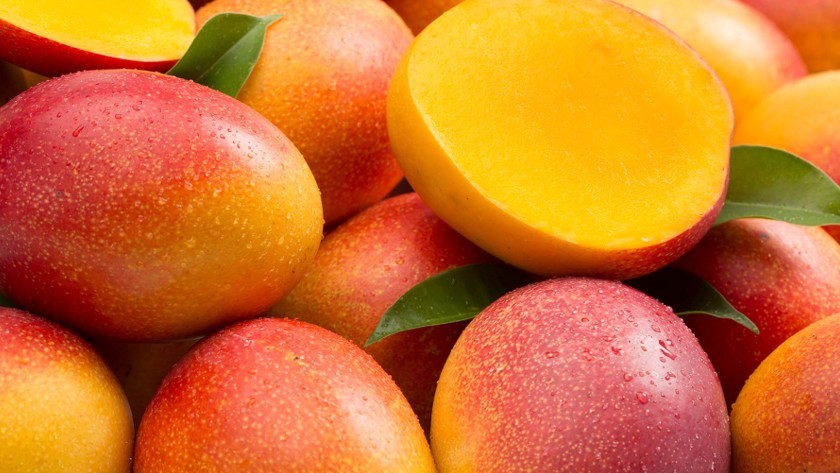
Mango (Mangifera indica L., family Anacardiaceae) is one of the main tropical and subtropical fruit crops.
It is a climacteric fruit that undergoes pronounced physiological and biochemical changes during ripening, characterized by a sharp increase in respiration rate and ethylene production.
These processes accelerate ripening and contribute to its relatively short postharvest life.
In recent years, various technologies have been explored, including low-temperature storage, to extend shelf life. However, the effectiveness of cold storage is limited because mangoes are prone to chilling injury when stored below 13 °C. This exposure often causes external and internal physiological disorders that compromise fruit quality.
Postharvest disorders
Typical postharvest disorders include softening, skin discoloration, development of off-flavors, and microbial decay during storage.
Among these, anthracnose, caused by Colletotrichum gloeosporioides, is one of the most destructive diseases, substantially reducing marketability.
In addition, storage is accompanied by marked biochemical alterations, such as fluctuations in phenolic content and changes in the sugar–acid balance, which may affect flavor, nutritional quality, and antioxidant capacity.
UV-C radiation
In recent years, ultraviolet-C (UV-C; 200–280 nm) irradiation has gained increasing attention as a sustainable and chemical-free approach for postharvest treatment. When applied at appropriate doses, UV-C can inhibit microbial growth, delay ripening, and preserve fruit quality.
Many studies have reported the effectiveness of UV-C treatment in extending the shelf life of various fruits, including blueberries, strawberries, pineapples, and mangoes, with effective dose ranges from 0.03 to 39.3 kJ·m⁻².
UV-C and low temperature
These findings suggest that integrating UV-C irradiation with low-temperature storage represents a promising strategy to improve postharvest quality and reduce losses in mango fruit.
A recent study aimed to investigate the effects of different UV-C irradiation doses on postharvest quality attributes, antioxidant activity, and disease incidence in mangoes during cold storage.
In this research, the effects of different UV-C exposure levels (0, 2.47, 4.93, and 7.37 kJ·m⁻²) on quality, disease suppression, and antioxidant properties were evaluated in mangoes stored at 15 ± 2 °C for 21 days.
UV-C treatments significantly reduced weight loss, maintained firmness, and delayed peel color changes compared to the untreated control, with 2.47 and 4.93 kJ·m⁻² showing the highest effectiveness.
UV-C also suppresses anthracnose development
UV-C irradiation also suppressed the development of anthracnose (Colletotrichum gloeosporioides), resulting in lower disease severity.
Antioxidant capacity showed dose- and time-dependent responses.
Symptoms of anthracnose observed in mangoes infected by C. gloeosporioides (A).
Morphology of colonies cultured on growth medium for 7 days at 28 ± 2 °C (B).
Development of anthracnose lesions in mangoes 7 days after artificial inoculation (C).
Overall, these findings highlight that UV-C treatment is a promising eco-friendly postharvest strategy to enhance disease resistance and preserve mango fruit quality.
Unlike conventional thermal or fungicide treatments, UV-C irradiation represents a residue-free technology that can be optimized for both quality preservation and disease control.
Sources
Phannakham, N.; Saepaisan, S.; Hongpakdee.; Ayutthaya, S. I.; N.; A.; Lin, H. L.; Nampila, S. (2026). Influences of UV-C radiation on quality, antioxidant and disease control in ‘Nam Dok Mai Sithong’ mangoes during low temperature storage. Scientia Horticulturae, 355: 114595.
https://www.sciencedirect.com/science/article/pii/S0304423825006429 Accessed 16/03/2026.
https://doi.org/10.1016/j.scienta.2025.114595 Accessed 16/03/2026.
Image
https://news.umiamihealth.org/en/the-health-benefits-of-mangoes/ Accessed 16/03/2026.