News
Why do strawberries soften?
The transcription factor FaERF6 activates the FaPG1 gene encoding the enzyme polygalacturonase, promoting strawberry softening
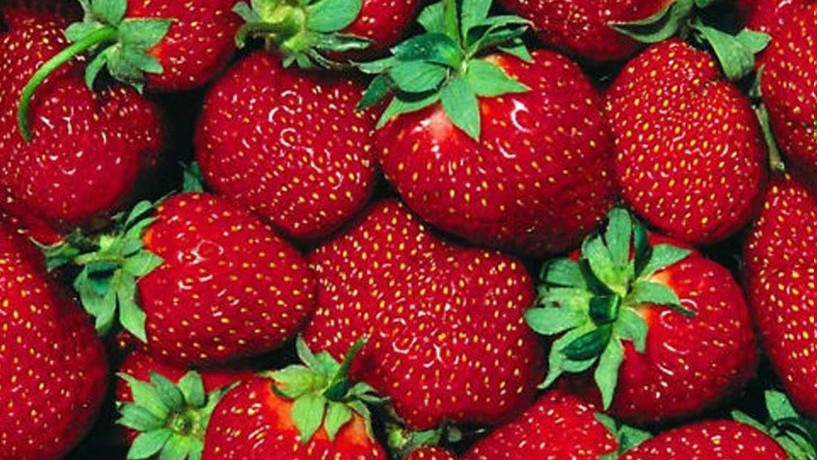

Strawberry (Fragaria × ananassa, family Rosaceae) is commercially valued for its delicate texture, flavour and nutritional richness. However, rapid softening after ripening makes the fruit highly susceptible to mechanical damage and microbial colonisation, resulting in considerable deterioration.
These limitations severely affect shelf life and economic value; improving fruit firmness and preserving quality remain critical research priorities in postharvest biology.
Texture and softening
Fruit texture, a key attribute of sensory quality, is determined by the architecture of the cell wall, which comprises the primary wall, secondary wall and middle lamella.
Pectin, predominantly located in the middle lamella and primary wall, is degraded during softening, reducing intercellular adhesion. This galacturonic acid-rich polysaccharide is structurally heterogeneous and is classified into homogalacturonan, rhamnogalacturonan I and rhamnogalacturonan II.
Pectin disassembly is enzymatically coordinated by polygalacturonase, pectate lyase and pectin methylesterase.
Methoxyl-rich homogalacturonan (-OCH3), the predominant pectin fraction, undergoes sequential enzymatic modification:
- initial demethylesterification by pectin methylesterase
- followed by main-chain cleavage mediated by pectate lyase
- terminal hydrolysis of α-1,4-glycosidic linkages by polygalacturonase
- releasing galacturonic acid monomers
Polygalacturonase, the key enzyme in pectin degradation
Polygalacturonase remains the most extensively characterised pectinase involved in fruit softening, and recent genetic evidence consolidates its role in strawberry softening.
Functional analyses confirm that FaPG1 loss-of-function mutants display doubled firmness, making it the primary candidate gene, while its transient overexpression accelerates softening in strawberries.
Research in strawberries
In a recent study, changes in strawberry firmness, pectin content and cell wall microstructure were examined throughout development and postharvest storage.
The findings identify that the FaPG1 gene product regulates pectin metabolism, and it was demonstrated that the transcription factor FaERF6 directly binds to the FaPG1 promoter, activating its expression.
This positive transcriptional regulation promotes protopectin conversion mediated by the enzyme encoded by FaPG1, polygalacturonase, into water-soluble pectin, thereby accelerating fruit softening.
In this way, a FaERF6–FaPG1 regulatory module was confirmed to explain cell wall remodelling during strawberry softening.
Sources
Zhang, Y.; Wang, S.; Li, X.; Cai, K.; Sun, H.; Zhang, Z. (2026).
FaERF6 activates the polygalacturonase gene FaPG1 to promote strawberry fruit softening.
Postharvest Biology and Technology, 234: 114129.
https://www.sciencedirect.com/science/article/abs/pii/S0925521425007410 Accessed 25/02/2026.
https://doi.org/10.1016/j.postharvbio.2025.114129 Accessed 25/02/2026.
Image
https://mercadocentral.gob.ar/news/propiedades-y-beneficios-de-la-frutilla Accessed 25/02/2026.