News
Melatonin reduces chilling injury in cucumber
Treating cucumbers with melatonin induces the accumulation of glycosides, helping the fruit tolerate low temperatures during cold storage
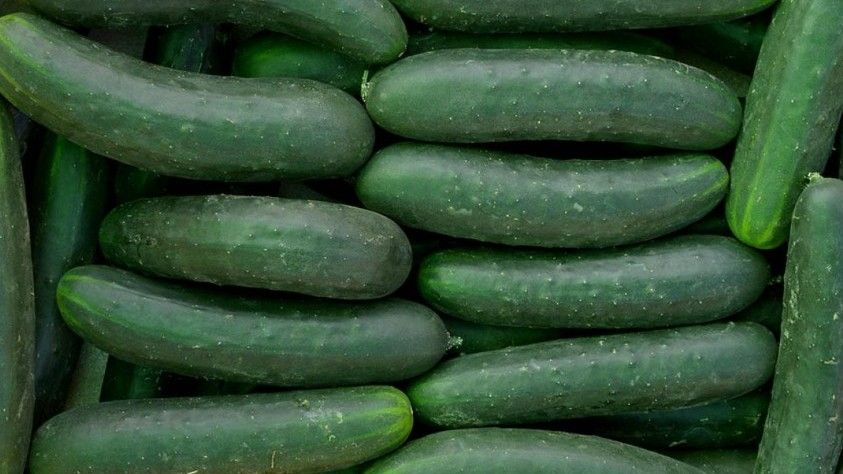

Cucumber (Cucumis sativus L., family Cucurbitaceae) is a widely consumed vegetable valued for its distinctive flavour and its rich nutritional profile, including vitamins, minerals, and antioxidants.
Due to its very high water content, cucumber is highly perishable, which leads to rapid deterioration and a very short postharvest life when stored at room temperature.
Cold storage effectively maintains quality and extends the postharvest life of many fruits and vegetables, making it a key tool for preserving fresh horticultural products throughout the supply chain.
Chilling injury
Cucumber is highly sensitive to storage temperatures below 10 °C, where it develops chilling injury that compromises fruit quality. To mitigate these effects, different strategies have been explored, including the use of physical treatments or supplementation with chemical elicitors and plant growth regulators, either individually or in combination.
Exposure to low temperatures can cause physical damage to the plasma membranes of plant tissues, leading to a loss of membrane integrity. As a consequence, ion leakage and irreversible metabolic imbalance can eventually result in physiological dysfunction and even cell death.
Osmoregulating compounds and chilling tolerance
Osmoregulating substances play a crucial role in maintaining osmotic balance across cell membranes. However, most studies on osmoregulators conferring chilling tolerance in plants—including postharvest commodities—have mainly focused on soluble amino acids such as proline, polyamines and betaines.
In addition to these organic osmolytes, soluble sugars and glycosides also function as important osmoregulatory compounds in plant cells.
For example, exposure to cold commonly increases the levels of sugars such as D-glucose, D-glucose-6-phosphate, maltose and other soluble sugars in the underground tissues of cold-adapted plants.
Although cold stress promotes the accumulation of these compounds, insufficient accumulation can still result in chilling injury.
Additional roles of sugars
Beyond their osmoregulatory functions, sugars also serve as energy reserves and precursors for a variety of metabolic pathways, contributing to plant tolerance to several abiotic stresses.
Moreover, carbohydrate abundance is particularly important for modulating the solubility, stability and biological activity of various secondary metabolites.
Melatonin and sugar accumulation
Melatonin (N-acetyl-5-methoxytryptamine), an indole derivative of tryptophan, is a well-known hormone initially identified in the mammalian pineal gland. In recent years, however, it has also received considerable attention in plant science.
This compound is present in many plant organs—including flowers, seeds, leaves, shoots, bulbs, fruits and roots—with concentrations varying depending on the tissue. In plants, melatonin primarily functions as a bioactivator and signalling molecule, influencing the metabolism of reactive oxygen species (ROS) and other physiological processes.
Pre-treatment with melatonin has shown promising results in recent years for preserving the organoleptic and nutritional quality of postharvest products. It has been reported to induce chilling tolerance in many fruit species, including peach, mango, litchi, red pepper, guava and tomato.
Given environmental and human health concerns, melatonin treatment represents an attractive eco-friendly strategy for extending the shelf life of postharvest produce.
In cucumbers, melatonin application has been reported to reduce chilling injury by promoting the accumulation of osmoregulatory substances such as polyamines, γ-aminobutyric acid (GABA) and proline. In addition, transcriptional activation mediated by CsMYB44 may be involved in polyamine biosynthesis.
In a recent study, postharvest cucumbers were treated with melatonin before cold storage at concentrations of 0, 0.05, 0.1, 0.2 and 0.5 mM, with 0.1 mM proving to be the most effective concentration for inducing chilling tolerance.
Melatonin treatment significantly reduced chilling injury symptoms and maintained a higher total soluble solids content during storage.
Metabolomic and transcriptomic confirmation
Metabolomic data indicate that melatonin treatment significantly alters metabolite profiles. The levels of 11 sugar-related metabolites were significantly higher in melatonin-treated fruit than in control fruit at both 6 and 12 days of cold storage.
Among these compounds, eight were glycosides, including n-propyl β-lactoside, (4S)-α-terpineol 8-O-β-D-glucopyranoside, limonin 17-β-D-glucopyranoside and kankanoside P, suggesting that melatonin promotes the accumulation of sugars, particularly glycosides.
Transcriptomic data further revealed that genes upregulated by melatonin treatment are strongly associated with sugar biosynthesis and metabolism pathways, as well as several glycan biosynthesis pathways.
In addition, RT-qPCR analysis confirmed that melatonin treatment significantly upregulates the expression of six representative genes involved in the biosynthesis of these compounds.
The accumulated glycosides help maintain osmotic balance across cell membranes and may enhance the biological activity of various molecules, thereby strengthening resistance to chilling stress.
These findings provide new insights into the regulatory role of melatonin in maintaining the quality and freshness of postharvest produce.
Sources
Yuan, X.; Jiang, Y.; Wang, Y.; Zhu, Y.; Ba, L.; Wang, B. (2026).
Melatonin treatment induces glycoside accumulation to confer chilling tolerance in cucumber fruit during cold storage.
Postharvest Biology and Technology, 234: 114134.
https://www.sciencedirect.com/science/article/abs/pii/S092552142500746X
Accessed 05/03/2026.
https://doi.org/10.1016/j.postharvbio.2025.114134
Accessed 05/03/2026.
https://www.promega.com.br/en/resources/guides/nucleic-acid-analysis/qpcr-and-rt-qpcr-amplification/
Accessed 05/03/2026.
Image
https://exportamoz.co.mz/produto/pepino/
Accessed 05/03/2026.