
Wyma Solutions
Conditioning
Europe’s potato industry turns to efficiency to tackle the market’s new challenges
Europe’s potato processing industry is moving towards more efficient, automated and flexible production lines. Labour shortages, rising energy costs and increasingly variable raw materials are pushing processors to extract more value from every tuber while reducing water and energy consumption. In this context, washing, grading, conveying and water-recycling technologies can help improve yields, reduce costs and adapt production to the changing demands of the market
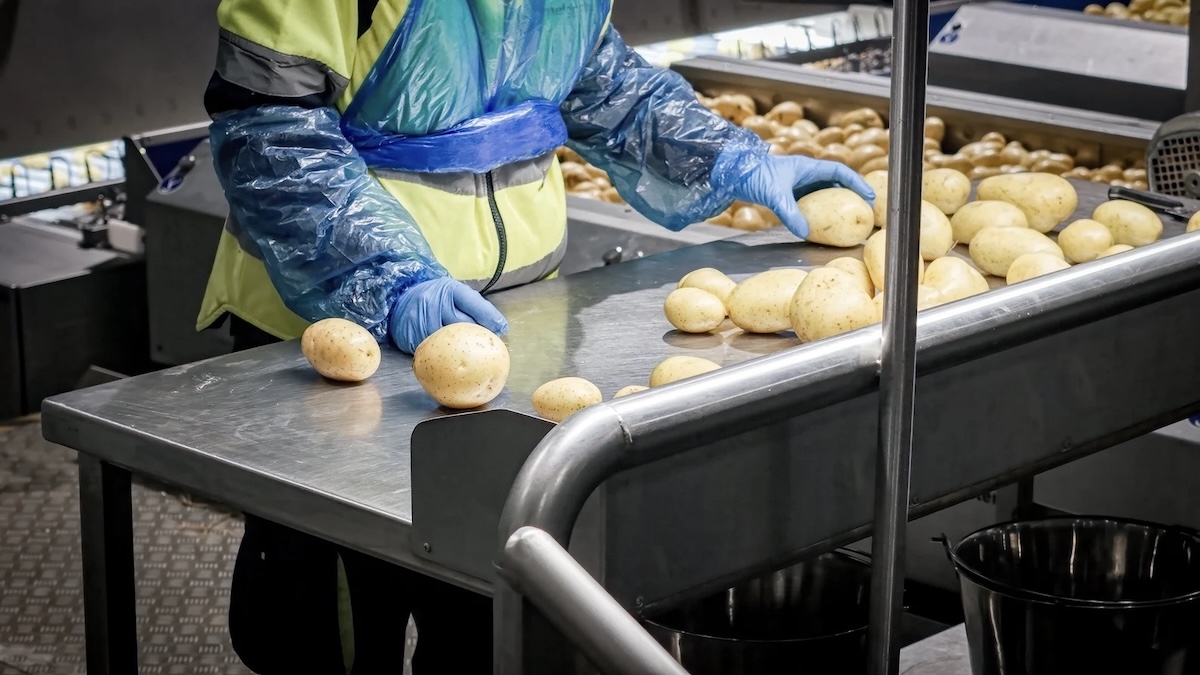
The European potato processing industry is entering a new phase in which competitiveness depends not only on business growth, but also on the ability to extract maximum value from every tuber entering the production line. In this context, automation and processing efficiency have moved beyond being desirable operational improvements to becoming essential factors for maintaining a strong position in the market.
Several pressures are driving this transformation. Labour is becoming increasingly difficult to find, while recruitment and retention costs continue to rise. At the same time, energy costs remain volatile. This summer, an intense heatwave pushed temperatures above 40 °C in France, Germany, Belgium, the Netherlands and Poland, coinciding with a critical stage in tuber bulking. Agronomists warn that prolonged heat and drought during this period can result in smaller tubers, greater size variation and increased levels of internal defects.
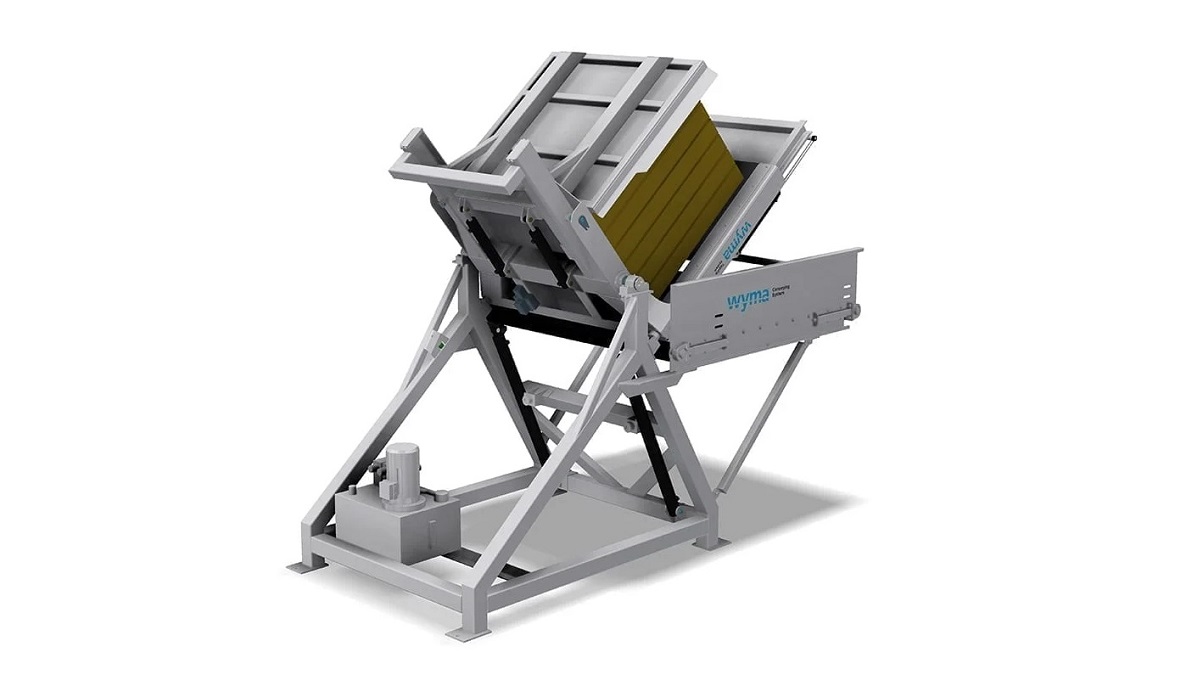
At the same time, the competitive landscape is changing. China and India are making significant investments to expand their capacity for processing frozen French fries and other value-added potato products, while Europe's market share is beginning to decline. For processors in the UK, Ireland, Scandinavia, Germany, Spain and Portugal, the response is not to compete on volume with lower-cost regions, but to develop more efficient, automated and resilient processing lines capable of handling increasingly unpredictable raw materials. This is precisely the environment for which Wyma's equipment has been developed.
Getting More Value from Every Tuber
Processing efficiency has become one of the sector's key indicators of competitiveness. Modern French fry production lines have reduced the amount of raw material required from approximately 2.0 kg to around 1.6 kg for every kilogram of finished product. This improvement enables higher yields per hectare and helps offset both the reduction in cultivated areas and lower yields associated with changing climatic conditions.
This is where equipment design and technology play a crucial role. When raw materials show greater variations in size and quality, the systems responsible for reception and preparation — including washers, destoners, sizers and optical sorting systems — must be capable of managing this variability and protecting line performance. Rather than allowing differences between batches to result in quality losses or reduced usable product, these systems must accurately separate suitable product from defects and waste.
Wyma's washing and optical sorting equipment is designed to handle variable batches, adapting to real-world raw material conditions and helping maintain consistent performance even when the crop shows lower quality or uniformity than usual.
More Production with Less Water and Energy
Energy recovery has also become an essential component of processing efficiency. Advanced lines capable of recovering steam and converting it back into water can reduce the need for fresh steam by up to 80%. This represents significant savings in a sector facing rising and volatile energy costs, while also contributing to decarbonisation targets.
Water efficiency is following the same trend. Water recirculation and reuse are no longer simply additional improvements, but fundamental components of a modern processing line. As regulatory scrutiny of water consumption and discharge increases across Europe, closed-loop systems are becoming increasingly important.
Wyma's water recycling systems are designed to reduce the need for fresh water while also lowering the costs associated with its treatment and subsequent discharge. In this way, efficiency improvements are incorporated directly into the production line from the outset, rather than being added later as separate solutions.
Less Reliance on Labour Through Automation
The labour shortage, which was initially considered a temporary phenomenon, has become a structural reality for the industry. Processors across different markets are developing lines capable of operating with as few as one or two operators, supported by digital monitoring, predictive maintenance and faster cleaning cycles.
In this context, automation is not simply about reducing labour costs. It also helps maintain uptime and process consistency when there are not enough workers available to operate a production line manually.
Wyma's automated conveying, sizing and optical sorting systems respond to this need by reducing manual handling at the points along the line that traditionally require the greatest amount of labour. They also provide processors with greater digital visibility, allowing potential quality issues to be identified before they develop into larger problems.
Flexibility is also becoming increasingly important. Foodservice and retail customers are demanding a wider range of products from a single supplier, from French fries to croquettes, potato pancakes and other formed products. This trend requires processors to operate lines capable of switching between different product formats without having to completely reconfigure the machinery.
Equipment designed with adaptability as well as performance in mind therefore makes it easier to respond to the needs of an increasingly diverse product range.
Preparing for Increasingly Variable Raw Materials
The heatwave affecting Western and Central Europe highlights a reality that the sector will increasingly have to address: raw material variability is not going away. Tuber size, dry matter content and defect levels will continue to fluctuate from one season to another as growing conditions become less predictable.
In this environment, the best-prepared processors will not necessarily be those achieving the highest theoretical throughput, but those equipped with washing, sizing and sorting systems capable of adapting to the characteristics of each crop without compromising consistency in the subsequent stages of processing.
This is the approach followed by Wyma: developing high-quality, automated machinery designed not for a single ideal crop, but for the variable conditions that processors face in the real world.
As Europe's potato processing industry moves from a model focused primarily on volume towards one based on generating greater value, choosing the right processing line is no longer simply a question of productivity. It is also a way to protect yields, reduce costs and build greater resilience against a raw material that will continue to change as market and climate conditions evolve.
News of Wyma Solutions
Sustainable industrial future through Wyma technological innovation
Wyma Solutions