
Felix Instruments
Measurements
Over 500,000 non-destructive scans reveal how variability drives fruit quality
Felix Instruments showed at Fruit Logistica 2026 how representative data exposes outliers that shape maturity and postharvest performance
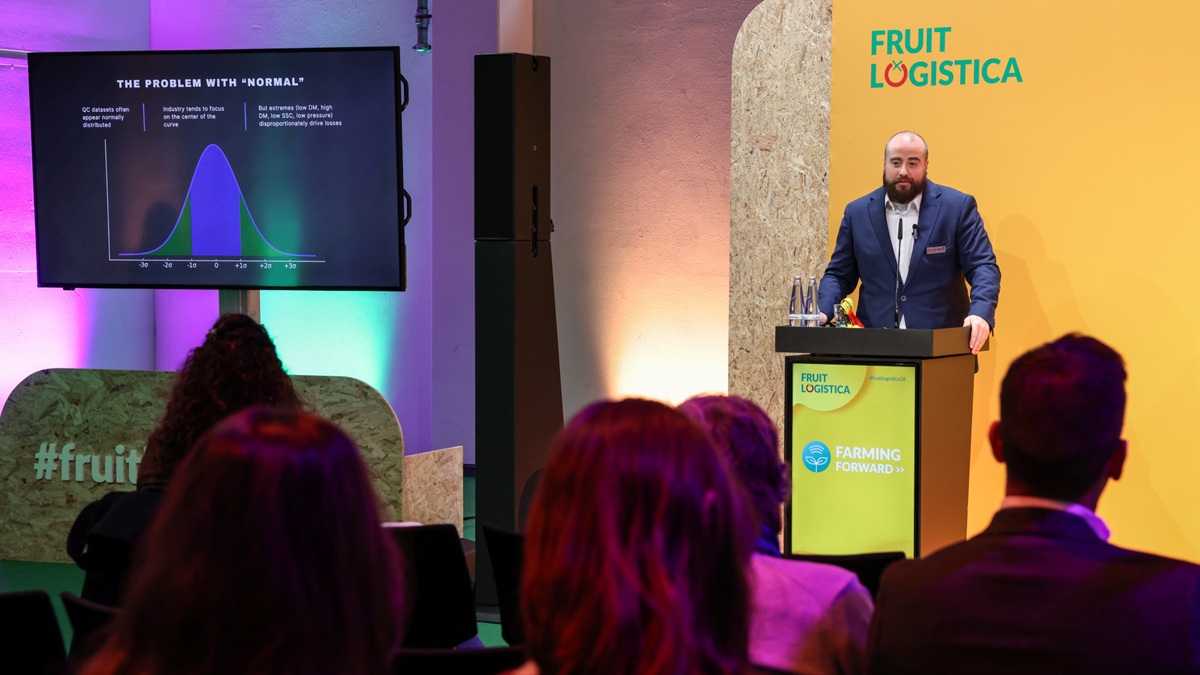
At Fruit Logistica 2026, Galen George, Director of Applied Science at Felix Instruments, presented findings based on the analysis of more than 500,000 non-destructive scans of different fruit commodities across orchards, packhouses, storage facilities and retail. The talk focused on how large-scale data collection is changing the way the industry understands maturity, internal variability and postharvest performance.
The data comes from modelling work carried out over several years in different production regions, in collaboration with growers, companies and research institutions. This volume has made it possible to identify patterns that rarely emerge when quality control relies on small sample sizes.
Variability as a structural factor
One of the central messages was that variability is not an anomaly but an inherent feature of fresh produce. It can appear between blocks within the same region due to differences in soil or microclimate, within a single tree depending on canopy position and even within the fruit itself, where the spatial distribution of certain compounds is not homogeneous.
When sampling is limited to a small number of fruit and testing is destructive, the picture obtained tends to be centred on the average. That average, however, does not necessarily reflect the true spread of the data. As sample size increases through non-destructive screening, the extremes of the distribution become clearer and these are often what drive downstream outcomes in storage and commercial handling.
The weight of outliers
During the presentation, George explained that many quality control data sets follow distributions that are close to normal and clustered around the mean. In that setting, outliers can easily go unnoticed when the sample size is small.
Fruit with low dry matter, marked differences in Brix or deviations in acidity may represent a small share of a lot but can have a significant impact on uniformity, shelf life and the consumer experience. Detecting and quantifying that variability allows issues to be anticipated and decisions to be adjusted before the product moves further along the supply chain.
Internal attributes and harvest decisions
Among the attributes analysed in the scans were dry matter, used as a maturity index and a predictor of storage performance, Brix as an indicator related to sugar content and acidity, particularly relevant for commodities such as berries and table grapes. Other internal attributes linked to quality and postharvest evolution were also considered.
Collecting data across multiple seasons, regions and maturity stages has enabled more robust predictive models. This broader base helps refine harvest timing, segment lots according to their storage potential and understand more accurately how maturity is distributed within a lot.
Non-destructive measurement and advanced modelling
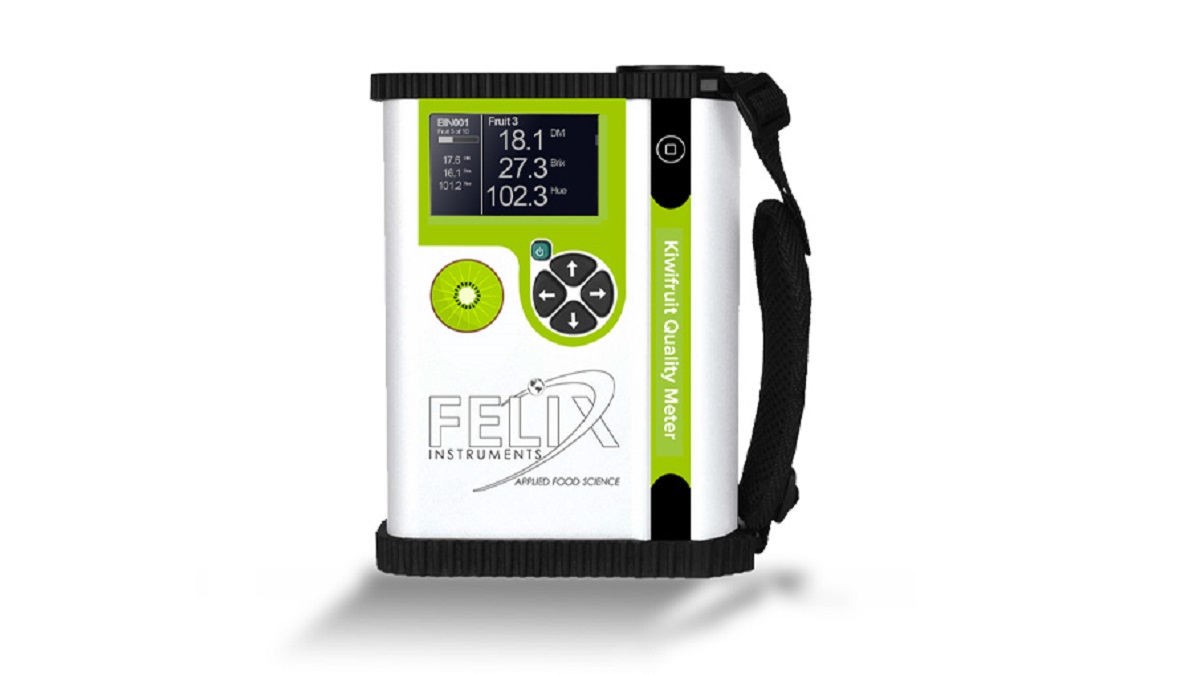
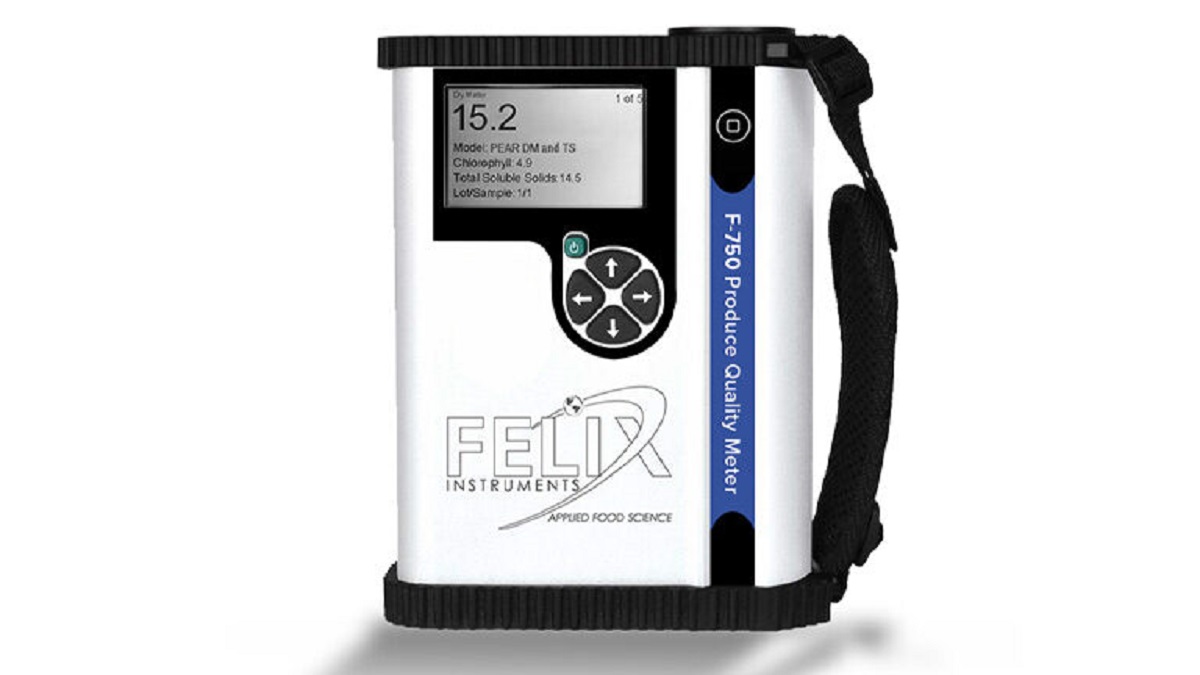
The technical approach presented is based on near-infrared spectroscopy to assess internal attributes without destroying the fruit. Platforms such as the F750 and F751 enable rapid measurements in the field and in the packhouse, significantly increasing the volume of data that can be collected.
Model development incorporates multiple seasons and production regions, along with independent validation. Advanced mathematical analysis and machine learning techniques are used to convert spectral information into quantitative predictions. This approach makes it possible to capture the full distribution of quality within a lot and reduce reliance on limited sampling, supporting decisions that better reflect real-world variability.
Towards quality control built on representative data
The conclusion of the talk pointed to the need to move towards quality control systems based on representative, higher-volume data. Expanding sample size through non-destructive techniques makes it possible to explicitly account for internal variability and improve the consistency of decisions across the supply chain.
Integrating this type of analysis can support greater product consistency, reduce deviations during storage and improve understanding of real fruit behaviour from the orchard to the consumer.
Photo caption: Galen George, Director of Applied Science at Felix Instruments, during his presentation at Fruit Logistica 2026.
News of Felix Instruments