News
Interest in postharvest is growing across the horticultural industry
Fruit and vegetable growers and distributors worldwide are asking postharvest experts more questions. "We need to study sales fruit by fruit to understand what retailers reject, what foodservice operators want and what consumers throw away at home."

IVIA and Postharvest.biz have announced that the 5th Citrus Postharvest Conference will take place on 17 September at AgroBank's headquarters in Valencia.
The Valencian Community is Spain's leading citrus-producing and exporting region. Within this context, extending the commercial life of citrus fruit while maintaining optimal quality, reducing losses throughout handling, transport and distribution, and extending the marketing period of each variety are essential objectives. Postharvest management, which represents the culmination of all the work carried out during cultivation, is therefore a key stage in the Valencian citrus value chain.
The Citrus Postharvest Conference aims to provide an annual meeting point for the commercial, industrial and research communities, as well as a networking forum for the principal stakeholders throughout the value chain.
The programme will include a commercial and technical analysis of the previous season, together with forecasts and the latest commercial postharvest developments ahead of the new citrus campaign. Further information is available in the announcement for the conference, organised by Poscosecha.com and IVIA, the Valencian Institute for Agricultural Research, on AGENDA.Poscosecha.com.
Having attended numerous major events related to global horticulture over recent months, one of the most notable developments has been the growing interest shown by fruit and vegetable growers and distributors worldwide in postharvest activities.
Interest in postharvest continues to increase. In an article published on Postharvest.biz, Alicia Namesny highlighted the need to reconsider the purpose of postharvest science and technology. As the sector moves decisively towards the principles of the circular economy and the bioeconomy, postharvest research must move beyond a technocentric perspective and also adopt a value-based economic approach.
Today's postharvest professionals are interested in preserving the value of these foods at retail. At the same time, global food industry forums, including those focused on foodservice and hospitality, continue to offer insufficient space to plant-based foods. The paradox is that, when people are asked about their dietary preferences, they say they want to eat more plant-based foods and less meat.
"As the sector moves decisively towards the principles of the circular economy and the bioeconomy, postharvest research must move beyond a technocentric perspective and also adopt a value-based economic approach."
For Postharvest.biz readers, I have prepared a selection of information published across the media platforms managed by our community. Together, these articles reflect a shared interest in sustainable horticultural systems and in delivering value to consumers at the point of sale.
A year ago, researchers at IATA-CSIC asked: what kind of world do we want to live in? The question encouraged dialogue about the transition towards sustainable food systems. At ACTUAL FruVeg, we reflected on the issue and considered what these proposals could mean for the horticultural industry.
In Latin America, particularly in Colombia and Argentina, postharvest management and the role of the bioeconomy in horticulture were central topics at a tropical species congress. Considerable attention was devoted to making better use of fruit and vegetable resources, as well as to the possibilities offered by sensors. Joaquín Ramírez, from the National University of Colombia, also highlighted the potential of artificial intelligence tools for quantifying postharvest physiological disorders.
The 5th Argentine Congress on Postharvest Biology and Technology, CABTP, was held at the end of last year in Cipolletti, in the Alto Valle region of Río Negro.
During CABTP, Bárbara Blanco-Ulate, from UC Davis in the United States, explained that climacteric fruits move from a phase of low ethylene production, known as System 1, to another phase in which the hormone activates its own biosynthesis genes, known as System 2. This generates a positive feedback loop that triggers ripening. Research into these processes remains highly relevant because "processes appreciated by consumers occur in both climacteric and non-climacteric fruits," she said.
The 2026 edition of Alimentaria+Hostelco brought together 3,300 companies from the food industry, foodservice sector and hospitality equipment market. This year marked the 50th anniversary of Spain's leading food industry event. Alimentaria's organisers continue to fulfil their role as promoters of business opportunities within the food industry. However, the editorial team at ACTUAL FruVeg noted one persistent limitation: Alimentaria still needs to devote more attention to plant-based foods.
At ExpoLevante, held in Campohermoso, Níjar, Almería, Juan Miguel Bárcenas Bustos explained the significance of SMETA 7.0 and GRASP, certification and assessment systems that introduce a social auditing perspective into the food industry.
Some believe that, from 2030 onwards, robotics, sensors and artificial intelligence will be widely available to address the current challenges affecting production and postharvest operations. Other experts warn that, on the way towards this supposedly promising robotic future, the social and economic problems facing growers, business owners and workers in the horticultural industry will require urgent solutions long before then.
Every year, the editorial teams of Postharvest.biz, Tecnología Hortícola and ACTUAL FruVeg attend Fruit Logistica in Berlin and BIOFACH in Nuremberg. What direction is the organic market taking? In the organic sector, consumers are looking for traditional values combined with innovative solutions, represented by the concept of "Reframing Organic", as well as clear and straightforward recipes under the theme "Perfectly Simple".
The Fruit Logistica Innovation Award was presented to a new apple variety, POMPUR. Its name combines the roots "POM", meaning apple, and "PUR", meaning pure. The apple stands out for its crisp red appearance and flavour. Thanks to its low allergenic potential, POMPUR can be consumed by people with allergies.
The FRUTIC Science Symposium provides an overview of scientific innovation in the fruit and vegetable sector. It is organised by Fruit Logistica and the Leibniz Institute for Agricultural Engineering and Bioeconomy. The symposium is coordinated by Manuela Zude-Sasse, one of Europe's leading researchers in postharvest physiology, sensor technologies and fruit quality.
At FRUTIC, participating researchers demonstrated how combining advanced sensors, physiological modelling and digital tools can improve decision-making both in the field and in fruit and vegetable packing facilities.
MACFRUT is an event I particularly appreciate. I believe it is relevant both to fruit and vegetable growers and to forward-looking commercial operators supplying Italian and European households and foodservice businesses. Can sustainability in the fruit and vegetable sector be measured? Generazione Ortofrutta has opened the debate.
At trade fairs attended by postharvest experts, presentations by Angelo Benedetti are almost always worth following. His most recent talks covered by Poscosecha.com featured numerous robotic innovations designed to facilitate everyday work in fruit and vegetable warehouses. These include UNI Sample Fruit, a system that uses optical acquisition technology to inspect the surface layer of fruit inside a box.
The PostharvestTALKS Murcia event, organised by Decco, examined the challenges involved in maintaining citrus quality from the field to the packinghouse. Refrigeration, decay control and storage remain at the heart of citrus postharvest management. According to Alejandro Pernuzzi of Hispatec, artificial intelligence should allow decisions to integrate more variables, including orders, product availability, quality, lead times, costs and operational capacity.
This year, IRTA held its 24nd Postharvest Conference. The event takes place in June and aims to present the main challenges ahead of the stone and pome fruit season, allowing the industry to work towards a balance that complies with new environmental legislation while remaining economically viable. The Citrus Postharvest Conference in Valencia pursues a similar objective.
At the beginning of each fruit season, packinghouses have concerns and questions for growers, as well as questions for their own customers and the retailers responsible for supplying specialist fruit and vegetable shops.
Climate change has contributed to the emergence of diseases and physiological disorders that previously caused little concern but now seriously affect crops. Joan Bonany, from the Fruit Growing programme, and Jordi Cabrefiga, from the Sustainable Plant Protection programme, presented the changes observed within this context and identified the pathogens currently causing the greatest concern.
This year, while preparing these notes, fruit growers in Lleida reported that the high temperatures recorded in June and early July had severely affected the entire pear crop. The fruit harvested from the trees at the end of the summer is expected to be considerably smaller in size.
Food4Future 2026 World Summit has consolidated its position at the Bilbao Exhibition Centre. The event is organised under the guidance of AZTI, with the participation of the Basque Culinary Center. Its latest message calls for greater digitalisation and for companies to innovate better, rather than simply faster.
Health will be a driving force behind the food of the future. The Bilbao forum presented Nutritional Artificial Intelligence, an AI-powered image-recognition technology capable of identifying food types, estimating portion sizes and automatically converting that information into useful nutritional data, including macronutrients, energy values and other key indicators.
Postharvest.biz recently published a report on the 8th International Symposium on Postharvest Pathology, organised by the ISHS and NIBIO, the Norwegian Institute of Bioeconomy Research, and held in Lofthus, Norway.
Only 15% of the apples consumed annually in Norway are produced domestically, and almost 90% of Norwegian apples are eaten within eight weeks of harvest. By contrast, more than 90% of the carrots consumed in Norway are produced within the country and stored throughout the year, resulting in significant losses that were discussed during the symposium.
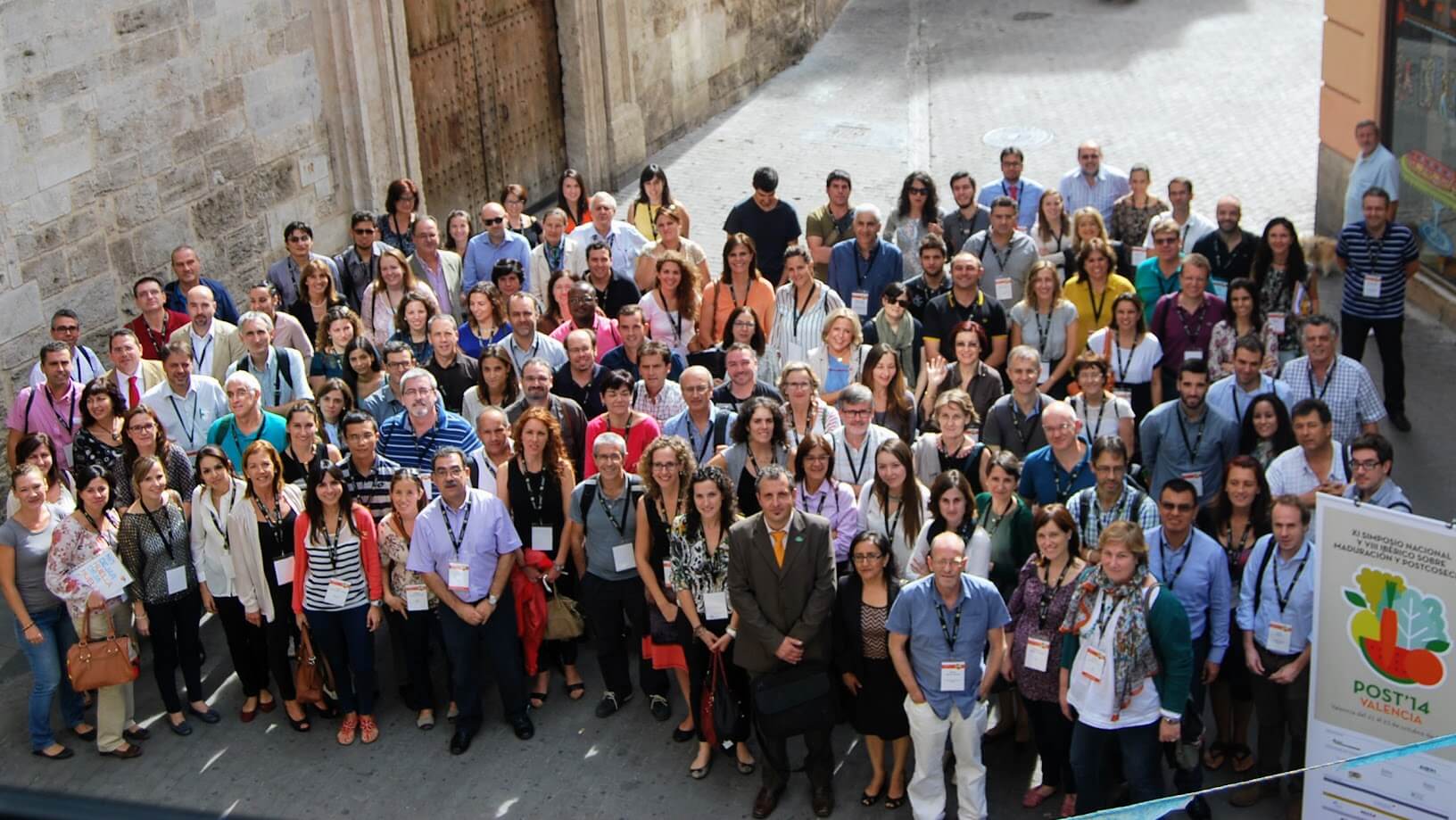
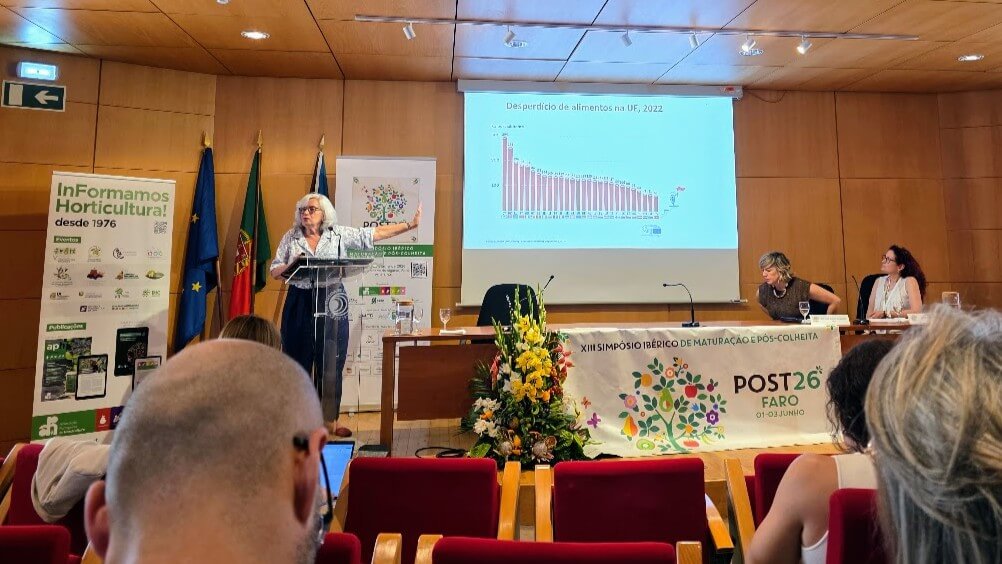
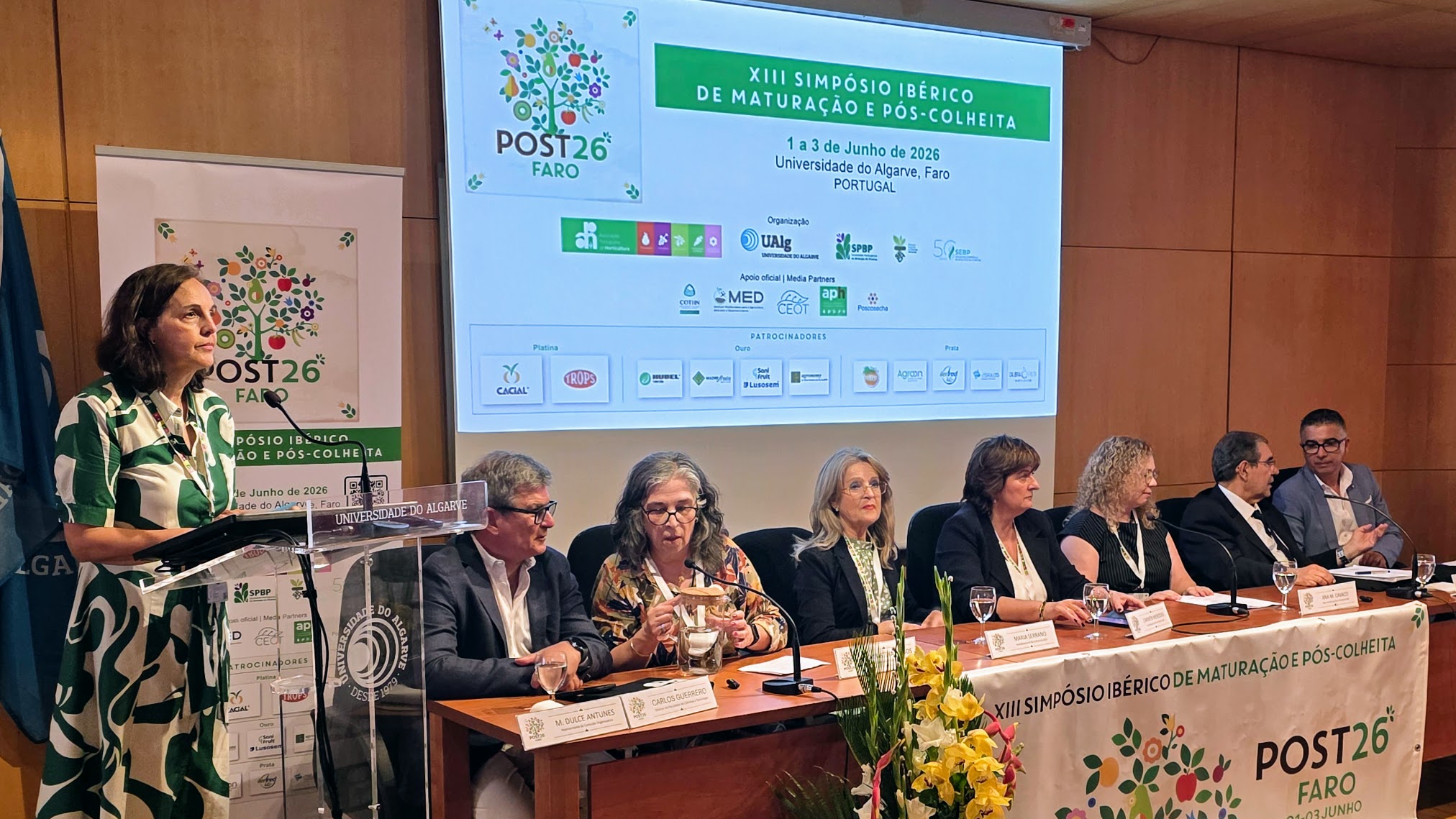
POST is the postharvest congress organised by SECH, the Spanish Society for Horticultural Science. This year, the event was held jointly with APH, the Portuguese Horticultural Association, as part of the 13th Iberian Symposium on Ripening and Postharvest, in Faro, Algarve, Portugal.
Artificial intelligence and non-invasive technologies once again emerged as subjects of major interest among delegates, alongside biodegradable coatings. Lluís Palou and his team at IVIA in Valencia are working on edible coatings and using agri-food extracts as natural antifungal agents.
European postharvest challenges range from imperfect-looking fruit to superfoods. According to the symposium in Faro, the modern postharvest dilemma lies between consumer expectations and zero waste, and between sensory quality and sustainability as essential sources of value.
In the main image, Ana Cristina Agulheiro Santos discusses the European Green Deal. For the time being, one of its greatest challenges remains the reduction of food waste.
Related news

From genomics to retail: Iberian researchers decode the keys to smart postharvest in Portugal